I have a new piece up at The American Spectator Online today. I was worried it was a little too personal for the venue, but the editor told me it was “the best piece I’ve read in a long time.” Which is always nice to hear.
Anyway, it’s about the Lockdown and living in fear. Because fear is a subject I know all about.
I hope I’m open-minded enough to listen to experts. However, when an “expert” starts telling me the only way to prevent Gotterdammerung is to increase the size and power of government, I start reaching for my skeptic’s hat. I wear that hat a lot nowadays.
I’m not an epidemiologist, as you’ve probably guessed.
But I do know about fear.
And what troubles me most about our current predicament is that we’re being governed on the basis of fear.
And who or what is God anyway? A word they used to always capitalize but now is frequently printed in lower-case—god—as in, a god among many gods, none of them real. Personally, I’m sticking with the capital even when not believing there is such a being, because I want my nonbelief to be about something important. Who wants to disbelieve in a lower-case god?
Daniel Taylor is a Christian writer with whom I have theological differences. But I enjoy his novels. Which wouldn’t bother me if I weren’t an ideologue. If I knew the religious beliefs of most of my favorite fiction writers, I’m sure they’d give me a sudden appreciation for Taylor as a brother. It’s only among the brethren that I get all religiously partisan.
Anyway, Taylor’s Jon Mote series is an enjoyable sequence of mystery novels (this is the third) about a troubled and God-haunted man who was once possessed by demons and has been exorcised, but who still declares himself a skeptic. As Woe To the Scribes and Pharisees begins, he seems to be getting his life together. His wife Zee has returned to him, and he has a responsible editing job with a Minneapolis publishing house that specializes in New Age books. They have recently decided to tap into the huge Bible market, by publishing one of their own. This will be a Bible for the new millennium, a Bible acceptable to everyone. However, discovering the expenses involved in producing their own translation, they decide to license one that already exists. They go to Dr. Jerry DeAngelo, a retired TV preacher who appears to be sort of a cross between Pat Robertson and Billy Graham. Dr. DeAngelo published a paraphrase of his own some years back, and now he’s agreed to license it to Jon Mote’s company, with certain stipulations, including his own participation on the revision committee. Which will consist of Christians spanning the continuum from far left universalist to far right fundamentalist.
It goes even worse than you might expect.
They aren’t very far into their editorial meetings before one of their number, a liberal theologian, is found dead in a rest room, the apparent victim of a heart attack. Only Jon notices a cryptic message written in soap on the mirror, which makes him suspicious, though he can’t figure out its significance.
Then a celebrity pastor (sort of a Joel Osteen stand-in) who had agreed to endorse the translation (before it’s finished, of course) dies in what looks like an accident.
And that’s not the last of the deaths. Eventually, while snowed in in a northern Minnesota lodge, they will all realize that these deaths have been murders, and that the murderer is among them.
Author Taylor does an excellent job portraying the debates between liberals and conservatives, and he does it so well that I suspect every reader will think the author secretly agrees with him. The book as a whole consists largely of a series of Socratic dialogues, in which principles of biblical interpretation are hashed out pretty thoroughly and fairly.
What I fear is that Woe To the Scribes and Pharisees is too talky for the average reader, especially for non-Christians. I wish non-Christians would read this book, but I’m not sure they’ll tolerate all the God talk.
Christians, I think though, will take to it pretty well. I know I did.
As always, the real hero of the story is Jon’s “developmentally disabled” sister, Judy, who cuts to the core of matters through her pure and simple love of Jesus, unencumbered by doubts or sophistication.
I highly recommend Woe To the Scribes and Pharisees. Cautions for challenging and mature themes, and some rough language.
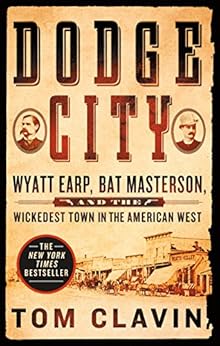
Long ago, based on an article I read in some magazine, I joined the anti-Wyatt Earp party. Anti-Wyatt people like to point out that Wyatt Earp was primarily a gambler, not a lawman – he was never the marshal of anyplace, though he was a deputy off and on. Also that the story of the Gunfight at the OK Corral (which took place not in the corral, but in a nearby vacant lot), is told in so many contradictory ways that it’s impossible to get at the truth, but that the Earps’ conduct is suspicious at best. And that Wyatt’s famous vendetta ride, though understandable in light of the murder of one brother and the maiming of another, was entirely extralegal and far from a law ‘n order affair. And, oh yes, there’s evidence Wyatt was a pimp, at least for a while.
Since then I’ve softened a bit. Wyatt was no Hugh O’Brien (that’s the guy who played him on TV, for your kids out there), but neither were his enemies – white hats were hard to find in them parts, in those days.
My real favorite Wild West lawman is Wild Bill Hickok. And yet I keep picking up books about Earp. Maybe because there are more mysteries in his story. I’m still trying to get to the bottom of him.
One great virtue of Dodge City is that it provides a lot of context. Although the narrative is centered in Dodge, it sends feelers out to touch on a lot of places that involved the main characters through the second half of the 19th Century. I appreciated this; I know my Old West fairly well, but my sense of what was contemporaneous with what was improved.
The book’s particular virtue is that, instead of concentrating on the almost mythic figure of Wyatt Earp, Clavin also keeps his eye on Wyatt’s close friend Bat Masterson. Masterson has gotten too little attention, and Clavin makes a good case (with which I tend to agree) that he was the more accomplished of the two. For one thing, Bat was actually an elected sheriff, at least for a while. But he was also involved in more adventures, from the legendary Adobe Wells fight to various manhunts, shootouts, and arrests as a lawman. William S. Hart knew both men, but it was Masterson he identified as his character model.
The great weakness of Dodge City is that it scores low on the factual scale. Clavin treats these men as if they were career lawmen, men on a mission to bring peace to the frontier, like in the movies. I don’t think you can honestly make that case. His account of the feud with the Clantons is routinely biased toward the Earps. And there are simple mistakes of fact. I’m not a “real” historian, but Clavin’s accounts of events involving Wild Bill Hickok and Billy the Kid are wrong in important details, to my best knowledge. (Although I could just be behind on the scholarship. It keeps changing. But Clavin does not inspire my confidence as scholar.)
Dodge City has some value for the reader looking for a sweeping overview of a colorful time and place in our history. But if you’re looking for objective scholarship, I’d suggest you look elsewhere.
Happy Friday. Some people still have Fridays, I’m told. Such people are described as Essential. I am not worthy, I am sure, to unlace the latchets of their sandals.
I was busy yesterday, though. The translation job I got had me working 12 hours straight, pausing only for meals and comfort stops. Also to open the windows, because the day was beautiful.
I won’t say it’s a joy of the free-lancing life, but it’s certainly one of its qualities, that much of the time you wish you had work, and then occasionally you have too much. The big stars can regulate their own schedules, but the rest of us are carrion birds, on the watch for cadavers of opportunity.
While I was working, I streamed a curious old movie on Amazon Prime: The Girl Hunters, a 1963 Mike Hammer flick. What makes it memorable is that the creator of the character, writer Mickey Spillane, played his own creation in this one.
The story involves PI Mike Hammer waking up from a long drunk to find that his secretary Velda is dead, and that his cop friend Pat Chambers now hates his guts. Then Mike gets a hint that Velda might be alive. He will, of course, steamroll anybody who tries to keep him from finding her.
As a late semi-noir, The Girl Hunters isn’t bad. It was produced by an English company, and the obscure cast (except for Lloyd Nolan and Shirley Eaton, who’s best remembered for getting painted gold in “Goldfinger”) turn in solid work. Spillane himself is better than you might fear. He gets his words in the right order, and generally keeps his facial expressions and body language consistent with them. His big problem is that he has zero charisma. He’s not good looking enough to be a leading man, and on top of that he isn’t likeable. You wouldn’t trust this guy to watch your suitcase in a train station.
But the production’s not bad, the music’s good, and the script is adequate. Worth watching mostly for the novelty of the thing.
I’m in haste tonight. Got a translation assignment, and I think I may have promised to deliver faster than I should have. So time’s wingéd chariot is tailgating me like a Ferrari on a blue highway.
In lieu of anything original, I’ll share this nice article from Atlas Obscura about the curses medieval scribes placed in books, so that people wouldn’t steal or mangle them.
“These curses were the only things that protected the books,” says Marc Drogin, author of Anathema! Medieval Scribes and the History of Book Curses. “Luckily, it was in a time where people believed in them. If you ripped out a page, you were going to die in agony. You didn’t want to take the chance.”
No Amazon link. I checked and Drogin’s book is very rare and copies are expensive. At those prices, they should have their own curses.
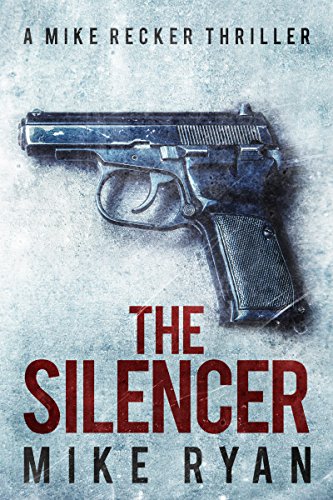
Here’s the concept: A burned CIA agent, now hunted by his old bosses, meets a computer genius. The genius tells him he’s found a way to hack into police and security databases, to identify ordinary people who are under threat. He needs an agent to intervene and protect those people. He has almost unlimited funds to set them up in the hero business.
If you think this sounds like the old Jim Caviezel TV show, Person of Interest, that’s how it sounds to me too. The main difference is that The Silencer is set in Philadelphia. Our hero takes the name of Mike Recker, and eases into his new life. Soon he will have his hands full, and will begin to make his first human connections after a long personal drought.
Aside from the un-original concept, I found the story in The Silencer entertaining in itself. (One thing that annoyed me was that our hero, supposedly a master of covert operations, loses no time in making himself a public legend. He might at least have varied his costumes, instead of allowing himself to be identified in the papers as “the man in the trench coat.” That’s not keeping a low profile).
But the biggest problem with this book was the author’s weak grasp of English grammar. He’s constantly dropping howlers like, “But things rarely go as planned, don’t they?” And, “There was maps of the area on a wall….” This author needs an editor. Badly.
Light-weight, derivative entertainment, marred by clumsy writing. You might enjoy the book, if you’re less picky than I am.
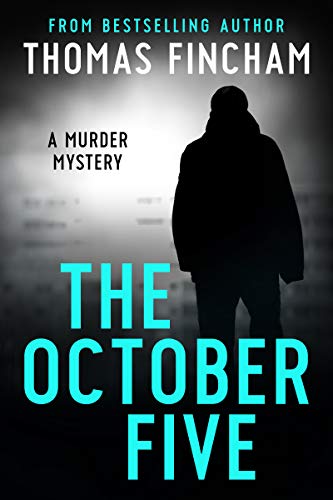
There’s an upstairs apartment in Chicago where a small group of middle-aged men maintain a secret club, The October Five. They are all Marine Vietnam War veterans, survivors of one horrific operation that went very bad. They tell no one about their club, even their families and closest friends. That’s because they work on secret projects together, projects that are highly illegal.
Detective Karl Whaler has a mystery on his hands. A young man has been murdered in his apartment, and no forensic evidence can be found. It’s hard to think why anyone would kill a person as universally beloved as this fellow was – until Karl learns that this man had been systematically defrauding many people, most of whom (such was his charm) still think of him fondly.
A chance discovery puts Karl on a surprising track – is this one in a series of murders, very neat murders in which the victims are people who very much deserved death, but whom the law could not touch?
Soon Karl will be pursuing the October Five. But he’s not their worst danger. Their worst danger will come from a quarter they could never have imagined.
For this reader, The October Five started out in an unpromising way. The beginning of the story meandered, and I got kind of bored with the Five themselves, going about their everyday lives. I had some trouble telling them apart. And Karl Whaler was not a terribly interesting detective.
But the book grabbed me as I moved on. I was particularly pleased with the story’s positive portrayal of Vietnam veterans.
Recommended, with cautions for language, violence, and ambiguous morality.
I kind of enjoyedLines of Duty, the first book in Mark Hazard’s Deputy Corus series, set in King County, Washington. So I went on to Book Two, Thin Gray Lines.
Corus, who was a police trainee in the first book, is now a rookie with the department. His boss decides his particular skills, honed in Special Operations, will be useful in investigating a drug operation that seems to be operating on a very large onion farm downstate, near Walla Walla. He sends Corus off with his superior, Danny Jamison, to babysit him, but Danny has other plans. He wants to spend the weekend with his wife, working on their marriage problems. So Corus ends up going on his own.
He decides to go in undercover, as an illegal Hispanic laborer. He will encounter the strange, dysfunctional family that runs the place, along with their innocent daughter and her lover, a South African struggling with his conscience. Also various bad guys, not so bad guys, and plain victims, including an illegal laborer trying to actualize the teachings of Tony Robbins. The final showdown will be – literally – explosive.
Thin Gray Lines was entertaining and engaging, with the same positive energy I noticed in the first book. What I didn’t like about it was, first of all, that the amusing cast of characters we got to know in the last book get very little time on stage in this one. Also, there was some New Age stuff, and a negative depiction of strict Christian groups.
So I guess I won’t go on with this series. But it’s not bad.
Today is the 75th anniversary of VE Day, “Victory in Europe Day,” in 1945. It was a bigger commemoration when I was a boy, when those events were still recent history to all the grownups I knew.
In Norway it’s known as Frigjøringsdag, “Liberation Day.” The bit of newsreel footage I’ve posted above provides one of the more amusing moments of that event. A German commander, Oberst Karsch, marches up to British Air Commander Darrell, a big smile on his face, as if hoping to convince him it’s all been a big misunderstanding and to let bygones be bygones. Darrell is not amused, and appears to defer to his Norwegian colleagues.
It’s an important date. Too bad the Norwegians can’t celebrate it properly under current conditions.
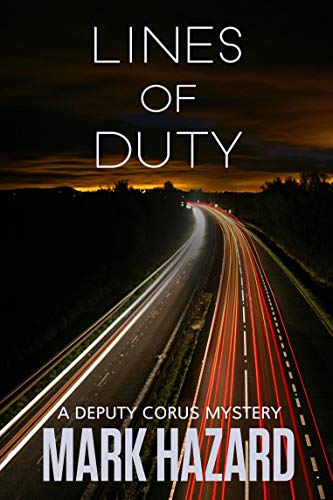
Sometimes a novel can be fairly ordinary in itself, but will reveal intriguing possibilities. That was my reaction to Lines of Duty, by Mark Hazard, first installment in the Deputy Corus series.
“Corus” is the only name of the main character; he has no first name (This is the second book I’ve read recently with a one-name character. Can you even do that in the modern world?). His personal background is mysterious, but the book begins with his last day on Special Forces duty in Afghanistan. He is a brave and decorated soldier. Shortly after his return to the States, he and his wife establish themselves in Seattle, where he has enrolled in a special, elite police training program.
Corus is the best shot in his class. Another classmate, Albert Chu, is the best academically. They fall into an odd, symbiotic friendship as they deal with the considerable pressures of the program. One day, while they are doing grunt work with unclaimed evidence, Corus discovers some diamonds that were never reclaimed by their owner. That, along with other strange points about the evidence, leads him and Chu to poke into the old case. This will have them investigating rodeo people, drug dealers, and an eccentric old lady with an amazing heart.
The author, Mark Hazard, is – judging by this book – good at characterization, but middling on dialogue. His characters sometimes talk like books. But I still liked the characters, and there’s an attitude of positivity here that I can’t help liking. I’m reading the second book now.
Websites store cookies to enhance functionality and personalise your experience. You can manage your preferences, but blocking some cookies may impact site performance and services.
Essential cookies enable basic functions and are necessary for the proper function of the website.
Name
Description
Duration
Cookie Preferences
This cookie is used to store the user's cookie consent preferences.
30 days
These cookies are needed for adding comments on this website.
Name
Description
Duration
comment_author
Used to track the user across multiple sessions.
Session
comment_author_email
Used to track the user across multiple sessions.
Session
comment_author_url
Used to track the user across multiple sessions.
Session
These cookies are used for managing login functionality on this website.
Name
Description
Duration
wordpress_logged_in
Used to store logged-in users.
Persistent
wordpress_sec
Used to track the user across multiple sessions.
15 days
wordpress_test_cookie
Used to determine if cookies are enabled.
Session
Statistics cookies collect information anonymously. This information helps us understand how visitors use our website.
Google Analytics is a powerful tool that tracks and analyzes website traffic for informed marketing decisions.
Used to monitor number of Google Analytics server requests
10 minutes
__utmb
Used to distinguish new sessions and visits. This cookie is set when the GA.js javascript library is loaded and there is no existing __utmb cookie. The cookie is updated every time data is sent to the Google Analytics server.
30 minutes after last activity
__utmc
Used only with old Urchin versions of Google Analytics and not with GA.js. Was used to distinguish between new sessions and visits at the end of a session.
End of session (browser)
__utmz
Contains information about the traffic source or campaign that directed user to the website. The cookie is set when the GA.js javascript is loaded and updated when data is sent to the Google Anaytics server
6 months after last activity
__utmv
Contains custom information set by the web developer via the _setCustomVar method in Google Analytics. This cookie is updated every time new data is sent to the Google Analytics server.
2 years after last activity
__utmx
Used to determine whether a user is included in an A / B or Multivariate test.
18 months
_ga
ID used to identify users
2 years
_gali
Used by Google Analytics to determine which links on a page are being clicked
30 seconds
_ga_
ID used to identify users
2 years
_gid
ID used to identify users for 24 hours after last activity
24 hours
_gat
Used to monitor number of Google Analytics server requests when using Google Tag Manager
1 minute
_gac_
Contains information related to marketing campaigns of the user. These are shared with Google AdWords / Google Ads when the Google Ads and Google Analytics accounts are linked together.
90 days
Marketing cookies are used to follow visitors to websites. The intention is to show ads that are relevant and engaging to the individual user.
A video-sharing platform for users to upload, view, and share videos across various genres and topics.
Registers a unique ID on mobile devices to enable tracking based on geographical GPS location.
1 day
VISITOR_INFO1_LIVE
Tries to estimate the users' bandwidth on pages with integrated YouTube videos. Also used for marketing
179 days
PREF
This cookie stores your preferences and other information, in particular preferred language, how many search results you wish to be shown on your page, and whether or not you wish to have Google’s SafeSearch filter turned on.
10 years from set/ update
YSC
Registers a unique ID to keep statistics of what videos from YouTube the user has seen.
Session
DEVICE_INFO
Used to detect if the visitor has accepted the marketing category in the cookie banner. This cookie is necessary for GDPR-compliance of the website.
179 days
LOGIN_INFO
This cookie is used to play YouTube videos embedded on the website.