All posts by Lars Walker

‘The Faraway North,’ translated by Ian Cumpstey

And it was then Sigurd Sven,

He rode on under the hills,

And a troll came down from the high fells,

And asked to ride with him.

A troll came down from the high fells,

All dressed in a shirt of silk,

His nose was like a cattleshed,

And his eyes like tarns on the hill.

I have a fondness for old ballads. Mostly I’ve read the British kind (you may have read “Barbara Allen” or “Sir Patrick Spens” in school). They’re voices of the past; sometimes heard indistinctly, sometimes garbled in the hearing, sometimes in the retelling. Often they’re like assemblies of interchangeable parts – you can mix and match them. Or change the hero’s name and you’ve got a ready-made new story. The ballad is often a marvel of narrative simplicity – you may learn what’s happening solely through dialogue (even monologue); you may even have to guess a bit what’s going on.

I’ve had some exposure to Scandinavian ballads in the past; generally they follow the same forms the British ones. The chief difference is that when a hero in a British ballad meets a supernatural being, it’s likely to be some kind of Faery. In the Scandinavian kind, you get trolls most often, then sometimes it’s the Huldre (the Underground Folk, the Scandinavian equivalent of Faery; I mention them in my novels).

Ian Cumpstey is a Swedish-to-English translator, but in his collection, The Faraway North, he has collected examples from Norwegian, Danish, and Swedish ballads, all done over into English. They sound very much like the ones we’re familiar with. They don’t always rhyme, but ours don’t either – I wondered as I read whether the translator’s creativity had failed, but he says in his notes that the originals often don’t rhyme either.

We encounter some famous characters in these verses – St. Olaf and King Harald Hardrada, for instance, or Sigurd (the one in the verses quoted above), better known to us as Siegfried the Dragon-slayer. But many of them are mysteries – if their characters ever lived at all, their stories are preserved only in these songs.

I enjoyed read The Faraway North very much. You might like it too, if you’re fond of antiquities.


‘The Boy from the Woods,’ by Harlan Coben

I’ve become a fan of Harlan Coben’s novels, especially since he moved out of sports-based mysteries to more domestic stories, in which responsible husbands and fathers go to extraordinary lengths to rescue family members.

I’m not so keen on the turn he’s taken with his latest novel, The Boy from the Woods.

The hero of The Boy from the Woods is a man known only as Wilde. Wilde comes equipped with a fairly implausible back story. As a boy, he was found living in the New Jersey woods, apparently a feral child – although he could speak and read English. No family ever stepped forward to claim him. He entered the military, and then briefly became a private investigator. He still lives in the woods.

The closest thing he has to a family is that of Hester Crimstein (a continuing character who often shows up in Corben’s novels), a tiny but relentless celebrity criminal lawyer. He was particularly close to her youngest son, who died in an auto accident. Now he’s kind of a mentor to her grandson Matthew, who’s in high school.

One day Matthew contacts Wilde and asks for his help. A girl in his class, Naomi Pine, has disappeared. Naomi had been the victim of universal bullying in their school. Matthew is concerned she may have done herself harm.

Wilde’s investigation will lead to unexpected connections with the campaign of a popular presidential candidate, one whom Hester dislikes and fears. This man (a sort of cross between Donald Trump and Rush Limbaugh, by way of Nietzsche and Mussolini) has secrets he will go to any length to cover up. However, even when the truth comes out at great cost, it will prove to be not quite the truth.

The Boy from the Woods kept my interest all the way through. However, some aspects of the story never worked for me. The “feral child” thing struck me as unlikely. (From what I’ve read, such children have been found from time to time in the real world, but they were pitiful physical specimens, nothing like the hunk Wilde has grown into). The mystery of his origins is clearly meant to be an ongoing thread in future books (this is obviously the beginning of a series), but it didn’t convince me.

Also – for no reason I can think of, except to score points with feminists – a group of security people consisting entirely of women (except for one transgender) is introduced. And when Wilde merely hints that their boss (a friend of his) might want to find a less dangerous job, since she’s the mother of four small kids, he gets shot down hard for sexism.

Also, the resolution of the story is unsatisfying in multiple ways.

So my final verdict is that The Boy from the Woods is an interesting, engaging (though ultimately frustrating) story, I don’t think I’ll follow the series any further.

Cautions for language and mature themes.

‘Virgil Wander,’ by Leif Enger

He asked whether language was returning, and I said yes but slowly. Seeing my frustration, he said if a person were to lose any grammar then let it be adjectives. You could get by minus adjectives. In fact you appeared more decisive without them. He asked politely after my nouns, which were mostly intact, then declared with sudden intensity it was verbs you must truly not lose. Without verbs nothing gets done.

With the great novelists, like Leif Enger and me, you sometimes have to wait a while between books. In the case of Enger’s latest, Virgil Wander, it’s been ten years. It’s tempting to compare it to his previous novels, Peace Like a River and So Brave, Young and Handsome, but this one’s so eccentric that seems kind of pointless. It’s pretty wonderful, though.

Virgil Wander, the titular narrator, owns a crumbling movie theater in the moribund town of Greenstone, Minnesota. Once it was a mining town, but that ended long ago and nothing has replaced it.

Virgil is recovering from injuries sustained when he went over a cliff and into Lake Superior in his car. He was rescued by a chance passerby, and is now dealing with minor, probably temporary, brain damage. This damage has changed some of his behavior, not always negatively.

Realizing he needs someone to prevent him absentmindedly burning down his home, he looks around for a roommate (he’s a bachelor). He invites a new acquaintance, Rune Eliassen, a visitor from Norway, to move in with him. Rune came to town to learn about his son, a local sports hero, whose existence he had never guessed until recently. Unfortunately, the son disappeared a few years back, lost flying a plane over the lake or absconded – no one knows for sure.

Rune has a remarkable gift – he makes amazing kites, which he likes to fly over the lake. The kites don’t even look like kites – shapes of dogs and houses and cars and bicycles – but they are wonderful to fly, and Virgil feels strangely alive whenever he gets the chance to fly one.

Rune’s lost son has left behind a beautiful wife (whom Virgil loves from afar) and a troubled son. Other characters include the hard-luck Pea family, whose little boy is obsessed with catching a legendary big fish. And an alcoholic handyman trying to win his wife back. The wife, however, has gotten involved with a celebrity son of the community, a one-hit auteur who shocked the world with his single movie, and now has moved back, claiming he wants to settle down and help the community. He even agrees to appear at the upcoming local festival – “Hard Luck Days” – which might just live up to its name all too well.

Meanwhile, Virgil has recurring visions of a man walking on the lake – and it’s not Jesus.

Most novels (and there’s nothing wrong with this) are experiences where you read along to find out what happens next. This book (it’s a little like Wodehouse in that way) is one where you savor each line and paragraph for its own sake, because the writing itself is a pleasure.

If we hadn’t been looking we’d never have seen it. I wondered then and still wonder what giants we miss by not looking.

Virgil Wander is a delightful book. I luxuriated in it. I recommend it highly. There’s Christian content here, by the way – but it’s parabolic, for those who have eyes to see and ears to hear.

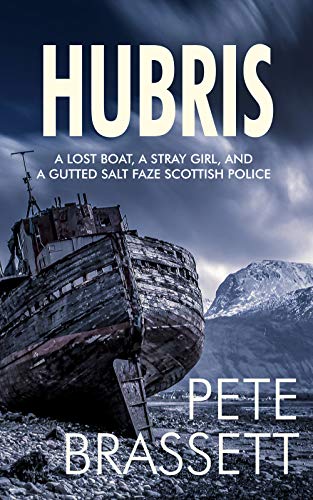
‘Hubris,’ by Pete Brassett

I’ve been reading Pete Brassett’s Inspector Munro mysteries for a while. I’m not sure I’m entirely on board with the new turn the series has taken, though. Our former hero, heretofore a paragon of physical fitness (mountain running was one of his favorite sports) has suddenly grown old. He’s had a heart attack and is retired – though he’s happy to assist his former subordinates on his own time.

So now the central character is Inspector “Charlie” West, a woman from London who overcame alcoholism after moving north to Scotland. She’s not a bad character, but it seems like everybody’s doing female detectives these days, and it annoys me.

Anyway, the latest book in the series, Hubris, involves a beached fishing boat which a farmer discovers on the shoreline of his property. Looking inside, he finds a man in the hold, gutted like a fish. Forensic evidence indicates the presence of drugs.

Meanwhile, that same farmer’s daughter has gone missing. Why did the family wait to alert the police?

Unsuspected connections will tie the two cases together, and old secrets will resurface to devastate lives. But the detectives are on it, and Inspector Munro will be on hand to provide guidance as well.

Hubris is a good, workmanlike police procedural, with only minimal objectionable content. The series is worth following.

A dishonest ad

Public school in Anacortes, WA, 1904. Photo in public domain.

In the time of quarantine: My private peeve today: A public service ad on IMDb.

I’ve been streaming TV on Amazon Prime, which also gives me limited free access to the IMDb channel. Only you have to put up with ads. I can live with ads.

But there’s one public service ad they’ve been running that annoys me. I don’t know if it’s been running anywhere else.

It’s an ad for some kind of educational organization. It features various colorful vignettes of little kids having a wonderful time learning in school.

My tolerance for cute kids is limited, but I can handle that. It’s the music that annoys me.

What they play over the ad is Pete Seeger’s classic folk/protest song, “What Did You Learn in School Today?”

The overall effect of the ad is to say that public schools are magical places, where the kids learn good, wholesome things.

Which is pretty much the opposite of what the song is about. The song goes back to the 1960s. Pete Seeger, the composer, was the godfather of the American folk music movement, which was really huge in the early ‘60s. I was a big fan. I wasn’t, however, aware back then of the basic purposes and motivations of the movement. Most (if not all) of its leaders (especially Seeger) were communists and fellow travelers.

The lyrics of the full song portray a dialogue between a parent and a little boy who has come home from school. Asked what he learned in school today, the boy tells about how he learned that “Washington never told a lie.” And how war is glorious and relatively safe, and “someday I might get my chance.”

In other words, according to the original song, the public school is a brainwashing center that indoctrinates children into unthinking loyalty to the capitalist system, and prepares them to be cannon fodder in useless, imperialistic wars.

The ad I’ve been seeing on IMDB is dishonest on two levels. First of all, it pretends that the song is not satirical, but sincere.

Secondly, now that the Left has taken over the educational system, it attempts to use a protest song as propaganda for perpetuating a new establishment.

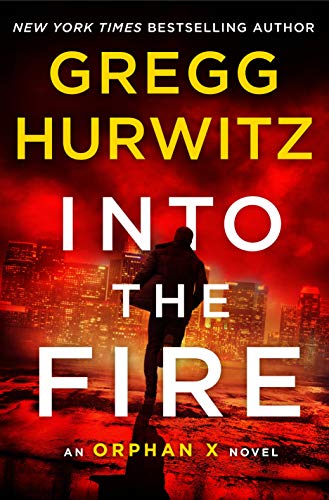
‘Into the Fire,’ by Gregg Hurwitz

“I understand you think that,” Evan said. “And your track record has given you good reason to believe that you’re scary. You’ve got the look down. The manicured tough-guy beard. The handiwork carved into your skin. But I want you to do something. Look at me. Look at me closely. And ask yourself: Do I look scared?”

First of all: I. Loved. This. Book.

You may have seen my earlier reviews of Gregg Hurwitz’s Orphan X novels. Orphan X is Evan Smoak, formerly part of a top secret, very elite group of special agents for the US government. Recruited from orphanages and given new identities, trained for stealth and secrecy and lethality, they were the ultimate deniable weapons. But Evan managed to get free of the program, and now he lives a secret life. He lives in a secure penthouse in Los Angeles, but officially does not exist. As a kind of personal penance, he rescues people from impossible problems. When a job is done, he gives each rescuee a secret phone number. They are to find one – only one – other person who needs similar help, and give them the number. But now Evan feels he’s ready to start a new chapter. His next rescue will be his last.

It will also be the toughest he’s ever faced.

Max Merriweather, the client in Into the Fire, seems like an unlikely character to be involved in anything important. He’s a broken man, living a marginal life as a manual laborer. Once he had a marriage and hopes for the future, but it all fell apart on him.

Even his own family ignores him, leaves him out of things. So he was surprised when his cousin Grant, the golden boy of the family, entrusted him with an envelope. In the event of his death, Grant said, Max is to deliver that envelope to a certain reporter.

But events have made that impossible now.

So Max slips into a café to think about his problem. And there a young man sits down across from him and says he’s noticed he’s upset. And if he is, if he has an impossible problem, he knows someone who could help. So Max calls The Number, and Evan answers.

Ever have one of those days when you do one job, and it uncovers a bigger job that also needs doing, and that one reveals an even bigger one, and so on? This case is like that, only each problem involves bigger, more powerful criminals and greater dangers. And along the way, Evan somehow suffers a concussion, and so has to operate in such a way as not to hit his head again. Sleep would help, if he had any time for sleep.

Other readers may not respond to Into the Fire the way I did. This book seemed calculated to push all my personal buttons and elicit profoundly personal responses. I was terrified at some points, and my spirit soared at others. This book isn’t just about uncovering crime, it’s about people overcoming trauma, moving out of their comfort zones, and opening their hearts to risk-taking.

I give Into the Fire my highest recommendation. You should be aware of obscene language and intense, violent situations.

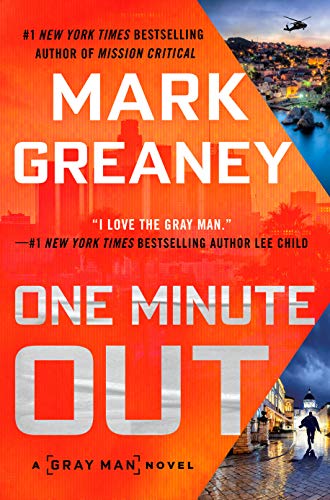
‘One Minute out,’ by Mark Greaney

I think a moment about my own actions, then say, “I’ve learned something in my years doing what I do. If you don’t feel guilt, then you can’t change. Guilt can be a driving force for good, for doing what’s right. Or it can be a limiting force. Something that causes you to throw away right and wrong, to justify yourself. That’s the weak way to deal with your conscience. The determining factor in whether guilt locks you into evil or spurs you on towards good is your own inner strength. Your own good moral compass.”

The greatest trope of the thriller genre is perhaps its most improbable – the man of violence who somehow keeps his moral center, who is not corrupted by his bloody work.

No thriller hero exemplifies this principle more than Court Gentry, hero of Mark Greaney’s “Gray Man” series. Court is a former CIA asset, trained and employed for many years as a dark ops assassin. He managed to escape from that life and now operates on his own. Except that he ended up having to call on his old handlers for assistance, and now he owes them favors. So he works for them occasionally again – off the books.

But he has one supreme rule: he only kills bad guys.

It’s a freelance job he’s on as One Minute Out opens. He’s in Croatia, assassinating a former war criminal. Simple job, easy in, easy out. Only he discovers what his target is doing – he’s guarding a group of young women who are being trafficked as sex slaves. He wants to liberate them all, but they refuse. If they run away, their families will be punished, they tell him. And now they themselves will be punished, just because he was here and caused trouble.

Court ought to just go home and forget it, but he can’t. Once he’s seen this evil, he has to do something about it. Along the way he will meet a remarkable woman, sister of one of the captives, on her own crusade against human traffickers. But they have no idea what kind of power and influence they’re up against.

One Minute Out is a fascinating story, but (like most thrillers, but here more than usual) the story suffered (for me) through its sheer improbability. It’s a smart fictional technique to stack the odds against the hero to seemingly impossible heights. But here the challenges pass the limits of the plausible (for this reader). I have limits in my suspension of disbelief, and this book came pretty close to them. Still, I’ll probably read the next one.

For all my quibbles, One Minute Out was a rousing tale, with lots of optimism built in. Cautions for language and disturbing themes.

‘Bloody Genius,’ by John Sandford

Virgil had never seen a purely ideological murder, Republicans being too cautious, Democrats generally being bad shots.

I don’t like John Sandford’s Virgil Flowers character as much as I like his more famous detective, Lucas Davenport. But I quite enjoyed Bloody Genius, the latest in the Flowers series. I notice that it’s gotten a lot of poor Amazon reviews, but I had a good time.

Virgil Flowers is a deceptively laid-back agent for Minnesota’s Bureau of Criminal Apprehension. He dresses like an aging rock musician, and goes fishing on company time, but he closes cases.

This time he’s called to Minneapolis (which he hates; rural Minnesota is his stomping grounds) to investigate the murder of a famous genetic researcher at the university, who was battered to death in his study carrell in the library. No motive is apparent, and the murder weapon is uncertain – though his heavy laptop computer is missing.

Virgil probes the murky waters of academic rivalries, and the victim’s sexual escapades, and his family relationships. But the real culprit and the real motive will be new ones in his experience.

As often happens with these books, they take me to places I’m familiar with, at least to some extent, and I enjoy that. And I like Sandford’s observations of the world, though Flowers’s eyes – quite often they’re politically incorrect.

I was surprised by the observation, at a couple points, that the University of Minnesota’s team colors are red and gold. Even I, the opposite of a sports fan, know they’re maroon and gold.

But I particularly liked Harry, an old guy Virgil meets in a bar. Harry informs Virgil that he can recite “The Cremation of Sam McGee” and “Gunga Din.” As it happens, those were my performance pieces back in the day. Harry might almost be me, except that I don’t hang out in bars.

As always, cautions for lots of foul language and adult themes.

Amazon Prime Review: ‘Bosch,’ Season 6

Barrel, Bosch, & Crate, photo credit: Lacey Terrell, IMDb

Has it actually been six years we’ve been enjoying Amazon Prime’s outstanding Bosch series? This isn’t exactly the world, or the characters, you’ll find in Michael Connelly’s bestselling crime novels, but it’s true to the spirit of the exercise. And Titus Welliver, as I’ve often said, has the character of Harry Bosch nailed.

This season, like the previous ones, is based on more than one book. So you’ll need to pay attention to keep the multiple story lines straight. Plot lines include the murder of a scientist near the famous Hollywood sign, which at first looks like part of a terrorist act by right-wing extremists. But it’s a lot more complicated than that, and police mistakes lead to serious blowback. There’s also a cold case, one of Harry’s “everybody matters” crusades, in which he tries to find the murderer of a teenaged street prostitute, attempting to give her mother some closure. And Harry’s partner Jerry Edgar is deep in an investigation of Haitian street gangs, which brings up bad memories of his own childhood in Haiti and leads him to contemplate crossing some lines.

It’s all intense, and fascinating, and compelling. A couple of points linger with me. I appreciated the expanded role for the Mutt ‘n Jeff detective team known as “Crate and Barrel,” older guys who started out pretty much as comic relief, but are now being permitted to demonstrate the qualities that earned them their gold shields in the first place.

Also the series took an interesting approach to its Alt-Right extremists. Although they’re clearly in the wrong, they’re given a chance to make their case, and they’re not entirely unsympathetic. Also – very oddly – they’re depicted as a multiracial group. I appreciate that touch, though I don’t find it very plausible (could be wrong).

Anyway, I consider Bosch one of the best series on any entertainment delivery system at the present time. Extreme cautions for language and mature themes.

For your spectation

I have a new column up at The American Spectator Online today. This one (written before the Plague descended) considers the old TV show, “The Adventures of Jim Bowie” in light of the New York Times’ “1619 Project.”

In fact, America has a long history of self-criticism when it comes to Native American issues. Sticking to popular culture, I can cite a few examples out of my own limited viewing and reading.

Read it all here.