If your taste runs to Florida beach bum private eyes in the tradition of John D. MacDonald’s Travis McGee, there seem to be plenty to choose from. I suppose it’s the lingering McGee mystique that inspires them, and I’m not complaining. H. Terrell Griffin’s Matt Royal seems to be another example, and I liked him just fine.
Matt Royal, the hero of Longboat Blues, is a former lawyer. He used to fly high, working around the clock, making the big bucks, loving the game. But his obsession finally destroyed his marriage, and then he went into a tailspin. His ex-wife’s intervention and one last high-paying case turned him around. He retired with enough money to live in his adopted home of Longboat Key, Florida (near Sarasota), fishing and loafing and enjoying a low-stress life in paradise.
Until one day a woman in his social circle is strangled to death, and her body is found on the condominium balcony belonging to his friend, Logan Hamilton. Desperate and without resources, Logan asks Matt to defend him. Matt can’t say no. But Logan has been framed so neatly that it will involve a lot of investigating to identify the real killer, who is well protected.
I liked Matt Royal as a hero right from the start. He’s thoughtful and easygoing, and (if I understood certain hints in the text) essentially conservative. There was plenty of action in the book, and the mystery was engaging (though I figured out the real villain fairly early – the author needs to work on camouflaging his clues). I have read the second book already and am working on the third. Good stuff. I didn’t notice any offensive language; there were some typos, though.
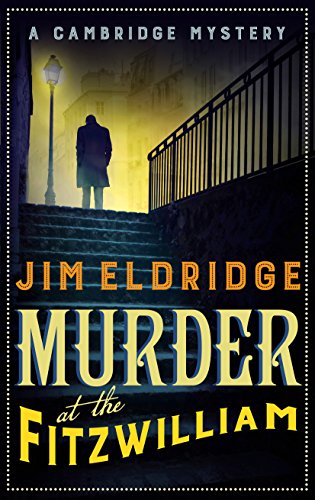
Sometimes a book shows promise, but the author appears to have bitten off more than they can chew. Such is the case – in this reader’s view – with Jim Eldridge’s Murder at the Fitzwilliam, first in a series starring detective Daniel Wilson.
Danny Wilson used to be a Scotland Yard detective. He worked under the well-known Inspector Abberline during the Jack the Ripper investigation. Having grown disillusioned with the official police, he is now a “private enquiry agent.”
He’s invited up to Cambridge by the director of the Fitzwilliam Museum, which boasts an impressive Egyptian collection. A man has been found dead in one of their sarcophagi. The man looks Middle Eastern, but carries no identification. The local police dismiss the matter as an accident suffered by a burglar, but the director suspects more is going on. For one thing, one of their mummies has disappeared.
An employee of the Museum, Miss Abigail Fenton, who discovered the body is eager to help. Danny finds her intelligent and resourceful. Together they start asking questions, as attraction grows between them – resisted by them both.
The essential story here could have worked, I think, but the author wasn’t up to it. I thought the characters were well-conceived in themselves, but they were badly limned. A person’s feelings and attitudes can be suggested in a narrative, without the necessity of spelling everything out for the reader. You need to trust your reader’s intelligence. This book tells us too much and suggests too little. And the romance story line was clumsily executed.
Clearly a fair amount of research went into Murder at the Fitzwilliam, but not enough to be convincing. The dialogue (already clunky) often fell into modernisms. And there were historical errors – the author thinks a photograph could be printed in a newspaper the next day in 1894 – I’m fairly sure you couldn’t do that yet.
I think author Eldridge shows promise as a novelist, but Murder at the Fitzwilliam didn’t work.
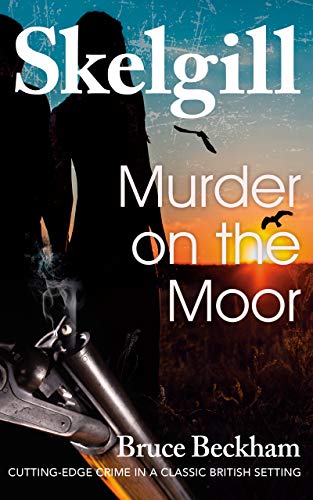
There are few surprises for the loyal reader in Bruce Beckham’s latest Skelgill mystery, Murder On the Moor. But surprises aren’t what we look for, any more than Skelgill himself looks for novelty when he spends long hours fishing. The exercise is itself the pleasure.
Dan Skelgill is, as you may recall, a police detective in rural Cumbria. He is supported by his regular team, DS Leyton, a transplanted Cockney from London, and DS Jones, an attractive young woman. Skelgill and Jones almost flirt occasionally, but he’s older than she and doesn’t seriously consider it. Essentially he’s a loner.
In Murder On the Moor, the team is called to investigate the theft of some jewels from the stately home of a local nobleman. Lord Edward Bullingdon. His lordship is married to a much younger wife, a fashion model with expensive tastes and a wandering eye. She even makes a play for Skelgill when he interviews her. He’s not impressed with security at the castle, and especially dislikes Lawrence Melling, the predatory gamekeeper. Local conservationists are concerned about a pair of rare birds of prey nesting on the estate. Melling has made it clear he considers the conservationists a nuisance, and the birds a danger to the grouse they raise for hunting, a necessary income for the operation.
Then Melling is murdered in a very suggestive way, and it’s up to Skelgill and his team to sort through a complexity of possible approaches and alibis to discover the killer.
I’ll have to admit I found Murder On the Moor a little slow around the middle. A lot of the plot hung on the physical layout of the estate, which I never quite mastered. Things picked up toward the end. I enjoyed it all in all, and there was no obscenity. I’ll read the next one.
“We of the Council, convened in full, have decided that man in good conscience can no longer permit this wanton destruction of our fellow creatures, whose right to exist is fully as great as ours,” the decree states. “It is therefore decreed that men, in spontaneous free will and contrition, voluntarily accede to the termination of their species.” The operative word is contrition. Guilt is a force eating people from inside. Citizens are too cowed, too stricken with guilt, to mount any organized resistance to the Council’s diktat. Although not all have chosen to give up on life, everything is in ruins and life expectancy for citizens is low indeed.
Our friend and instigator Dave Lull is well aware of my fondness for the late author D. Keith Mano. He sent me a link to this recent article from the National Review on one of Mano’s nearly forgotten but uncomfortably relevant novels, The Bridge.
Perhaps the scenario evoked in The Bridge is too general in nature to belong to Mano or to any one writer. But anybody who reads Cormac McCarthy’s 2006 novel The Road and Mano’s The Bridge, published 33 years earlier, will quickly see how much the later novel has in common with the earlier one.
I thought myself audacious (and feared I was prescient) when in my Epsom novels I postulated a near future in which “Extinctionism” was a popular movement. I in fact cherished a hope that I could manipulate Fate by exploiting its reluctance to ever prove me right. But we’ve seen Extinctionism begin to take hold in recent years, and one looks at imagined futures like those of The Road and The Bridge, today, with growing alarm.
The Bridge, writer Michael Washburn notes, is out of print but can be obtained online. It sounds intriguing, but – honestly – I’m afraid to read it. Also, look at the price on Amazon!
London in 1896, not the sophisticated, charming London of Sherlock Holmes, but the grungy, hardscrabble London of Holmes’s jealous rival, low-rent private investigator William Arrowood. Fat, heavy-drinking, gout-suffering Arrowood, who reads people’s faces and applies practical psychology to problems of crime. And who only seems to get noticed by the newspapers when he’s accused of some impropriety.
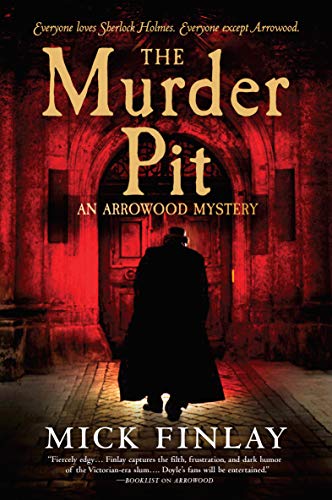
In The Murder Pit, second book in the series, Arrowood is hired by the Barclay family to make contact with their daughter Birdie. Birdie is mentally challenged, but is married to a son of a farming family in a village near London. For some reason her in-laws are preventing her from communicating with them, and they are worried about her.
It seems to be a truism in Arrowood’s life that all his clients lie to him. He knows the Barclays are concealing something. But it’s a job, and perhaps he can do some good. He and his assistant Barnett find the village economically depressed, and the farm people secretive, not hesitating to use violence to protect their privacy. Further investigation will reveal ties to a local insane asylum, and an important witness will disappear suspiciously. If Arrowood can unravel the mystery before the newspapers hound him out of business, he will be in a position to uncover a scandal at a very high level of society.
There are many good things to say about The Murder Pit. It will teach you much about the treatment of the mentally challenged in the 19th century, and of social conditions among the poor in the same period. My problem with this book (and the one before it) is that there’s not much fun here. I didn’t like the hero much, and there’s a sense of frustration and injustice throughout. Very likely it’s all true, too. But I don’t think I want to spend money on more of these stories.
“Your deductions are more like Sherlock Holmes than you think,” I said when we were walking again.
“No, Barnett. I decipher people. He deciphers secret codes and flower beds. That man and I are not alike, and frankly I’m getting tired of your jibes about him.”
William Arrowood, hero of Mick Finlay’s new series of Victorian mysteries, of which Arrowood is the first, lives in the same fictional world inhabited by Sherlock Holmes. But Arrowood deeply resents his more famous rival, envying him his high fees and elite clientele. Holmes deducts through reason, but Arrowood likes to point out that real people are not reasonable. He himself is a self-taught psychologist (though he doesn’t use that word). He observes people’s moods and infers motives. It’s not an exact science, though, and he often makes mistakes. Which can be tragic.
Unlike the ordered world of the Holmes stories, which the modern reader can easily imagine comfortable and relaxing, Arrowood lives in chaos on a lower level of society. He inhabits cramped rooms behind a pudding shop, wearing shoes that don’t fit because new ones would cost money. He pines for his wife, who has left him, clinging to a blind belief that she’ll come back someday. He is fat, bald, bespectacled, and ugly. Also an alcoholic. His assistant and chronicler Norman Barnett is a big bruiser who feels guilty about his past. His own wife died recently, and he hasn’t been able to bring himself to tell anyone.
Sherlock Holmes would not have taken the case brought to them by a young French woman, Miss Caroline Cousture. She is looking for her brother, who has disappeared. Arrowood agrees to search for him because he needs the money, though he’s sure Miss Cousture has lied about something. He grows more concerned when he discovers that the brother has been working at a brewery owned by Stanley Cream, a powerful criminal kingpin with whom he has tangled before – at great cost. And when his best witness is ruthlessly murdered before his eyes, the case gets intensely personal.
I’m of two minds about this book. It appears to be well-researched, but the world it recreates is ugly, filthy, cramped, and uncomfortable. And William Arrowood, though he has his positive characteristics, is not really a character you long to get to know better.
But I went ahead and bought the next book in the series. Arrowood is worth reading, if you don’t mind ugly realism. Cautions for disturbing situations. References to Christianity were not disrespectful.
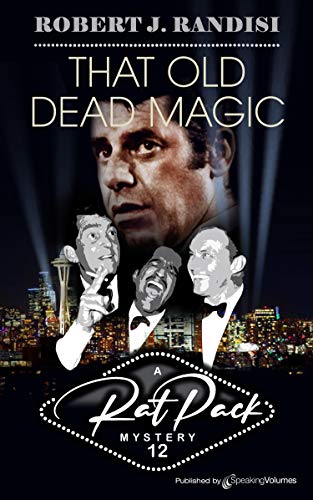
I’m old enough to remember the 1960s, when Frank Sinatra was the epitome of cool, the guy every heterosexual male wanted to be. Along with his buddies Dean Martin, Sammy Davis Jr., and a few others, commonly known as the Rat Pack, he held court in Las Vegas like a king. Journeyman author Robert Randisi is writing a series of mysteries based on that time and place. I figured I’d try one of them, That Old Dead Magic. Might be fun, I thought.
Alas, it wasn’t that much fun.
Eddie Gianelli, known as Eddie G. to his friends, is a fixer for the Sands Hotel, where the Rat Pack used to perform up until recently (1965). He solves problems, caters to big gamblers’ tastes, and runs interference for celebrities. Now the Rat Pack’s slot at the Sands is being filled by Sammy Davis Jr. and comedian Jerry Lewis, temporarily teamed up. Eddie G. has never cared much for Jerry Lewis’ shtick, so he doesn’t plan to see the show. But when Sammy asks him for his help in “keeping Jerry from killing somebody,” he goes to see them.
He finds Jerry Lewis the least funny person he’s ever met. Also one of the least personable. But he has a problem. Somebody, he says, is blackmailing him. He won’t say what it’s about, but he wants Eddie to make the payoff delivery, because he can’t trust his own temper.
At the same time, Eddie gets a request from his private eye friend, Danny Bardini. Danny is investigating the disappearance of several young women in town. He needs a pretty girl to act as bait. Eddie suggests a waitress he knows, and she’s happy to get the work. Except that when she disappears completely after a few days, he feels responsible.
In his capacity as Vegas fixer, Eddie has made lots of interesting friends. Not only the Rat Pack and other big stars, but the mobsters who actually own the town. His relations with the police are more ambivalent, especially with a particular corrupt detective. So when it comes down to direct action against white slavers, Eddie turns to his gangster friends rather than the law. It’s a little strange to read a story where mobsters are the white knights.
The plot of That Old Dead Magic was competent enough, but I found the book surprisingly barren. When you’re writing about old Vegas, people expect you to describe the glamor, along with some revelation of the essential tawdriness. But here the descriptions are very bare bones – Vegas is bright and colorful by night, but by day it’s worn out and shabby. That’s it. No poetry. The story had no texture for this reader – I got no sense of atmosphere. And the characters were barely described – this guy was tall, this guy was fat. That’s about it. The only characters I could picture were the famous ones I’d seen on TV.
That Old Dead Magic felt like the skeleton of a story to me. I found it rather disappointing.
“Rick, you seem like an intense, but decent, fellow.” He looked at me with cop eyes. Military, civilian, they all looked the same. Asking questions in silence. “From the looks of the bump on your head and your black eyes I’m guessing you recently sustained a concussion and are probably still in pain. But you’ve never shown evidence of it. Your eyes stay targeted on that screen. Not just intense, but manic. You’re focused on a mission. Tunneled in. I’ve seen it in enlisted men and COs. I’m worried you’ve lost your peripheral vision. You’re target blind. Blind to everything but your target. Like a zealot. That’s a dangerous way to live, Rick.”
I’ve had a feeling, all through Matt Coyle’s fascinating but troubling Rick Cahill series of mysteries, that the whole project was working up to some kind of epic climax. Along the way, a lot of bad stuff happened, and some of the books were pretty heartbreaking. But I think this last book, Lost Tomorrows, makes it all well worth it (though another Rick Cahill book is coming out down the line. But that one will have an altered scenario, for reasons that will become clear to anyone who finishes this one).
Rick Cahill lives in La Jolla, California, where he grew up and his father was a cop (disgraced, though now cleared posthumously by his son). But Rick’s own short police career was in Santa Barbara. There his wife was murdered and he was arrested for it. The case was dropped, but Rick was kicked off the force anyway. And, for reasons he tells no one, he blames himself for her death anyway.
A call from Santa Barbara persuades Rick to go back after all these years. Krista Landingham, the policewoman who trained him, has been killed by a car in a hit-and-run pedestrian accident. Krista’s sister Leah asks him to come up for the funeral. Rick knows he has only enemies on the Santa Barbara force, but he feels obligated to pay his respects. Just as he paid his respects at his wife’s funeral, in a church filled with devout enemies.
He only plans to attend the service and go home, but Leah Landingham asks to speak with him. She doesn’t believe Krista’s death was an accident. She was working on a big case, and there was no reason except work for her to have been in that place at that time.
Rick tries to explain that he’s the worst person in the world to do this job. Every cop in Santa Barbara hates his guts. Leah replies that she’s actually already hired the retired policeman (now a private investigator) who arrested Rick. He is now convinced Rick was innocent, and is willing to work with him – though he still holds a grudge.
This is actually the kind of situation Rick can’t resist. Full of self-hatred, he thrives on hostile environments. He will soon discover that Krista had been working on his wife’s cold case. Is it possible she was getting close to the truth, to uncovering the true culprit? Was she killed for that? Rick will endure pretty much anything to learn the answer to that question, and then he plans to exact his own brand of justice.
Rick has always followed his father’s rule, to do right, even if it goes against the law. But what if his reasoning is off? What if he doesn’t know what’s right?
Lost Tomorrows is a gripping, explosive book full of dread and moral complexity, ending with a shocker that’s nevertheless quite satisfying. I particularly liked the way the story questioned subjective judgments.
Cautions for intense violence. I didn’t notice much (or any) objectionable language. Occasional references to Christianity were respectful.
I’d noticed the car when I’d arrived three hours earlier. A buddy in high school had owned a similar Camaro without the stripes. We’d loved the car and marveled how something built ten years before we were born could be as cool as we were. I haven’t been cool for twenty years, but the ʼ69 Camaro still is.
Plowing through Matt Coyle’s dark mystery series about Rick Cahill, guilt-ridden, self-destructive private eye in La Jolla, California.
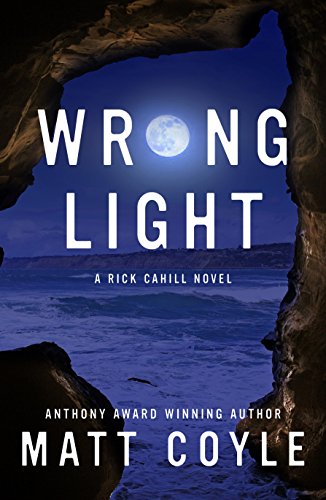
In Wrong Light, Rick is hired by a local radio station manager to protect his station’s big star – Naomi Hendrix, a sultry-voiced nighttime talk show host. Naomi turns out (surprisingly) to be as beautiful as she sounds, but she shuns the public eye. And she’s adamant that the police should not be told about the threatening messages she’s gotten. She has a secret past, and she keeps it close.
At the same time, a Russian Mafia assassin to whom Rick owes a favor instructs him to start a nighttime surveillance. It interferes with his job, but you don’t say no to these people. He knows they’re using him as a pawn in some rotten scheme, and he’ll need to figure out what’s going on before he finds himself the fall guy.
And just when he thinks Naomi Hendrix’s stalker is probably harmless, a girl disappears and Rick’s suspicions begin proving horribly true.
This will not end well.
Things work out okay in some ways, pretty awful in others. I’d list Wrong Light as one of the darker books in this dark series. But I’m sticking with it. I’m really concerned now to see what will happen next.
I’m finding Matt Coyle’s Rick Cahill mystery series fascinating. Rick Cahill, La Jolla, California private eye, possesses an excellent Raymond Chandler-style narrator’s voice. His essentially pessimistic world view is mitigated by the suffering he’s endured. A lot of that suffering is self-inflicted, because he still blames himself for the death of his wife. She was murdered, but not by him. Nevertheless, she’d still be alive if he hadn’t made one big mistake.
Another memory that eats at him is of his father. Rick’s father was a policeman in La Jolla, an upright and respected man. But he was thrown off the force for corruption, and crawled into a bottle to die. Rick can’t forgive himself for rejecting his dad at the end, but also deeply resents him for his failures.
At the start of Blood Truth, the new owner of Rick’s boyhood home discovers a hidden safe in a wall and invites him to come pick it up. Rick has the safe opened by a locksmith and finds three items in it – a “Saturday Night Special” pistol with two bullets fired, an envelope full of money, and the key to a safe deposit box. When Rick locates the box the key fits, he finds it contains two spent .25 caliber cartridges, suitable to the gun in the safe.
Rick’s code is inflexible – he means to find out what all this means. He assumes it’s evidence of his father’s corruption. It doesn’t matter – the truth needs to come out. People tend to get hurt when Rick goes on crusades like this, and he’ll be sorry about that later. But the truth, first and last.
Meanwhile, Rick’s old girlfriend Kim, for whom he still has feelings, asks him to follow her husband. She thinks he’s having an affair. It turns out to be more than that – the husband’s not just in bed with another woman, he’s “in bed” with some of the most dangerous people in the state, way over his head in a shady business deal going murderous. But you can’t scare Rick off – he’s the kind of tough guy who’ll sneak out of the hospital while being treated for a knife wound, bringing his saline bag with him.
No Rick Cahill story is optimistic, but this was one of the more hopeful in the series. There’s a long narrative arc playing out through these books, as Rick faces down his old personal devils one by one. The total effect is positive. I recommend Blood Truth, if you can handle the dark atmosphere.
Websites store cookies to enhance functionality and personalise your experience. You can manage your preferences, but blocking some cookies may impact site performance and services.
Essential cookies enable basic functions and are necessary for the proper function of the website.
Name
Description
Duration
Cookie Preferences
This cookie is used to store the user's cookie consent preferences.
30 days
These cookies are needed for adding comments on this website.
Name
Description
Duration
comment_author
Used to track the user across multiple sessions.
Session
comment_author_email
Used to track the user across multiple sessions.
Session
comment_author_url
Used to track the user across multiple sessions.
Session
These cookies are used for managing login functionality on this website.
Name
Description
Duration
wordpress_logged_in
Used to store logged-in users.
Persistent
wordpress_sec
Used to track the user across multiple sessions.
15 days
wordpress_test_cookie
Used to determine if cookies are enabled.
Session
Statistics cookies collect information anonymously. This information helps us understand how visitors use our website.
Google Analytics is a powerful tool that tracks and analyzes website traffic for informed marketing decisions.
Used to monitor number of Google Analytics server requests
10 minutes
__utmb
Used to distinguish new sessions and visits. This cookie is set when the GA.js javascript library is loaded and there is no existing __utmb cookie. The cookie is updated every time data is sent to the Google Analytics server.
30 minutes after last activity
__utmc
Used only with old Urchin versions of Google Analytics and not with GA.js. Was used to distinguish between new sessions and visits at the end of a session.
End of session (browser)
__utmz
Contains information about the traffic source or campaign that directed user to the website. The cookie is set when the GA.js javascript is loaded and updated when data is sent to the Google Anaytics server
6 months after last activity
__utmv
Contains custom information set by the web developer via the _setCustomVar method in Google Analytics. This cookie is updated every time new data is sent to the Google Analytics server.
2 years after last activity
__utmx
Used to determine whether a user is included in an A / B or Multivariate test.
18 months
_ga
ID used to identify users
2 years
_gali
Used by Google Analytics to determine which links on a page are being clicked
30 seconds
_ga_
ID used to identify users
2 years
_gid
ID used to identify users for 24 hours after last activity
24 hours
_gat
Used to monitor number of Google Analytics server requests when using Google Tag Manager
1 minute
_gac_
Contains information related to marketing campaigns of the user. These are shared with Google AdWords / Google Ads when the Google Ads and Google Analytics accounts are linked together.
90 days
Marketing cookies are used to follow visitors to websites. The intention is to show ads that are relevant and engaging to the individual user.
A video-sharing platform for users to upload, view, and share videos across various genres and topics.
Registers a unique ID on mobile devices to enable tracking based on geographical GPS location.
1 day
VISITOR_INFO1_LIVE
Tries to estimate the users' bandwidth on pages with integrated YouTube videos. Also used for marketing
179 days
PREF
This cookie stores your preferences and other information, in particular preferred language, how many search results you wish to be shown on your page, and whether or not you wish to have Google’s SafeSearch filter turned on.
10 years from set/ update
YSC
Registers a unique ID to keep statistics of what videos from YouTube the user has seen.
Session
DEVICE_INFO
Used to detect if the visitor has accepted the marketing category in the cookie banner. This cookie is necessary for GDPR-compliance of the website.
179 days
LOGIN_INFO
This cookie is used to play YouTube videos embedded on the website.