“Like cold water to a thirsty soul, so is good news from a far country.” (Proverbs 25:25, ESV)
There is good news, folks, even now, especially if you’re a C. S. Lewis fan.
There are “new” recordings of C. S. Lewis reading his own work and Chaucer, available from the Rabbit Room Store. That’s surprising in itself, but the source of the recordings is even more remarkable.
In August of 1960, C. S. Lewis’s wife Joy Davidman had been dead for about a month. At that time her ex-husband, William Gresham, traveled to England to see his sons, Douglas and David. It must have been an awkward reunion. Bill Gresham tried hard to get custody of his sons, but “Jack” Lewis strenuously opposed him, winning custody for himself. (According to Joy Davidman’s biographer, she may have exaggerated her stories of Bill’s neglect and abuse. However, it is indisputable that he was an alcoholic.)
However he felt, Bill was gracious enough to ask Jack to read some of his work into the new tape recorder he’d brought along. Jack did so, reading excerpts from Perelandra and That Hideous Strength, and then reading (or reciting) part of the Prologue to The Canterbury Tales in flawless Middle English.
I haven’t bought my copy yet, mostly out of laziness, but I’m going to. I can’t complain about the price – three bucks for the whole caboodle.
Proceeds go to benefit the Marion E. Wade Center, which owns the rights.
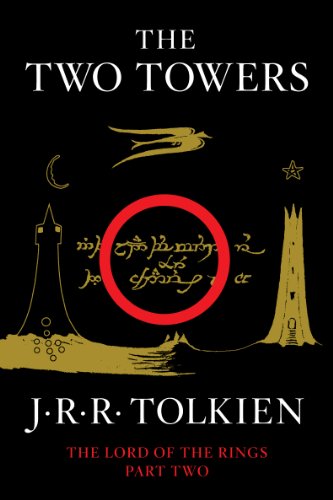
I’m well into The Two Towers now. An anxious nation will be gratified to know that I Have Thoughts.
I noticed – for the first time, I think – the name of the ancient warrior who – we are told – founded the Kingdom of Rohan. His name was Eorl the Young.
This is where I did a little linguistic analysis, based on my fair knowledge of Norwegian and my sketchy grasp of Old Norse.
I figured Eorl must be etymologically related to the Norse word, Jarl, which means a ruler. I was pretty sure that the Norse cognate when used in personal names was “Erl.” I had looked up the meaning of Erling (for obvious reasons) and learned that the name means “young ruler.”
That makes sense, because the “ing” suffix is common in sagas to indicate “the younger,” as in “junior.” Thus the sons of Arne Arnmodsson (whom I mentioned a few days ago in my post on my novel writing) were known as the Arnmodings.
My guesses were verified by the author of this web site, assuming he knows what he’s talking about.
Therefore, when you encounter the name Eorl the Young in TLOTR, think “Erling.”
Did Tolkien have Erling Skjalgsson in mind when he named the character? I have no evidence for that. But I like to think so. Because what I like is extremely important.
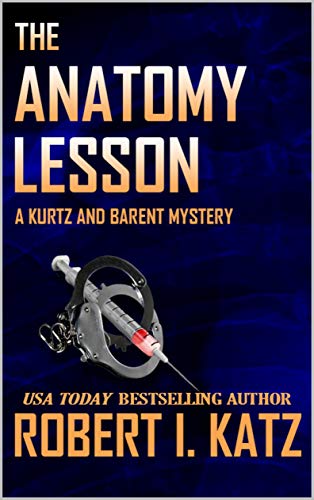
This book showed up as a freebie, and I figured I’d read it before going back to The Lord of the Rings.The Anatomy Lesson, by Robert I. Katz, wasn’t bad at all.
Our hero is Richard Kurtz, a young New York surgeon whose sideline (and a useful one) is martial arts. The Anatomy Lesson is the second book in which he assists police detective Lew Barent in an investigation. The first time constituted the first book in the series.
The mystery starts with what looks like a grotesque practical joke. At a Halloween party for medical students, somebody substitutes genuine cadaver parts for plastic ones that had been set out as decorations. The body parts turn out to come from medical school dissection specimens, but it’s hard to figure out who could have stolen them.
Barent asks Kurtz to inquire into the matter, and one of the people he talks to is Rod Mahoney, a lecturer at the medical school. When Mahoney is murdered in a grotesque manner shortly after that, the motives remain impossible to guess, but soon there is talk of a drug connection.
The story has lots of twists and red herrings; it was challenging. I certainly didn’t figure it out. On top of that, Kurtz and Barent make an interesting team – Barent is the jaded cop who’s seen everything, while Kurtz is young and full of vinegar, and quite enjoys the opportunity to fight bad guys off now and then. Barent is always telling him to stay out of the investigation, but then doesn’t hesitate to call on him when he needs an entrée into the medical world. They’re believable and amusing.
My main problem with this book – and it was purely personal opinion – is that the cause of drug legalization keeps coming up, and the author leaves no question what he thinks. He may even be right – maybe legalization is the only way to mitigate the social disaster – but I’ve never been able to shake the idea that legalizing drugs is a marker of societal surrender and imminent death.
But that’s my opinion. The Anatomy Lesson was an enjoyable read with enjoyable characters. Cautions for the usual.
Tonight, insight into the creative process. Or rather, my creative process.
Because other novelists work very differently from me. They amaze me. Some author friends on Facebook will say, “Well, I only got 1,000 words down tonight. Had the flu and my mother died, but that’s no excuse. Got to punch those numbers up tomorrow.”
Me, at this point I get in about one scene a night. Often only a few paragraphs. After that I haven’t got a clue what comes next, and I won’t know until the next day – maybe. It may take a couple days or a week before I figure out how to coax my characters into going where I need them to go.
It should get better as I get deeper into the plot. Then things will move by themselves. I’m setting up my shots at this point.
Anyway, this is what I’ve been working through recently:
There’s a story (only one) about Erling Skjalgsson that’s not included in Heimskringla. You find it in Flatey Book. I’ve mentioned it here before. It’s the Tale of Erling and Eindridi.
Eindridi was the son of the famous chieftain Einar Tambarskjelve, a very important man. I won’t outline the story tonight, but basically it’s about how young Eindridi gets into a compromising situation with Erling’s daughter Sigrid. Erling is furious, and Eindridi has to undergo the Iron Ordeal (you may recall that ceremony from The Year of the Warrior) to prove that he hasn’t dishonored her. Then old Einar, Eindridi’s father, nearly goes to war against Erling over the insult to his son. But the business is resolved through the two young people getting married.
It’s been my intention from the beginning to include that story in my current Erling book. But there were points I wondered about.
For one thing, another story mentions Eindridi’s wife, and she’s not Sigrid Erlingsdatter. I forget her name, but she’s somebody else.
Now that doesn’t invalidate the story by itself. Wives were a tragically perishable commodity in those days. Childbirth often carried them off. Rich men frequently went through several wives. Still, I found it odd that the connection wasn’t mentioned anywhere else (as far as I know; might have missed something).
Also, I saw Erling and Einar as fairly friendly. Just an assumption on my part, but call it an artist’s instinct.
On the other hand, there is a well-attested marriage alliance that I thought required more explanation. We know that Erling had a daughter named Ragnhild who married Thorberg Arnesson of Giske, son of the powerful Arne Arnmodsson, and one of a group of brothers who swung a lot of weight in the time of King (St.) Olaf Haradsson and his successors.
The Arnesssons were a family divided in Olaf’s time. Some of them supported the king, others opposed him. At the Battle of Stiklestad, where Olaf died, there were Arnesson on both sides.
But Thorberg was one of the pro-Olaf Arnessons. He even went into exile in Russia with Olaf. So why would he marry the daughter of Olaf’s greatest domestic enemy, Erling Skjalgsson?
And I had the brilliant idea – audacious by my mousy standards – of replacing Eindridi with Thorberg in the anecdote. It would achieve narrative economy while solving a problem of motivation.
So I’m doing that. And nobody can stop me.
There was one further problem, though. Last night I had a worrying thought – “Wait! For this to work, old Arne Arnmodsson (Thorberg’s father, if you lost your score card) has to be alive in 1022. But I always had the idea he must have died young.”
This was because there was another brother named Arne Arnesson. And the usual custom in the Viking Age was not to name a baby after a living relative. The old Norse believed that the soul followed the name, you see. So if you named the baby Arne after his father, Papa Arne would likely drop dead. Only one member of the nuclear family at a time was permitted the same name.
But I did some more research and learned that old Arne is believed to have lived until around 1024. So it’s cool. They must have adopted Christian naming practices in the family by the time Arne Jr. was born.
I thought I’d read something less challenging before returning to The Lord of the Rings. So I picked this up…
Victorian London offers a fascinating and atmospheric location for murder mysteries, as Conan Doyle learned to his great (if grudging) profit. Author David Field has begun a new series of mysteries starring a somewhat similar (or reminiscent) team – prominent London physician James Carlyle (nephew, we are told, of Thomas, the philosopher) and Matthew West, an impecunious young Methodist preacher serving London’s poor. We meet them in Interviewing the Dead.
Both happen to be present, out of curiosity, at a lecture given by a spiritualist. The spiritualist makes a prediction – that the spirits of medieval plague victims, whose common grave was dug up during the construction of the Aldgate Underground station, will soon be rising up to take revenge on the living, for the disturbance.
The two men strike up an acquaintance, although they are very different in outlook. Carlyle is the rationalist scientist, and can’t help tweaking Matthew for his faith, which he judges naïve. But they are both concerned – for different reasons – about the spread of superstition among the populace.
Soon reports are coming in of people being terrified by revenants encountered on the streets. Carlyle and West cooperate to apply logic to the problem, and note an interesting fact – all the ghost sightings seem to have involved people who visited pubs owned by a particular brewery. Their inquiries will lead Matthew into considerable danger, both to his personal safety and his career in the church.
I didn’t hate Interviewing the Dead. It was a fairly pleasant read. But it didn’t excite me much either. I’ll give the author credit for being able to write a grammatical English sentence, which is an improvement over a lot of writers today (though there were a couple minor homophone errors). But I found Carlyle hard to like – he’s pretty darn manipulative. Matthew West is OK, though I wasn’t sure of his theology – he hints at not believing in Hell (it’s unclear), and also declares himself in favor or women’s ordination – which I don’t think was even an issue among Methodists at the time. It’s nice, however, I must admit, to encounter a pastor in a novel who isn’t a hypocrite. In spite of all the teasing about the supernatural that goes on between them, Carlyle and West seemed to me kind of dull in their interactions.
But what really annoyed me was the character of Adelaide, Dr. Carlyle’s daughter, whom we are supposed to regard as a romantic object for Matthew. Like pretty much all female Victorian protagonists you run across today, she’s a fervent feminist. I suppose we’re meant to admire that, but honestly, the girl is a bore. She’s rude to all men on all occasions, and can’t speak two sentences without making a speech about being oppressed. I have to concede that the author strongly suggests that her prickliness has more to do with emotional frustration than with ideology, but I still found it impossible to root for the romance.
For that reason, I’m not strongly tempted to renew my acquaintance by reading the next book.
But your mileage may vary. Interviewing the Dead wasn’t bad, really. Just not to my taste.
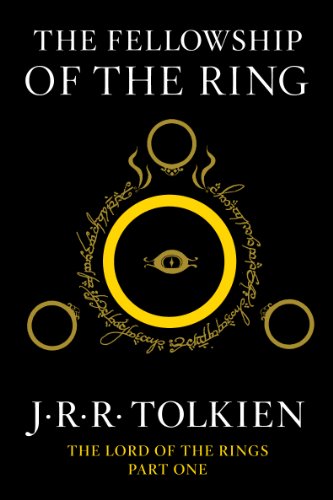
I finished reading The Fellowship of the Ring over the weekend. One can’t really review a work of this eminence. I can only write appreciations. One thing I noted was a detail I’d forgotten, one that was left out of the movies, and it’s no mystery why. It’s when Gandalf meets with Saruman at Orthanc, and learns his former master’s perfidy:
‘”For I am Saruman the Wise, Saruman Ring-maker, Saruman of Many Colours!”
‘I looked then and saw that his robes, which had seemed white, were not so, but were woven of all colours, and if he moved they shimmered and changed hue so that the eye was bewildered.
‘”I liked white better,” I said.
‘”White!” he sneered. “It serves as a beginning. White cloth may be dyed. The white page can be overwritten; and the white light can be broken.”
‘”In which case it is no longer white,” said I. “And he that breaks a thing to find out what it is has left the path of wisdom.”’
This is an amazing passage. Saruman the White, whose white color had symbolized his supreme wisdom, has broken the white color down into its constituent prismatic hues.
He’s made it into a rainbow.
We see rainbows all the time today, in churches that believe they’ve “deconstructed” traditional morality and theology.
Was Tolkien an actual prophet? Did he foretell the future of the church?
My close personal friend (well, I’ve met him in actual space and time, which makes us pretty close by 2020 standards) Hunter Baker, of Union University, has a useful article in Touchstone in which he discusses an issue a lot of us are thinking about these days — is liberal democracy failing? Is the experiment over?
Nevertheless, let me, without rehearsing all the relevant developments, simply say that many of those structural limitations have now been overcome, through either amendment, expansive court decisions, or shrewd use of the powers to tax and spend. As a result, a constitution designed to embody Cicero’s wisdom for harmonizing diverse interests and avoiding the excesses of the various classical forms of government has been substantially transformed into something much closer to an ordinary majority-rule democracy. When one notes the calls for the termination of the electoral college, the politicization of the Supreme Court, and the discrediting of federalism due to the South’s intransigence with regard to both slavery and civil rights, it becomes clear that we are reverting to the mean as our Ciceronian (and even Calvinistic, as I’ve written elsewhere) constitutional democracy becomes more typical.
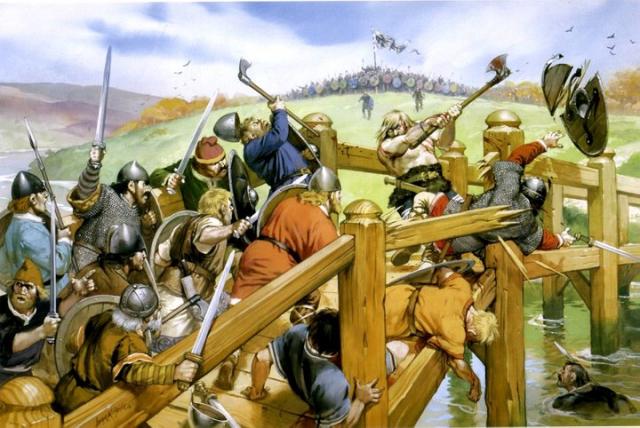
The lone Viking at the bridge, by the great Angus McBride
More Viking stuff tonight.
Today is the anniversary of the Battle of Stamford Bridge, traditionally (though somewhat arbitrarily) reckoned as the end of the Viking Age. It happened near a village not far from York, in the year 1066. King Harald Hardrada of Norway, who was getting on in years, had made a pact with Toste, the estranged brother of King Harald Godwinsson of England, to conquer the country. Harald believed he had a technical right to the throne as legal heir to his nephew, who’d had a slim claim.
According to the saga, Harald brought a fleet of 300 ships from Norway. On September 20 they defeated an English army at Fulford, and then accepted the submission of Northumberland. They were on their way to receive hostages on the 25th when they were suddenly attacked by the army of King Harold Godwinsson, who had made a forced march from the south.
The English must have been exhausted, while the Norwegians would have been relatively fresh. However, the Norse were not prepared for battle and many had left their mail shirts behind, because the day was warm and they expected no trouble. The battle, by all accounts, was nevertheless a hard-fought one.
An interesting detail is a story found in English sources (but not, surprisingly, in Norwegian ones as far as I know) about a warrior who defended the bridge with an axe all alone for an extended period of time, giving the Norwegians time to form up their ranks. He was killed at last by a spear thrust from below.
According to the saga, the Norwegians might have won if King Harald Hardrada had not taken an arrow in the throat, finishing on English soil a military career that had stretched from Norway to Russia to the deserts of the Middle East. But that’s how saga writers tell stories – I wouldn’t be surprised if the truth was more complicated. In any case, it’s undisputable that Harald was killed there.
One final item, often overlooked, might be of interest to our readers. There was a final (third) stage of the battle, after Harald’s death, remembered in Norway as Orri’s Storm. A young man named Eystein Orri, who was betrothed to the king’s daughter, had been left at Riccall to guard the ships. When he learned of the army’s peril, he and his force set off at a dead run to join the battle. There was really little they could do for the cause except die with their king, and that’s what they did. According to the saga, they were wearing their mail. But the weight and the heat exhausted them so that they were nearly played out when they got to the battlefield. But then (if you can believe the saga), they went into such a berserk frenzy that they threw off their mail shirts and fought unarmored. This made them easy targets (some, according to the saga, died from sheer exhaustion).
Eystein Orri was Erling Skjalgsson’s grandson, through his daughter Ragnhild.
According to the sagas, of the 300 ships that sailed to England with Harald, only 24 returned home. The English said that whitening bones could still be seen on the battle ground 50 years later.
An old friend of mine, Brad Day, mentioned on Facebook that today (actually yesterday) was the anniversary of the death of an author I’ve talked about a lot on this blog – Snorri Sturlusson (your spelling may vary), author of Heimskringla, the Prose Edda, and (very likely) the Saga of Egil Skallagrimsson).
Snorri is an author I identify with, not because of his genius, but because he wrote better than he lived. Born to a powerful Icelandic family and well-educated in the home of a learned relation, he grew up to cherish both literary and political ambitions. These sometimes overlapped. His great historical saga, Heimskringla, was clearly composed to gain favor with the Norwegian king. His Prose Edda was an effort to present the myths of the old religion in a way acceptable to the Church, so that the tradition of Norse poetry might carry on.
He sailed to Norway twice, and got to see a lot of the country. That familiarity comes out in Heimskringla. Lacking the gift of prophecy, he made a bad tactical mistake, attaching himself to the powerful Duke Skuli, uncle of the king, Haakon IV Haakonsson. This would prove fatal, as Skuli and Haakon fell out, and Haakon won the war. Snorri’s second visit to Norway turned out badly, and he actually offended the king. This led eventually to his murder at the hands of his enemies, one of whom was his son-in-law. It is thought that the killers were acting on Haakon’s orders.
Snorri did not die like a saga hero. We are told he was speared to death while cowering in his cellar, crying “Don’t strike!”
It is believed that Snorri also connived in Iceland’s loss of independence to Norway.
But he was a literary genius. Every Viking and mythology buff owes Snorri a tremendous debt. Tolkien’s work would have been vastly different without Snorri – perhaps it might not have been written at all.
‘Yes sir!’ said Sam. ‘Begging your pardon, sir! But I meant no wrong to you, Mr. Frodo, nor to Mr. Gandalf for that matter. He has some sense, mind you; and when you said go alone, he said no! take someone as you can trust.’
‘But it does not seem that I can trust anyone,’ said Frodo.
Sam looked at him unhappily. ‘It all depends on what you want’ put in Merry. ‘You can trust us to stick to you through thick and thin – to the bitter end. And you can trust us to keep any secret of yours – closer than you keep it yourself. But you cannot trust us to let you face trouble alone, and go off without a word. We are your friends, Frodo. Anyway: there it is. We know most of what Gandalf has told you. We know a good deal about the Ring. We are horribly afraid – but we are coming with you; or following you like hounds.’
No major revelations from my reading of The Fellowship of the Ring tonight. Just a thought on a subject I’ve touched on before – The Lord of the Rings as veteran’s literature.
What struck me in the scene above – which takes place at Frodo’s new house in Crickhollow, before the adventure even properly begins – is how different the tone is from what we see of the hobbits in the films. Merry and Pippin are pure comic relief in the movies – up till the moments when they’re forced to grow up.
And there’s certainly an element of that in the books too. But in this scene we see them in a different light. Here they are Frodo’s comrades – his buddies in the military sense. They’re freemen and equals, under no illusions, and loyal to their officer. There’s a time for games and laughter, but when it comes to the point, we all know what we’re here for, and we’re in to the end. Whatever the cost.
If we were privileged to have access to Tolkien’s memories, I think we’d find that this scene echoes some moment (or moments) in his wartime career. He’s memorializing men he served with – most of whom would probably have never come home. Jack Lewis would have recognized it right off.
Websites store cookies to enhance functionality and personalise your experience. You can manage your preferences, but blocking some cookies may impact site performance and services.
Essential cookies enable basic functions and are necessary for the proper function of the website.
Name
Description
Duration
Cookie Preferences
This cookie is used to store the user's cookie consent preferences.
30 days
These cookies are needed for adding comments on this website.
Name
Description
Duration
comment_author
Used to track the user across multiple sessions.
Session
comment_author_email
Used to track the user across multiple sessions.
Session
comment_author_url
Used to track the user across multiple sessions.
Session
These cookies are used for managing login functionality on this website.
Name
Description
Duration
wordpress_logged_in
Used to store logged-in users.
Persistent
wordpress_sec
Used to track the user across multiple sessions.
15 days
wordpress_test_cookie
Used to determine if cookies are enabled.
Session
Statistics cookies collect information anonymously. This information helps us understand how visitors use our website.
Google Analytics is a powerful tool that tracks and analyzes website traffic for informed marketing decisions.
Used to monitor number of Google Analytics server requests
10 minutes
__utmb
Used to distinguish new sessions and visits. This cookie is set when the GA.js javascript library is loaded and there is no existing __utmb cookie. The cookie is updated every time data is sent to the Google Analytics server.
30 minutes after last activity
__utmc
Used only with old Urchin versions of Google Analytics and not with GA.js. Was used to distinguish between new sessions and visits at the end of a session.
End of session (browser)
__utmz
Contains information about the traffic source or campaign that directed user to the website. The cookie is set when the GA.js javascript is loaded and updated when data is sent to the Google Anaytics server
6 months after last activity
__utmv
Contains custom information set by the web developer via the _setCustomVar method in Google Analytics. This cookie is updated every time new data is sent to the Google Analytics server.
2 years after last activity
__utmx
Used to determine whether a user is included in an A / B or Multivariate test.
18 months
_ga
ID used to identify users
2 years
_gali
Used by Google Analytics to determine which links on a page are being clicked
30 seconds
_ga_
ID used to identify users
2 years
_gid
ID used to identify users for 24 hours after last activity
24 hours
_gat
Used to monitor number of Google Analytics server requests when using Google Tag Manager
1 minute
_gac_
Contains information related to marketing campaigns of the user. These are shared with Google AdWords / Google Ads when the Google Ads and Google Analytics accounts are linked together.
90 days
Marketing cookies are used to follow visitors to websites. The intention is to show ads that are relevant and engaging to the individual user.
A video-sharing platform for users to upload, view, and share videos across various genres and topics.
Registers a unique ID on mobile devices to enable tracking based on geographical GPS location.
1 day
VISITOR_INFO1_LIVE
Tries to estimate the users' bandwidth on pages with integrated YouTube videos. Also used for marketing
179 days
PREF
This cookie stores your preferences and other information, in particular preferred language, how many search results you wish to be shown on your page, and whether or not you wish to have Google’s SafeSearch filter turned on.
10 years from set/ update
YSC
Registers a unique ID to keep statistics of what videos from YouTube the user has seen.
Session
DEVICE_INFO
Used to detect if the visitor has accepted the marketing category in the cookie banner. This cookie is necessary for GDPR-compliance of the website.
179 days
LOGIN_INFO
This cookie is used to play YouTube videos embedded on the website.