
All posts by Lars Walker

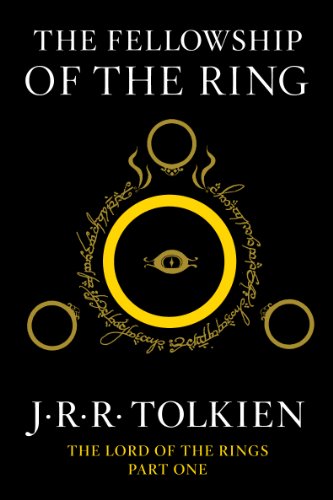
Reading report: ‘The Fellowship of the Ring,’ by J.R.R. Tolkien: Bombadil and Goldberry

There on the hill-brow she stood beckoning to them: her hair was flying loose, and as it caught the sun it shone and shimmered. A light like the glint of water on dewy grass flashed from under her feet as she danced.

Blogging through the Lord of the Rings, still on The Fellowship of the Ring:

What are we to make of Tom Bombadil? He’s a riddle inside an enigma inside a mathom, which is probably just what the author intended. The narrative of the epic can endure without him, as the movies demonstrated. But every reader knows he belongs, somehow, in Tolkien’s world. Every reader will think of Tom in his own way. I’ve stated my view before on this blog, but I’ll repeat it here:

Tom seems to me to be a representation of Adam, or at least of unfallen Man. Adam tended the Garden, and he named the animals; whatever he called the beasts, that was their name. Tom Bombadil controls all nature within his domains, and when he names the hobbits’ ponies, those are the names they answer to ever after. Tom says of himself:

“Eldest, that’s what I am. Mark my words, my friends: Tom was here before the river and the trees; Tom remembers the first raindrop and the first acorn.”

Remember how important “subcreation” was in Tolkien’s artistic/religious vision. Man in fellowship with God becomes a kind of little god – he can’t create ex nihilo as God does, but he creates in a smaller way that brings glory to his Master. In the same way, I think, unfallen Tom Bombadil glorifies his Creator by ruling the Garden that’s been set under his stewardship.

Tom Bombadil, incidentally, began as a toy, a Dutch doll owned by Tolkien’s daughter Priscilla. She lost it down a sewer, and was distraught. Her father comforted her with tales of how Tom floated along the river and had numerous adventures, overcoming all kinds of dangers through his magical powers. Eventually he even overcomes the powerful River-woman, and marries her daughter, Goldberry (herself a rather sinister figure until Tom tames her).

Which brings us to Goldberry. Goldberry has a very special place in this reader’s heart.

The year must have been 1973; I was in college, and my roommate was an even bigger Tolkien geek than I was. We agreed that I would read the Hobbit and the Trilogy to him, one chapter a night (I love to read aloud). And we did that – straight through. It took a while.

During that same period I went out on my first date, with a girl who was very Goldberry-esque. I fell hard for that girl, and have never quite gotten over her. She’s a grandmother today, and lives far away, but to me she’ll be forever young and slender and graceful.

Whenever Tolkien tells us of a woman dancing, and how her feet tinkle on the grass (as in the case of Luthien), I’m pretty sure he’s harkening back to Edith Bratt and how she danced for him in the woods the day he fell in love with her. For my own part, I always look forward to seeing Goldberry again.

Reading Report: ‘The Fellowship of the Ring,’ by J.R.R. Tolkien

He thought he had come to the end of his adventure, and a terrible end, but the thought hardened him. He found himself stiffening, as if for a final spring; he no longer felt limp like a helpless prey.

This quotation, concerning Frodo Baggins in the Barrow Downs, from The Fellowship of the Ring, seems to me a good epitome of what I’ve found in my current reading of the Lord of the Rings

Actually, the thought was mainly inspired (to my shame, I suppose) by watching the movies twice through recently. I’ve found them inspirational as I wrestle with my Work in Progress. It’s a remarkable thing, as I see it, that in spite of the movie industry’s well-earned notoriety for messing with original sources, the Peter Jackson movies managed – overall – to preserve the heart of the story. Even though most of the people involved must surely have been a thousand miles away from Tolkien’s beliefs.

Anyway, what struck me as I watched and read was this. It hardly needs saying that we’re in perilous times. I never thought I’d live to see a day when I worried about the breakdown of civil society and the loss of our republic, but such things don’t seem unthinkable now.

I’m not a man known for confidence and courage. I reserve heroism for my books. I know heroism when I see it, and I salute it from a safe distance. I’m pretty sure that if the day comes when I must raise my sword in defense of my rights, I’ll probably trip over the scabbard.

But it occurred to me that maybe this isn’t the end. That’s the thing about stories.

In every good story, there comes a moment when the main character thinks the tale is told – and that he’s lost. A moment when his strongest instinct is to lay his weapon down and surrender.

But that’s not really the end, in a good story. It’s only the Final Crisis. It’s the hero’s test. The climax is yet to come – and at the climax, the hero either triumphs or fails in a way that means something.

So this is my message. Not the message of a prophet, or the son of a prophet, but of a storyteller.

This isn’t the end. It’s the crisis. Hold on. Carry on doing your service, at the station where God has set you. As Sam Gamgee said:

“It’s like in the great stories, Mr. Frodo. The ones that really mattered. Full of darkness and danger, they were. And sometimes you didn’t want to know the end. Because how could the end be happy? How could the world go back to the way it was when so much bad had happened? But in the end, it’s only a passing thing, this shadow. Even darkness must pass. A new day will come. And when the sun shines it will shine out the clearer. Those were the stories that stayed with you. That meant something, even if you were too small to understand why. But I think, Mr. Frodo, I do understand. I know now. Folk in those stories had lots of chances of turning back, only they didn’t. They kept going. Because they were holding on to something.”

‘Beren and Luthien,’ by J. R. R. Tolkien

Tevildo however, himself a great and skilled liar, was so deeply versed in the lies and subtleties of all the beasts and creatures that he seldom knew whether to believe what was said to him or not, and was wont to disbelieve all things save those he wished to believe true, and so was he often deceived by the most honest.

I’ve long cherished a great fondness for Tolkien’s tale of Beren and Luthien, which impressed me long ago when I read the Silmarillion. And of course, it’s referenced often in The Lord of the Rings. So before I moved on from The Hobbit to the Trilogy, I thought I’d read the (fairly) recent book devoted to that story.

It wasn’t entirely what I expected. It’s sort of a scholarly exercise. In it, the late Christopher Tolkien, the author’s son and literary executor, traces the development of the story through various stages in the collected manuscripts, where it is altered in numerous ways. There are surprises. For instance, an early version of the story has as one of its major villains a great cat called Tevildo (see quotation above), who lives in a castle and serves the evil Melkor. In later versions, Tevildo would be replaced by a great magician who would in time become the Sauron of the Trilogy.

I think we may deduce that Prof. Tolkien was not very fond of cats.

Those who find Tolkien’s work lacking in female heroes need to read Beren and Luthien. Although Beren is a doughty hero, he also seems to be headstrong to point of stupidity. And the two great crises in the story both involve Luthien rescuing him.

I was, frankly, looking for something more like a straight narrative when I bought this book. I’m not enough of a Tolkien scholar to linger happily forever over details of composition and myth-building.

On the other hand, I’d never encountered the words “inexaggerable” and “quook” (past tense of quake) before, so the reading was not without surprises.

The tale of Beren and Luthien was a central matter in Tolkien’s life’s work. If I understand the story correctly, it went back to his attempt to immortalize the day when Edith Bratt danced for him in the woods and he fell in love forever. In a sense, he built all Middle Earth as a kind of ornate setting for the jewel of that memory.

Beren and Luthien is recommended for those who can never get enough Tolkien. If you’re looking for a less strenuous approach to the story, you might just read The Silmarillion.

Oh yes, it has Alan Lee illustrations, so it’s got that going for it.

Stacked

Another day, another failure to finish a book to review. So you’re condemned to a personal update. Unless you choose to just surf on. Which might be the way of wisdom.

Today was another example of what I call “temporal stacking.” (Did I invent that term? Or did I borrow it in a moment of absentmindedness, which is what most of my moments are these days?) Today is one of those earmarked for specified chores – on Thursdays I pay my bills. And I take the garbage out.

But I also had to go to the doctor today. (Warning: old fart’s repulsive health talk ahead.) I noticed a spot on my nose that I thought my dermatologist (never thought I’d have a personal dermatologist, but all the cool kids are getting them nowadays) should look at. He, of course, was not available at the office that’s located a mere fifteen minutes away. He was at the office that’s a half hour away. So I drove out to Excelsior (we have a town called Excelsior. So there) and showed it to him. He said no, it was nothing. However, that other spot on my cheek over there looked sketchy. I then received the Deadly Touch of the Frost Giant, and was sent home clothed and in my right mind.

All this was capped (and pleasantly so) by a new batch of paying translation work. It won’t pay my mortgage off, but it’s work and I’m grateful. I’ve put in 2.5 hours on it so far; more is to come.

Meanwhile, I’ve been making slow progress on the new Erling novel. The work is like punching my way through a room full of oatmeal – I can move ahead, but it’s an effort. I’m on the cusp of what ought to be a pretty nifty supernatural scene, but it will probably have to wait for realization.

Amazon Prime review: ‘One Touch of Venus’

I’m reading Tolkien’s Beren and Luthien right now, and haven’t finished it yet. So I must find something else to post about. (Note to bloggers: Try to have interesting lives, because if you haven’t got a book review handy every day, you need something more interesting to write about than dentist visits and plumbing emergencies. Unless you’re James Lileks. Addendum to self: I’m not James Lileks.)

I think I mentioned that I’ve been watching old TV and movies on Amazon Prime. One thing that popped up in my suggestions the other day, which I selected, I’m not sure why, was an old 1940s musical called One Touch of Venus. It was a reasonable hit on Broadway, starring Mary Martin, and was made into a movie with Ava Gardner in 1948 – though they reportedly cut a lot of the songs (I’ve never seen it). The version I saw was a different one, done live on NBC TV in 1955, performed, according to the credits, by the Texas State Fair Musical Theater organization. The cast, most of whom are trying too hard in the tradition of live theater, features actress Janet Blair as Venus. The only other familiar face was Louis Nye in a small role.

It’s got a silly premise – a feckless barber named Rodney Hatch gets into an argument with an art collector over an ancient Greek statue. The collector declares the statue (which is surprisingly non-nude, and also bears a suspicious resemblance to a department store mannequin painted white) the image of female physical perfection. Indignantly, Rodney slips onto the statue’s finger the engagement ring he recently bought for his girlfriend – to prove that her hands are just as well-proportioned as a goddess’s. This action brings the statue to life, and Venus proceeds to ensnare Rodney in her charms, break his engagement, and (SPOILER ALERT) abandon him in the end to return to her worshipers (who appear, oddly, to be Hindu or Muslim). Rodney ends up with an entirely different girl from his original girlfriend, which strikes me as an odd plot resolution. I kind of felt sorry for the original girl. I probably dozed off during a scene where we learn why she’s unworthy of a barber.

A fact I missed going in dawned on me suddenly as Rodney was singing one of the production’s comic numbers – “How Much I Love You.”

“More than a catbird hates a cat, or a criminal hates a clue –

“As the high court loathes perjurious oaths, that’s how much I love you.”

 I tried to figure out where I’d heard this before. Finally I realized that I hadn’t heard it, I’d read it. It was published as a poem, and its writer was the great Ogden Nash. Then I remembered that Nash had written the lyrics for a Broadway production called “One Touch of Venus.” (The music, you may be surprised to learn, was by Kurt Weill, better known for “Mack the Knife.”)

My major reaction to the whole thing was, “Wow, culture sure has changed since the 1950s. They’d never do this play today.” Then I looked and found that it’s been revived several times recently. Judging by the sexual (or gender, if you prefer) norms portrayed in the original show, I have to assume considerable revision has been done.

I found a YouTube video of somebody singing “How Much I Love You,” but the actor was so annoying I refuse to post it. You can look it up yourself if you’re curious. They changed some of the lyrics too.

Reading report: ‘The Hobbit,’ by J.R.R. Tolkien

It was a terrible battle. The most dreadful of all Bilbo’s experiences, and the one which at the time he hated most—which is to say it was the one he was the most proud of, and most fond of recalling long afterwards, although he was quite unimportant in it.

Recently I watched the Lord of the Rings movies (extended versions, of course; not the Hobbit films). And whenever I do that, it comes into my mind that I need to read the books again. Christopher Lee read them once a year, after all. I’m far behind that tally. So I pulled out The Hobbit, to begin the journey.

I’ll confess that at first I thought it kind of elementary. It is a children’s book, after all, and sometimes the author talks down to his audience.

However, it grew on my mind as I read that this book (along with the Trilogy) can be viewed from the perspective of veteran’s literature (I’m not a veteran, I hasten to note; but it’s something I can be aware of). When Tolkien tells us, again and again, that Bilbo wished himself back in his cozy hobbit hole, “not for the last time,” he’s conveying the feelings of the soldier at war. Not long ago, he was comfortable in his rooms at Oxford, eating well, cared for by servants, keeping regular hours. Now he’s slogging through mud or crouched in a flooded trench, struggling with boredom or dreading going “over the top.” Thoughts of home flood in; they are a torment and a comfort all at once.

And by the end of the book, I must confess, I had to blink back manly tears. I was moved.

The Hobbit is a great book. But you knew that.

‘Lucky Draw,’ by Mark Stone

When I reviewed Mark Stone’s novel Lucky Break, first in his “Lucky John” series, the other day, I said (in so many words) that the book was slight, inconsistent, but rather fun. Having read book number two, Lucky Draw, I think I’ve had enough. It’s possible to be too slight.

“Lucky John,” the hero, is John Lucky, a former soldier and trucker who won the lottery and moved to Bonita Springs, Florida. He gets involved in investigating crimes, largely to keep himself occupied. In Lucky Draw, he’s hired to board a casino ship and participate in the world’s top poker tournament, in order to recover sensitive data that’s a threat to national security. He goes in accompanied by the girl who bought his winning lottery ticket, and they are soon surrounded by danger and betrayal.

The Lucky John books show strong signs of being written fast and not proofed for consistency. For instance, in the first book we were told John won the lottery in Iowa, and then he went on to tell people it wasn’t Iowa, but Indiana. Now we’re told it was in Illinois. I don’t think the author cares much.

The action is frequent and implausible, and in one scene I had no idea what was going on – the description didn’t make any sense to me. There was a nice moment when John counsels a young man to avoid pornography, but overall the story was long on fistfights and shootouts, and short on characterization.

It was fun for a while, but I think I’ve had enough now.

‘Nothing But the Blood,’ by S. D. Thames

Recently, a friend reminded me of my review, some years ago, of A Mighty Fortress, the first book in the Milo Porter mystery series by S. D. Thames. I had lost track of this author, so I checked to see if there were more books. And there is one. Nothing But the Blood was published in 2017. I note that there have been no further Milo Porter books. I hope the author hasn’t given up, because he writes my kind of story.

Milo Porter is a Gulf War veteran who now lives in Tampa and works as a private investigator and process server. He suffers from PTSD, which expresses itself in bad dreams, (possible) hallucinations, and risk taking. He’s a Christian, as are most of his friends, who are also (including his girlfriend) mostly weight lifters. Milo is a pretty good lifter himself, and has just set a record. During the big lift, he sees a vision of blood and of his personal guardian angel.

That vision motivates him to take a job he’s offered the same day. A representative of a major league football team hires him to watch a young player whom they plan to select in the upcoming draft. Milo encounters surprising hostility from the player and his entourage. But then the player dies in a highly suspicious weight lifting accident, and Milo finds a new client and a new challenge – to unravel a complicated, ruthless conspiracy of fraud.

I enjoyed Nothing But the Blood a little less than A Mighty Fortress, probably because the pro football world doesn’t interest me a lot. But I was again impressed with the author’s professional prose, good characterization and plotting, and skillful manner of incorporating Christian faith into a (mostly) realistic story. I recommend Nothing But the Blood, with the caution that this isn’t a Frank Peretti book. Which, from my point of view, is a good thing.

R.I.P. Diana Rigg

Dame Diana Rigg (1938-2020) died today in London. An accomplished actress whose intelligence always shone through the camera lens, she first became famous playing Emma Peel in the classic English TV series, “The Avengers” (not to be confused with the Marvel franchise; see the intro and outro credits above). She had a long and successful career, playing the only Bond girl to actually marry the spy in “On Her Majesty’s Secret Service,” and most recently carrying a role on “Game of Thrones.”

I was desperately in love with her in her “Avengers” days. According to my reading, she was a practicing member of the Anglican Church.

‘Lucky Break,’ by Mark Stone

I sometimes joke about the infinite number of fictional detectives today who live on a Florida beach, in emulation of John D. MacDonald’s Travis McGee. And yet they never do seem to run out. My latest discovery is the Lucky John series by Mark Stone, of which the first installment is Lucky Break. “Lucky John” is actually (if improbably) named John Lucky. A former soldier and over the road truck driver, he rescued a girl in a truck stop from a robber one night. In gratitude, she made out a lottery ticket for him using her phone number. The number was drawn, and John Lucky suddenly had more money than he’ll ever spend. (He did give the girl a piece of the prize.)

Having no real roots or family of his own, John decides to move to the place he liked best of all the places he’s ever visited – Florida. He buys a house in Bonita Springs, with his amiable buddy Davey, who seems to have been born to be a sidekick. Before long they’ve found a new favorite bar together, and shortly thereafter John defends the attractive bartender from her angry ex-husband. This leads to a complicated (and implausible) adventure in which John finds himself suspected of murder before uncovering and thwarting a diabolical revenge plot.

Believability isn’t a big consideration in Lucky Break. Details are contradictory, and extreme, movie-style dangers come at our hero rapid-fire. There is little time for meditation on life. The book is a fast read that probably didn’t take long to write.

But I kind of enjoyed it. Lucky John is a likeable hero, and the general mood is sunny, which is nice for a change. I bought the second book.