Category Archives: Uncategorized

Eleventh hour, eleventh day, eleventh month

On April 15, 1918, Jack was ordered to advance his troops behind a barrage of British shells fired by big guns far behind the lines…. Jack ordered his men over the top of the trench parapet and led them straight towards the enemy as the barrage of high explosives riddled with shrapnel landed ahead of them, blasting the German trenches and soldiers. Then, suddenly, as they advanced with bayonets at the ready, the barrage stopped advancing and began to come back toward them. Soon Jack and his men were being bombarded by their own artillery from far behind them, and to his helpless fury Jack watched his men being blown to pieces in the constant roar of their own artillery support. Suddenly Jack saw a blinding light, everything went completely silent, and then the ground came up slowly and hit him in the face. Jack had been hit by both the concussion and shrapnel from a British shell. His trusted sergeant had been between Jack and the shell when it exploded and was blown to bits. Apart from his own efforts to escape, Jack remembered nothing more of the battle.

(Douglas Gresham’s account of his stepfather C. S. Lewis’s wounding in World War I, from his book, Jack’s Life.)

Today is Veteran’s Day, the commemoration that used to be called Armistice Day, back when everyone fondly hoped that the last war had been fought. A hearty thank you to all military veterans who read this post. I’m flying a flag for you.

Someone asked on Facebook today, “What one historical event would you change, if you could go back in history?” My answer was, “I’d stop the assassination of the Archduke Ferdinand in Sarajevo.” Continue reading Eleventh hour, eleventh day, eleventh month →

The right side of the tracks


Photo credit: Nutschig.

I saw my optometrist last night, something I do every year, because it qualifies me to get a touch-up job if my Lasik surgery ever goes horribly wrong.

He did a test where he held a little red ball on a handle in front of me, and told me to follow it with my eyes as he moved it around. Afterward he made a note, and said, “I can tell you’re a reader.”

“Why?” I asked.

“Because you track with your eyes so well. I only see that level in people who love to read, and kids who play a lot of video games.”

It was a completely new idea to me that there could be anyone who couldn’t track the little red ball easily.

How about that? I have one highly developed physical skill. I think it’s the only one, too.

If Not GPS, Then Cloak

#76 - empty streetsFrom our legal desk, the U.S. Supreme Court is considering arguments over police use of high tech surveillance equipment, that is, GPS devices. It isn’t a question of whether cops can use GPS to track people. The question is whether they must get a warrant by proving they have a good legal reason to track someone before they do. Lawyer Walter Dellinger explains, “If the Supreme Court gave a green light [to warrantless GPS tracking, then] any officer can install any GPS device for any reason on anybody’s car, even if the officer thinks it would be interesting to know where Supreme Court justices go at night when they leave the courthouse. No one would be immune from having a GPS device installed on their vehicles.”

At first, I thought, no officer is going to recklessly tag and track cars, because the department resources would be too much. But then I wondered if it could happen in a small town, where the police department has only a few people. A power-hungry sheriff might start tagging and tracking as many people as he could buy devices for.

But there is a clear alternative. If the courts declare warrantless GPS tracking violates the amendment forbidding reckless search and seizure, police can develop their squad car cloaking shields and officer invisibility coats. That way they can follow suspects until they have reasonable … Oh, the courts will step in here, won’t they, saying you can’t follow someone while invisible unless you get a warrant. Of course, how will they know, eh?

I feel stronger already

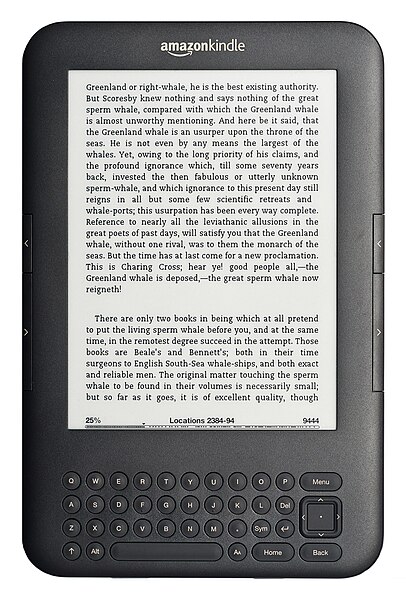
How was it that I’ve been on the internet all these years now, and never really noticed Neatorama until today? Where else can you learn vital information like, “How much heavier is your e-book reader after downloading a book?”

Using Einstein’s E=mc² formula, which states that energy and mass are directly related, Prof Kubiatowicz calculated that filling a 4GB Kindle to its storage limit would increase its weight by a billionth of a billionth of a gram, or 0.000000000000000001g.

That’s the basis for my new fitness regimen, right there.

This is supposed to be a beautiful weekend, so I guess I’d better make the most of it. Got some yard work I need to do, and I’m pretty sure there are fewer nice weekends left in 2011 that I care to contemplate. Ideally I should stay in bed again, to kill off this chest thing, but autumn dallies for no man.

Have a good one!

Have You Ever Cheated Death?

Tony’s son asked him if he or his brothers had ever “cheated death” without any embarrassment at the possibility that few people used that phrase. Tony reflects on this and the time he has seen death denied its claims.

It reminds me a time recently when I walked around the neighborhood with my daughters, pulling one or two in a wagon and following the others on their bicycles. One of the bikes had poor brakes, so I worried a little about the hills, but not enough. Even now if I dwell on it, I can work up my fear and self-condemnation, thinking of my daughter speeding down a hill, right in front of a truck, and crashing into the grass beyond. How could I be so naive and nonchalant? She couldn’t slow down on that hill, and if she’d crossed the street a second later, she would have hit the truck. That’s one of many ways I could convince myself that I’m a totally fool.

But the Lord has had mercy on me.

Dost Twitter Dismantle One's English?

Mark Liberman takes issue with the criticism Ralph Fiennes has for Twitter, in which he says our language is being “eroded” by our habitual use of “truncated sentences, soundbites and Twitter.” Twitter restricts posts to 140 characters, though there are several ways around that. Liberman did some word analysis and reports, “The mean word length in Hamlet (in modern spelling) was 3.99 characters; in P. G. Wodehouse’s Jeeves stories, the mean word length was 4.05 characters; in the DP’s tweets, the mean word length was 4.80 characters.” He says the character restricts motivates some of us to pack the information into our tweets.

Leberman also reports on the word and sentence lengths in U.S. Presidential addresses, in which mean word length has dropped 5% in Inaugural and State of the Union addresses since George Washington’s first speeches and mean sentence length has dropped 50%.

Clearly, the presidency must go, for the sake of American English.

St. Crispin's Day

This call to celebrate a literary holiday in St. Crispin’s Day seems jaded, but maybe I am ignorant of King Henry V true character and the context of his war with France. I like this holiday idea though. Today, friends, is St. Crispin’s day. From Shakespeare’s Henry V:

“He that outlives this day, and comes safe home,


Will stand a tip-toe when the day is named,


And rouse him at the name of Crispian.


He that shall live this day, and see old age,


Will yearly on the vigil feast his neighbours,


And say ‘To-morrow is Saint Crispian:’


Then will he strip his sleeve and show his scars.


And say ‘These wounds I had on Crispin’s day.”

Guy Patrick Cunningham writes, “In Henry V, Shakespeare offers us an opportunity to see the horror that results from pursuing winning only for its own sake. This is why St. Crispin’s Day ought to belong to Shakespeare’s play, and not the historical Henry’s battle. Because by reading, rereading, or simply thinking about the play, we are reminded that there is often a difference between the achievements that usually get remembered and the achievements that actually make people’s lives better.”

Here’s a summary of the Battle of Agincourt, which Henry won on October 25, 1415.

Burn: Never Extinguish

This is a commercial posing as a short film on creative desire. I suppose the bottom line for a commercial is the sale of drinks, specially the energy drink, Burn. But this bit of video is calling us to create out of our own image and don’t let hardship, like a tornado, get in the way.

Perhaps the video I embedded here last night changed (because I think I double-checked its availability). Here’s another link to the video.

Link sausage, Oct. 21, 2011

Tonight, as we approach the weekend, a couple links. Both will lead you to delicious compendiums of obscure information, with which you may amaze your friends and win bar bets (not that any of our readers ever go to bars).

First, from Listverse: Twenty Great Archaic Words. Words that we’ve somehow allowed to slip out of common use. Yet a few of them seem (to me) to be very useful. My favorite:

17. Apricity – The feeling of the warmth of the sun in winter. This word sparked this list when I used it in conversation and no one knew what it was. Nothing particularly funny, just a great word and a great sensation.

One of my favorite sensations, and a word I need to work into conversation from now on. I suspect I’ll get the chance before many months have passed.

(Caution: The last archaic word is one you might want to shield small children from.)

Also, from The Scotsman, Vikings and Scotland: Ten Lesser-Known Facts:

Clan names are a visible relic; MacIvors were originally the sons of Ivar, MacSween, the sons of Swein, Macaulay, the sons of Olaf, MacAskill, the sons of Asgeir and so on.

I didn’t know about those names. I did know about MacLeod, the sons of Ljot (some people say Ljot means “Light,” and others say it means “Ugly.” I’m not qualified to judge, but I’d bet on “Light.” Just a hunch.

Have a great weekend.