I’m a fan of Brett Battles’ Jonathan Quinn series of thrillers, about a “cleaner” – a man who works as a contractor for espionage agencies, getting rid of evidence – and bodies – for them. The latest book is The Vanished.
Nine years ago, Quinn and his team attempted to provide protection for a brilliant scientist, in part as a favor to her sister, who was an agent. The job went bad, and the scientist was spirited away (not involuntarily, I might add). Since then, the agent sister has been inactive on the job – obsessed with finding and rescuing her sister.
But now Quinn and his team have been temporarily sidelined by their employers. Shocking news from France motivates them to travel there and try to rescue the sister on their own. This will involve merely getting past the security of one of the most technologically advanced corporations in the world.
The main thing that distinguishes The Vanished as a story is that author Battles decided to set it in 2020, incorporating the whole business of Covid-19 lockdown protocols. That makes some things harder for them and some things easier, but did not (for this reader) make the story much more interesting. As you know, I’m a reader who likes character-driven stories. The Jonathan Quinn series is generally pretty good in that department, but this story was mostly about procedures and technology. I didn’t find it compelling.
But it’s a good series. You might like this one better than I do.
“Of course you are. You’re James Bond cleverly disguised as an inbred redneck.”
“Thanks, I love you too. Actually, in my experience, most rednecks I have met were very fine people with solid values. And the worst inbreds I’ve met were among the European aristocracies and the Boston Brahmins.”
Harry Bauer, hero of Blake Banner’s Cobra series, is an assassin working for a private security firm that contracts to the government (for deniability). He is deadly and efficient and ruthless, but he has a code – he only kills the worst of the worst.
So he’s surprised when, as Quantum Kill opens, his bosses call him out of a well-earned vacation, asking him to do a job entirely outside his wheelhouse. There’s a woman (they won’t tell him who) at a certain place in Canada. Harry is to pick her up and transport her to Washington DC by a certain date, by a devious route he can work out for himself.
When he finally meets the woman, she’s a puzzle. She’s attractive, but strangely distant and affectless. She makes no effort to make friends, but soon they have more to worry about than their relations, when hit teams locate them – they can’t figure out how – and Harry has to do what he does best to keep her alive. It gets more puzzling when he figures out that the hit teams are CIA.
As they take a roundabout route as far out of their way as the Azores, the barriers between them start to break down. But more is going on than Harry and his employers have been told, and in the end he will resolve the problem through doing what he does best, in a shocking but oddly satisfying climax.
I’ve read some of Blake Banner’s books outside the Cobra series, and I was disappointed in certain attitudes and plot elements, especially in religious matters. But in this series, I haven’t had that problem – such opinions as Harry Bauer expresses generally please me.
I’m torn a bit as to how strongly I should recommend this series to our readers. In terms of reading pleasure, it’s top notch. My interest never flagged from the first page to the last (and as I grow older, flagging interest is a problem I have increasingly as I read). But the violence is harsh and stark and uncompromising. I feel a certain amount of guilt for enjoying it so much.
Tom wiped his forehead. “If we get through, we’ll tell them, sir but—well, I’ve heard it said that in England there are still men in power who do not dare to put weapons in the hands of common people.”
Orden stared at him. “Oh! I hadn’t thought of that. Well, we can only see. If such people still govern England and America, the world is lost, anyway. Tell them what we say, if they will listen. We must have help, but if we get it”—his face grew very hard—“if we get it, we will help ourselves.”
In 1940, author John Steinbeck spoke with Pres. Roosevelt and began doing volunteer work with government intelligence and information agencies. He spoke to Col. William “Wild Bill” Donovan of the OSS about the need for effective Allied propaganda for distribution in occupied countries. This led him to write a short novel called The Moon Is Down.
The Moon Is Down begins with the invasion of a small town in a country that resembles (but is not identical with) Norway. The town falls with minimal bloodshed, because a local businessman – a collaborationist – has prepared the way for the occupiers (who are obviously German but not specifically identified as such). The officers take up residence in part of the Mayor’s Palace. Mayor Orden seems a strangely passive leader – he considers himself the voice of the people, and he isn’t sure yet what the people think about all this.
Over time the people’s opinion becomes very clear. They hate the occupiers and will do everything they can to obstruct them, especially through slowing and sabotaging the work at the local coal mine. The reader spends a lot of time with the occupying officers, who are little happier about the situation than the locals. They‘d expected to be greeted as friends and heroes, but instead found constant hatred and ostracism, which saps their spirit.
In the end, major sacrifices will be demanded of the locals, but they are sacrifices they are willing to make – because you can’t suppress free people forever.
The Moon Is Down is an effective story – though a little rose-colored for my taste. The author’s professed confidence in the resilience of free men seems a little naïve in light of recent history – give the enemies of freedom control of the media and education for a couple generations, and we’ve seen what they can do. Editor Donald V. Coers, in his introduction, makes much of the surprising fact that the book was harshly criticized by American liberals (prominently Clifton Fadiman and James Thurber), who condemned it for humanizing the occupiers rather than demonizing them. But Steinbeck seems to have been right, because the citizens of occupied countries found the book highly evocative of their own experience. Thousands of illegal copes were cranked out on mimeograph machines (if you’re as old as I am you might remember how much work that entailed) and secretly distributed all over Europe.
I first learned of the existence of The Moon Is Down while reading The Jøssing Affair, which I reviewed a few days back. I was surprised I’d never seen it mentioned before, but having read it, I think I know why. Modern leftists find the liberty Steinbeck celebrates here a little excessive, especially the parts (more than one) where he celebrates the importance of owning weapons.
The Moon Is Down is a simple book that reads almost like a stage play (it was, of course, made into a play as well). Worth reading for the quality of the writing, and for a look into an older, wiser kind of liberalism.
Oxford. The Thames Valley Police. Names that evoke, in mystery fans, the unforgettable characters of Morse and Lewis, and the televised “Endeavour” prequels. But this is not one of those stories.
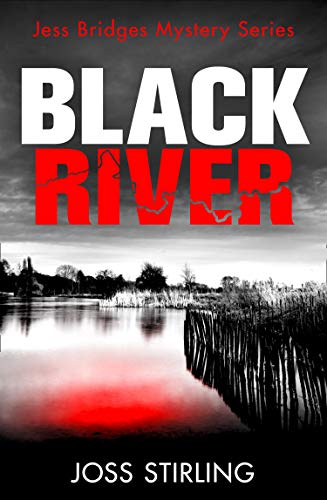
Black River, by Joss Stirling, is a different sort of mystery altogether, in the same setting. It’s billed as the first book in a series, although the story harkens back to previous events in the main character’s life, as if the reader already knew about them. Perhaps it’s a spin-off of another series.
Our heroine and central character is Jess Bridges, a short, pretty, curvaceous young woman who has ADHD, which makes her both impulsive and (apparently) ditzy. She has recently set up as a private investigator, specializing in missing persons. Currently she’s trying to contact a teenaged girl who has moved out on her mother and in with her recently divorced stepfather.
But that inquiry gets interrupted when, inspired by a bestselling book on “wild swimming” in England, she goes skinny-dipping at one of the author’s recommended spots, only to discover the body of a murdered man in a boat. This results in her meeting Jago Jackson, the author of the book himself, who happened to be cycling in the area, and Inspector Leo George, who heads up the murder investigation. The three of them (and several others) will meet again and again, as Jess goes undercover, taking a job with a movie crew filming at an Oxford college, and the two cases start overlapping. At least in terms of location.
The plot was complex – which really isn’t a negative criticism for a mystery. It was a pretty easy read, and the writing was good. There was a touch of French farce about the whole thing, as Jess tends to land in repeated, embarrassing sexual situations. My stuffy puritanism found that a little excessive.
However, I also noted that the author made an effort to avoid foul language. I didn’t love this book, but you very well might like it better.
“Some things are meant to be calculated. Mystery isn’t among them.”
Jared C. Wilson, author of many books and articles we’ve discussed here, has a new young adult novel called Echo Island. When four diverse, high school friends return from a camping trip, they find everyone in their home town gone. All people, animals, and almost every sound are gone.
They don’t notice all of that at first. They notice their families missing; neighbors absent from public areas. Cars parked at churches and buildings without anyone inside. The power is out, even batteries are dead. And there isn’t a sound of any part of natural life, except the lapping of waves at the shore.
These aren’t necessarily church kids, but a couple of them think naturally of the rapture. Maybe the four boys were left behind: Bradley, the tough one; Archer, the smart one; Tim, the loyal one; and Jason (maybe he’s the one with common sense). But of the four, surely Jason would have been raptured with the others, and tons of other Echo Island residents would have remained. It wasn’t a Sunday School campground.
Over the next couple days, the boys wander the island, looking for other survivors and clues to what took everyone away. What they find is completely out of this world.
The story is great fun. It was a good follow-up to Koontz’s The Taking, because when the rain starts to fall, I initially thought of the devastating apocalypse that comes in Koontz’s downpour.
I suspected part of the solution right away, but I did not anticipate where Jared ran with it or his larger story scope. He has given it spiritual depth that many will enjoy and perhaps others will find a challenge to their assumptions. Surprises, laughs. No dogs though; that will probably cost it one out of thirty stars.
The title of this book probably requires a little explanation, and I’m just the man to do it (though I actually had to look it up in Norwegian Wikipedia).
“Jøssing” was a common word used in Norway during World War II to describe patriots, those who opposed the Quisling collaborationist government. It arose after an incident in 1940, when British commandos attacked a German ship in the Jøssingfjord, rescuing 300 British POWs. The incident was one of the incitements for the German invasion, and the Nazis themselves originated the term as an insult against anti-Nazis. Like the name “Christian” in Roman times, the people who were being laughed at adopted it and wore it with pride.
The hero of J. L. Oakley’s The Jøssing Affair is Tore Haugland, a Resistance agent. He lives in the Norwegian town of Fjellstad, working as a fisherman’s helper. He poses as a deaf-mute. In fact he’s a University graduate and a former athlete, trained as an agent in England. He operates a secret radio transmitter and organizes “imports” and “exports” through the Shetland Bus – which at this point in the war (late 1943) no longer consists of Norwegian fishing boats, but of English submarine chasers.
Anna Fromme is the widow of a Resistance hero, a man who was tortured to death by the Gestapo. He was also a close friend of Tore’s, though Tore keeps that a secret. In spite of her husband’s heroism, single mother Anna is a pariah in Fjellstad – because she’s German. No one is sure of her loyalties, and no one trusts her.
Tentatively and almost involuntarily, the two of them slip into friendship, and then love. But that love – and much else – will be threatened when Tore is betrayed into the hands of the Gestapo, and the Nazis, aware they’re losing the war, crack down harder than ever on the Resistance, exploiting love, friendship, loyalty and trust to crush all opposition.
Author J. L. Oakley is – based on my reading of this book – a good storyteller, but a less good writer. The story had lots of dramatic tension, and I cared about the characters. It illuminated splendidly a part of World War II history that most people don’t know, and I myself wasn’t entirely aware of – the time at the end of the war when German armies were surrendering all over Europe, and the free world rejoiced – but in Norway the Nazis held on fiercely, declaring their determination to defend Fortress Norway or die in a Götterdämmerung, taking the Norwegian people down to hell with them.
What I liked less about the book (and I’ve been complaining about this in my reading reports here) was the sheer length of the thing. I thought the story could have been told faster and more simply. I had trouble keeping the characters straight (even the hero – he uses multiple aliases). Also, there were a number of word mistakes and typos in the text.
Some sexual content, but it was fairly mild. All in all, The Jøssing Affair was a good book and I’m glad I read it. (Some of the action takes place on the island of Hitra, where one of my great-grandmothers was born. I also liked the absence of pro-Communist cant, which you often find in such stories.) But it sure took a while to read. (There was a strange sense of déjà vu as I read about a population suffering deprivation, looking for liberation by Christmas, but having to wait until spring for relief. Hmm, what does that remind me of?)
A man wakes up, sitting in a Jeep in the desert. He has no idea who he is.
All he knows is that he’s a killer. A highly trained, efficient killer (He becomes known as Verdugo, the Executioner). In the next few days he will have plenty of opportunity to do what he does best. He will tangle with the US military intelligence and drug cartels, and meet a woman to whom he is drawn, who knows who he is but won’t tell him.
All the elements of a pretty compelling thriller are here in Verdugo Dawn. Lots of action, plot twists and setbacks, an intriguing protagonist.
But the book didn’t work for me. Although I’ve enjoyed Blake Banner’s work, I had trouble with the latest of his series I tried, due to repeated targeting of the Catholic Church as a villain. Religious matters also turned me against Verdugo Dawn. The narrative is interrupted in a couple places by references to Carlos Castaneda and dream-like dialogues with an old wise man named “Olaf” who talks a lot of solipsistic physics that we’re expected to view as profound.
Also the action was often implausible. And there were lots of spelling and homophone errors in the text.
I started out liking this book very much. In the opening chapter of James Kipling’s Killed, the author breaks the rules of thrillers by just spending time with our hero, Detective Jake Walker, on an ordinary day, before the bodies start falling. I personally liked this. I found Jake likeable and relatable – a dedicated police detective (in an unnamed city) whose work has destroyed his marriage, but who is still determined to do right by his three daughters.
When the call comes (on his weekend off) to come to the scene of a murder, he is galvanized – because the murder has taken place on the university campus where his oldest daughter is a student. The victim turns out to be the star player on the football team, tortured and murdered slowly. Jake is convinced this has to be a personal crime. When further bodies are found on campus – and later off campus – he continues certain that this is not an ordinary serial killer at work, but someone with a particular grievance to avenge.
The further I got into Killed, the more disappointed I grew with the writing. Although Jake interested me as a person, I had trouble buying him as a cop. I’m not an expert on police procedure, but the way he ran the investigation didn’t “ring true” to me. His superior seemed to be taking orders from him, and when they called in the FBI for help, Jake himself made the decision (I think that would be his boss’s call). And when the FBI did show up, there was no jurisdictional friction – the Feds and the locals always posture a little for precedence, at least in books.
And I figured out the killer before I think I was supposed to.
So I found Killed a bit of a disappointment. Not hard to read, but poorly plotted, in my opinion. Cautions for the usual.
Tiptoft is not happy with Anthony’s reply and says, ‘People prate about how wonderful life is, but I swear to you that reading is better. Search how you may you will never find happy endings in life. It is only there in books.’
I’m not entirely sure what to make of Robert Irwin’s Wonders Will Never Cease. It didn’t quite satisfy me, but it’s the kind of book where I don’t know whether that’s the author’s fault or mine.
The book is reminiscent of Susanna Clark’s Jonathan Strange and Mr Norrell. And, I suppose, of my own Erling Skjalgsson novels. It’s a book set in real history, where the supernatural and the magical intersect with historical events. It’s related in the present tense in a very spare, apparently artless, voice – I wasn’t sure at first (not being familiar with the author) whether this style indicated an inexperienced writer or a greater artistic purpose. I kept reading, and discovered it was the latter, successful or not.
The narrative begins with the Battle of Towton in 1461, when the Lancastrian forces of the English King Henry VI are overcome by the Yorkist forces of Edward IV (if you have trouble keeping your Roses kings straight, as I do, Edward came just before Richard III). Young Sir Anthony Woodville and his father fight on the losing side, but his father immediately switches his allegiance and becomes a favored retainer of King Edward.
But before that, Anthony is killed in the battle. He wakes up, however, a couple days later, remembering only a vision of the Grail Castle of Arthurian lore. As a man raised from the dead, Anthony is the subject of considerable curiosity, hero worship, and envy as he learns to become a great knight and servant of the king. Eventually his sister will marry King Edward. He will meet, among other people, Sir Thomas Malory, author of Le Mort D’Artur. All through his life he will be surrounded by wonders – miracles and horrors and visions and witchcraft, and fictional characters he himself invented who take on alarming lives of their own.
And yet, this book full of wonders is oddly not very wonderful. The magic and miracles Anthony observes prove to be ultimately pointless, as are his dreams and adventures. The ultimate message I carried away from Wonders Will Never Cease was that, even if you saw lots of marvels, it wouldn’t make your life marvelous.
To repeat myself, I just couldn’t make up my mind about this book. It’s an interesting read, but ultimately flat, like a shaggy dog story. But that may have been the author’s intention.
Cautions for language, mature subject matter, and the occasional bit of blasphemy.
The Kings Lake Investigationsbooks are a quiet pleasure for the mystery reader, consistently excellent and engaging, without sensationalism or hype. Author Peter Grainger produces readable, satisfying books about people you care for.
In Roxanne, the latest installment, the new Kings Lake murder squad investigates the death of a young woman found dead in a brand-new automobile. The car was her own (though there’s no record of her paying for it), and her body shows no signs of violence. It also appears she did not die where she was found.
DCI Cara Freeman, the new chief of the squad, leads her relatively untested team (we spend much of our time with DS Chris Waters, a hold-over from the days of Inspector DC Smith) as they examine the life of Roxanne, a wild child who had (according to her parents) gotten her act together, with a plan (though a problematic one) for making a future for herself. Problems within the team will be almost as much a challenge as identifying the murderer.
“Conspicuous by his absence” would be a good way to describe this series, now that the fascinating DC Smith is retired and has been relegated to the sidelines. Cara Freeman is interesting in her own way, but it’s kind of a negative way – she’s good at her job, but she remains a mystery to her team. They know nothing of her life or motivations – though the reader will get some insight in this book. Chris Waters is also a sympathetic character, and it’s good to watch him work, and to observe his relationship with his blind girlfriend.
I can’t deny I’d prefer to see DC Smith going through his paces indefinitely, but Roxanne was a good, low-key, sympathetic mystery which I enjoyed from beginning to end. I don’t recall any objectionable content, except for a lamentable misuse of the phrase, “begs the question.” Recommended.
Websites store cookies to enhance functionality and personalise your experience. You can manage your preferences, but blocking some cookies may impact site performance and services.
Essential cookies enable basic functions and are necessary for the proper function of the website.
Name
Description
Duration
Cookie Preferences
This cookie is used to store the user's cookie consent preferences.
30 days
These cookies are needed for adding comments on this website.
Name
Description
Duration
comment_author
Used to track the user across multiple sessions.
Session
comment_author_email
Used to track the user across multiple sessions.
Session
comment_author_url
Used to track the user across multiple sessions.
Session
These cookies are used for managing login functionality on this website.
Name
Description
Duration
wordpress_logged_in
Used to store logged-in users.
Persistent
wordpress_sec
Used to track the user across multiple sessions.
15 days
wordpress_test_cookie
Used to determine if cookies are enabled.
Session
Statistics cookies collect information anonymously. This information helps us understand how visitors use our website.
Google Analytics is a powerful tool that tracks and analyzes website traffic for informed marketing decisions.
Used to monitor number of Google Analytics server requests
10 minutes
__utmb
Used to distinguish new sessions and visits. This cookie is set when the GA.js javascript library is loaded and there is no existing __utmb cookie. The cookie is updated every time data is sent to the Google Analytics server.
30 minutes after last activity
__utmc
Used only with old Urchin versions of Google Analytics and not with GA.js. Was used to distinguish between new sessions and visits at the end of a session.
End of session (browser)
__utmz
Contains information about the traffic source or campaign that directed user to the website. The cookie is set when the GA.js javascript is loaded and updated when data is sent to the Google Anaytics server
6 months after last activity
__utmv
Contains custom information set by the web developer via the _setCustomVar method in Google Analytics. This cookie is updated every time new data is sent to the Google Analytics server.
2 years after last activity
__utmx
Used to determine whether a user is included in an A / B or Multivariate test.
18 months
_ga
ID used to identify users
2 years
_gali
Used by Google Analytics to determine which links on a page are being clicked
30 seconds
_ga_
ID used to identify users
2 years
_gid
ID used to identify users for 24 hours after last activity
24 hours
_gat
Used to monitor number of Google Analytics server requests when using Google Tag Manager
1 minute
_gac_
Contains information related to marketing campaigns of the user. These are shared with Google AdWords / Google Ads when the Google Ads and Google Analytics accounts are linked together.
90 days
Marketing cookies are used to follow visitors to websites. The intention is to show ads that are relevant and engaging to the individual user.
A video-sharing platform for users to upload, view, and share videos across various genres and topics.
Registers a unique ID on mobile devices to enable tracking based on geographical GPS location.
1 day
VISITOR_INFO1_LIVE
Tries to estimate the users' bandwidth on pages with integrated YouTube videos. Also used for marketing
179 days
PREF
This cookie stores your preferences and other information, in particular preferred language, how many search results you wish to be shown on your page, and whether or not you wish to have Google’s SafeSearch filter turned on.
10 years from set/ update
YSC
Registers a unique ID to keep statistics of what videos from YouTube the user has seen.
Session
DEVICE_INFO
Used to detect if the visitor has accepted the marketing category in the cookie banner. This cookie is necessary for GDPR-compliance of the website.
179 days
LOGIN_INFO
This cookie is used to play YouTube videos embedded on the website.