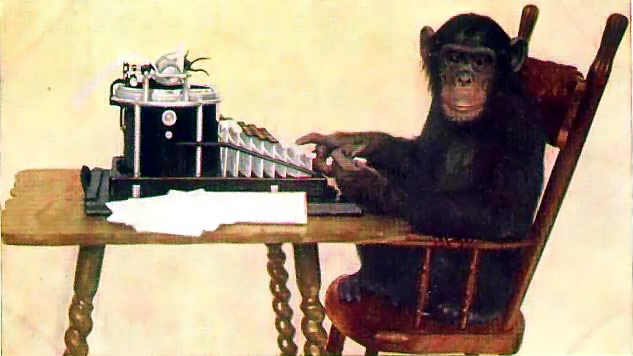
I’ve become a little cautious about discussing translation work. So suffice it to say that I snagged a nice one, and there’s a deadline coming on, and I can’t really spend much time on a blog post.
But rejoice with me that I’ve found work, when better men are filing for unemployment. Whatever my project is, it’s interesting. Have a good weekend. Don’t do anything I wouldn’t do (that ought to keep you pretty safe).
Vincent Malone, hero of Ted Clifton’s Santa Fe Mojo, was once a hotshot lawyer in Dallas, until alcohol trashed both his career and his marriage. He drifted to Denver, where he found his niche as a legal investigator. Then he developed gout, and missed too much work. Figuring a warmer climate would help, he headed for Albuquerque, and cheap housing. But in a diner in Santa Fe he saw an ad for a job driving a customer van for a bed and breakfast. On a whim, he applied for the job.
Vincent is a misanthrope, a man who’s seen the worst in people and has distanced himself from them. But the couple who hire him are annoyingly nice. He doesn’t know what to do with them, but he kind of likes working there as he gets used to it.
They’re excited to greet their first guests at the B&B, but something is wrong. The rooms were booked by a major sports agent who lives locally, for a group of his top clients and their spouses. But when they hold a meeting, it ends in shouting and threats.
The next morning the police come. The agent has been murdered. Vincent can tell that the sheriff’s department would like to hang something on him, but they quickly settle one of the clients – a major league baseball player. Security video shows the two men fighting in the agent’s front yard, a few hours before the murder.
Vincent, though, based on his investigative experience, thinks the cops haven’t looked far enough. They found an easy suspect and stopped detecting. The accused’s lawyer shows up, and he’s the accused’s uncle and Vincent’s spiritual twin – a hard man who got rich defending whoever paid him, using any kind of trick he could get away with. But he’s older now, and thinking it might be nice to form some kind of bond with his only surviving relative. At least he forms a bond with Vincent, who shares his bemusement at discovering morality late in life.
Santa Fe Mojo straddles the line between cozy mystery and hard-boiled, and does it pretty well, I think. The gradual softening of Vincent’s hard shell in the warmth of human friendship provides an enjoyable sub-plot. I enjoyed Santa Fe Mojo quite a lot. Cautions for language, mostly.
Sarah Hoyt is a Facebook friend and a fellow Baen author. Aside from her SF work, she has produced, under the nom de plume (a particularly appropriate term in this case) Sarah D’Almeida, a seies of novels about Alexandre Dumas’s Three Musketeers. These are mysteries, and have been inserted directly into the timeline of that classic novel. The Musketeer’s Seamstress, second in the series, occurs shortly after D’Artagnon meets his swashbuckling friends, but (if I understand correctly) before all the bother about the queen’s diamonds.
Aramis, the romantic musketeer destined for the church, is at the palace, dallying with his mistress, a lady of the court whom he refers to with his friends as his “seamstress.” He steps out of the chamber for a moment. When he returns, he finds her dead, a dagger through her heart. Like so many idiots in mysteries, he pulls the dagger out, getting blood all over his hands. When he hears people at the door, he makes a leap from the balcony onto a convenient tree and then manages to get away over a wall – stark naked. He is fortunate enough to find his friends Athos, Porthos, and D’Artagnon at guard at one of the gates, and they help make his escape. Cardinal Richelieu, who seems to cherish a particular dislike for Aramis, sets a hunt going, but Aramis manages to get away to his home estate, while his friends try to uncover how an “impossible” murder was committed.
The author, I think, did an interesting job with the familiar characters. She invents back story material for them that Dumas only hinted at, and as far as I can remember it’s pretty consistent with his portrayals. I particularly like the character of Porthos, who is envisioned as a man not stupid, but simply plain-minded and practical. Which makes it possible for him – sometimes – to see things his subtler friends miss.
I felt a certain tension in the insertion of a whodunnit into what is essentially an action/adventure setting. The action is quite good when it happens, but a lot of the book involves people just thinking and discussing matters, which struck me as a little incongruous. However, as I said, I liked what was done with the characters, so such scenes were not without interest.
I wouldn’t rate The Musketeer’s Seamstress as a top-shelf book, either as an actioner or a mystery, but it was an enjoyable read, and I had a good time reacquainting myself with what is, perhaps, the archetypal male-bonding group in all literature.
“Smithsonian Channel has also begun to roll out entire episodes on YouTube, and weekly online “watch parties” are planned to make the “Aerial America” viewing experience interactive despite social distancing. Every Tuesday and Thursday from 4 to 5 p.m. EST, Smithsonian Channel’s Facebook page will host state-specific trivia while showing an episode. Each episode will simultaneously drop on YouTube.”
It may not be Epcot’s Soarin’ ride, but it’s close and much longer. There are currently four episodes: Alabama, Alaska, Arizona, and Arkansas.
During the later part of the war, the government issued a pamphlet on how to recognize changelings. Violet read it (a green tinge of the features; propensity to cruelty) and laughed. The real signs had been far more pervasive, far less clear. Sometimes she thought she had only realized she wasn’t human when she was fourteen. Sometimes she thought she had always known.
That’s the first paragraph of a story called “More Full of Weeping Than You Can Understand,” possibly my favorite among the stories in Rosamund Hodge’s delightful collection, Desires and Dreams and Powers.
A friend sent me a copy as a gift, and I’m extremely
grateful to him. As I’ve often said, I don’t much care for most modern fantasy.
But when someone gets it exactly right – as in the cases of Walter Wangerin,
and Mark Helprin, and Leif Enger, the result is delight of an exquisite sort.
The stories in Desires and Dreams and Powers are of diverse kinds, within the general fantasy genre. There is urban fantasy, and tales of witches, and tales of monsters. But most of them (at least as I recall them) are faery stories. And that’s like a birthday present to me.
Ever since I read Tolkien’s essay, “On Faery Stories,” I’ve wanted to write faeries properly. I tried it in Troll Valley – which I think is a pretty good book, but I’m not at all sure I got the Faery/Huldre thing right. Susanna Clark got it right, I think, in Jonathan Strange & Mr Norrell. And now I declare, by the powers vested in me, that Rosamund Hodge gets it right too. The strangeness, the danger, the alien unreason of the faeries is as well depicted here as it ever has been. Kudos to the author.
I can’t recommend this book highly enough. On top of the imaginative genius, the prose is first class. Cautions are in order – not for the usual “adult” material, but for the weird and the alien and the disturbing (and the cruel). But read it, if you’re a grown-up and not overly sensitive. There may be a Christian element here too, though it’s not at all explicit.
The assault on institutional religion, on old-fashioned economic methods, on family authority, and on small political communities has set the individual free from nearly everything, truly; but that freedom is a terrifying thing, the freedom of a baby deserted by his parents to do as he pleases.
I have done it. I have successfully read Russell Kirk’s The Conservative Mind all the way through. I rate this accomplishment just a bit behind getting my master’s degree.
The essence of conservatism is aristocracy – at least that’s
what this book seems to be saying. Which is not optically optimal, in my mind.
And I may be misreading Kirk’s intentions – he may simply be accurately
transcribing the arguments of the historical conservatives he’s surveying, from
Edmund Burke to T. S. Eliot.
Most English and American conservatives, up until recently,
have defended some kind of aristocracy. Not because they believe aristocrats to
be superior by blood, but for prudential reasons. Your alternatives in governance,
they argue, are either some kind of autocracy – where a monarch or a dictator rules
by personal caprice – or pure democracy, where the public, which knows only what
it wants, uses its votes to allocate all the wealth to itself. You can’t get
any kind of real justice from either alternative.
The aristocracy, they have argued, is some kind of class of men (or people) who’ve been schooled in the ancient truths and the lessons of history. They preserve the institutions that guarantee rights and freedom, which dictators and the masses alike would take away.
Since the 20th Century, though, the cause of aristocracy has mostly been lost, and we’ve been trying to find a way to raise an aristocracy out of the general public through education. Kirk saw hope for the future at the time of writing, feeling that conservatives were producing good art and analysis and positively influencing culture.
It seems to me, however, that prospects look less sunny since the 1980s when the book was last updated. We now have an educational system expressly committed to erasing the Anglo-American tradition. And our immigration policies are focused on bringing in large numbers of people who are either indifferent or actively hostile to that tradition.
Kirk’s original title for the book was The Conservative Rout. He meant it to be a story of a long retreat, but with hope in the end. For the conservative reader in the early 21st Century, I fear the outlook is less encouraging.
Our church cancelled our worship services three weeks ago, and we held our first live streamed service this morning. Prior to this our pastors distributed written sermons with discussion questions and our usual liturgy with supplementals that we could use on our own. I led my family through an ad hoc devotional time two weeks ago and followed the church material last week, which took far longer than I expected. We sang all the verses of all the songs, and my reading of the sermon with two breaks for questions took over an hour alone.
The streamed service this morning was comforting. I don’t need a familiar service in a familiar setting to get through the current crisis, but being together in a local body in whatever manner we can is a natural, grace-filled habit God has given us.
What are you doing? How are you making it through on your own or with your church?
With Easter coming in two weeks, I assume all of our plans will be rather low-key. Will we hear the gospel anew, stripped of the color and pageantry we’ve attached to the season? Will the world hear a different song than the one some of them think they know already?
People started talking about cabin fever the day after their mayor or governor directed them to shelter in place. Maybe they are the folks who rarely stay at home for anything, those who dash off to the store, the crab shack, the boardwalk, the open road–anywhere at the drop of a hat. (For the kids at home, “the drop of a hat” is an expression from the days when adults wore hats daily and dropped them on the sidewalk, taxi seat, or chaise lounge several times a day. At those times certain people would do that thing they would do and, you know.)
Now that most of us are working from home or at least staying at home more than we would have been, we may find ourselves more irritable than normal. We may act and react with emotions we didn’t expect, and because of that, we may not feel okay (insert tangentially related song).
Some of us don’t know what to do with our emotions, dismissing them as temporal fancies that should be reined in at every moment. Or wishing they could be. We take our emotions as improper bursts of energy or simply the way we express ourselves. We see no meaning behind our feelings.
Good will is not enough to safeguard freedom and justice: this delusion leads to the triumph of every demagogue and tyrant, and no amount of transplanted Idealism can compensate for the loss of religious sanctions. Men’s passions are held in check only by the punishments of divine wrath and the tender affections of piety.
This passage from Kirk’s chapter on Orestes Brownson is part of one of many discussions where the place of Christianity – or at least religion in general – is considered. Although most of the notable conservatives in the book are heterodox in some sense, and some are even agnostics or atheists, the importance of religion as such looms large. One exception is Roman Catholicism – several of the great conservatives are Catholics, or at least high Anglicans.
Catholics come off pretty well in this book – which annoys
me a bit, of course. Still, I can’t deny that the Reformation was a
liberalizing force (heck, I’m proud of it. See my post last night). Luther didn’t
abolish the hierarchy of the church (check out the organizations of most
Lutheran churches worldwide), but he affirmed the principle that there’s a
direct line between the believer and Christ, absent the mediation of the
priest. In the context of history, this was a step toward individualism and
what Kirk calls “atomization” – mankind conceived as a mass of unconnected
individuals, all free-floating clients of the state, undistinguished by family,
status, or personal qualities.
It’s interesting for an evangelical to observe that
evangelicals are newbies to the conservative movement. Again, this is something
I already knew – evangelicals were Abolitionists and the Prohibitionists, trying
to re-shape the world through legislation, to change mankind through enlightened
government force.
But there were dangers in that
approach, as we can see now. The reformer who wants to save the world from
slavery and Demon Rum, goes on to try to save it from guns and cigarettes and fossil
fuels and transphobia.
And yet I don’t believe in a purely libertarian approach either. I think the government has a role to play in legislating morality – all laws, after all, legislate morality to one extent or another.
OK, folks. I’m back on course. I hope you’re all safe, sheltering in place, avoiding hugs, and keeping well.
As I explained a few inches down the page, I’m reading Russell Kirk’s interesting but interminable The Conservative Mind, and blogging as I go. Parts of the book were kind of a shock to me, though a salutary one.
One thing you learn in reading this book this that it’s not
a canard to say that conservatives are against Democracy. To the contrary,
early conservatives (like Edmund Burke, particular hero of this book),
considered Democracy a positive threat to a decent social order. The American
Founders generally shared that view. When we say “We are not a democracy, we’re
a republic,” it’s true – or was.
Kirk lays that principle down, early in the book, in a list
of conservative principles. Here are his words:
[Conservatives hold a ] Conviction that civilized society requires orders and classes, as against the notion of a “classless society.” With reason, conservative often have been called “the party of order.” If natural distinctions are effaced among men, oligarchs fill the vacuum. Ultimate equality in the judgment of God, and equality before courts of law, are recognized by conservatives; but equality of condition, they think, means equality in servitude and boredom.
This idea in itself was not a surprise to me – I talk about the same thing in my work with Lutheran Free Church history. But I’ve approached it from the other side. I’ve often told listeners and readers that the Norwegian Lutheran pietists who founded my church body were liberals in their time. That the primary difference between liberals and conservatives in those days was their different ideas about the place of the common people in society. Conservatives wanted hierarchy and ancient privileges preserved. Liberals wanted the common people to participate ever more fully in all public life. Hence universal education, leading to broader voting rights.
To the early conservatives, this was all disastrous. The breakdown of the social classes must inevitably lead to the debasement of moral life. There would be no more great, highly educated men to emulate – everything would be debased to a common level of undistinguished mediocrity.
I don’t think we’re meant to take all the early
conservatives’ ideas seriously – they mostly distrusted the abolition of
slavery, for instance (wanting it to be delayed and happen naturally). For my
own part, I can’t help being proud of the achievements of (limited) democracy
in America – Abraham Lincoln, as I’ve often said, was a walking reproach to the
class-conscious old conservatives.
On the other hand, the horrors those old conservatives predicted seem to be coming upon us at last.
Possibly the American experiment was a fragile flower, one
that bloomed briefly in a specialized environment in a blessed time and place,
never to be seen again.
Websites store cookies to enhance functionality and personalise your experience. You can manage your preferences, but blocking some cookies may impact site performance and services.
Essential cookies enable basic functions and are necessary for the proper function of the website.
Name
Description
Duration
Cookie Preferences
This cookie is used to store the user's cookie consent preferences.
30 days
These cookies are needed for adding comments on this website.
Name
Description
Duration
comment_author
Used to track the user across multiple sessions.
Session
comment_author_email
Used to track the user across multiple sessions.
Session
comment_author_url
Used to track the user across multiple sessions.
Session
These cookies are used for managing login functionality on this website.
Name
Description
Duration
wordpress_logged_in
Used to store logged-in users.
Persistent
wordpress_sec
Used to track the user across multiple sessions.
15 days
wordpress_test_cookie
Used to determine if cookies are enabled.
Session
Statistics cookies collect information anonymously. This information helps us understand how visitors use our website.
Google Analytics is a powerful tool that tracks and analyzes website traffic for informed marketing decisions.
Used to monitor number of Google Analytics server requests
10 minutes
__utmb
Used to distinguish new sessions and visits. This cookie is set when the GA.js javascript library is loaded and there is no existing __utmb cookie. The cookie is updated every time data is sent to the Google Analytics server.
30 minutes after last activity
__utmc
Used only with old Urchin versions of Google Analytics and not with GA.js. Was used to distinguish between new sessions and visits at the end of a session.
End of session (browser)
__utmz
Contains information about the traffic source or campaign that directed user to the website. The cookie is set when the GA.js javascript is loaded and updated when data is sent to the Google Anaytics server
6 months after last activity
__utmv
Contains custom information set by the web developer via the _setCustomVar method in Google Analytics. This cookie is updated every time new data is sent to the Google Analytics server.
2 years after last activity
__utmx
Used to determine whether a user is included in an A / B or Multivariate test.
18 months
_ga
ID used to identify users
2 years
_gali
Used by Google Analytics to determine which links on a page are being clicked
30 seconds
_ga_
ID used to identify users
2 years
_gid
ID used to identify users for 24 hours after last activity
24 hours
_gat
Used to monitor number of Google Analytics server requests when using Google Tag Manager
1 minute
_gac_
Contains information related to marketing campaigns of the user. These are shared with Google AdWords / Google Ads when the Google Ads and Google Analytics accounts are linked together.
90 days
Marketing cookies are used to follow visitors to websites. The intention is to show ads that are relevant and engaging to the individual user.
A video-sharing platform for users to upload, view, and share videos across various genres and topics.
Registers a unique ID on mobile devices to enable tracking based on geographical GPS location.
1 day
VISITOR_INFO1_LIVE
Tries to estimate the users' bandwidth on pages with integrated YouTube videos. Also used for marketing
179 days
PREF
This cookie stores your preferences and other information, in particular preferred language, how many search results you wish to be shown on your page, and whether or not you wish to have Google’s SafeSearch filter turned on.
10 years from set/ update
YSC
Registers a unique ID to keep statistics of what videos from YouTube the user has seen.
Session
DEVICE_INFO
Used to detect if the visitor has accepted the marketing category in the cookie banner. This cookie is necessary for GDPR-compliance of the website.
179 days
LOGIN_INFO
This cookie is used to play YouTube videos embedded on the website.