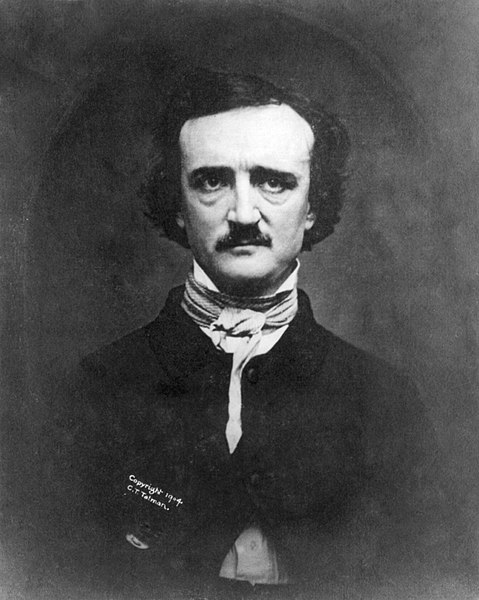
Author of The Exorcist, 89, Has Died

William Peter Blatty, who wrote The Exorcist in 1971, has passed away at age 89. He wrote the novel in response to news accounts his classmates discussed while attending Georgetown University. A Lutheran family in 1949 said their teenaged son could be possessed. His symptoms were–supernatural: flying objects, moving sheets, and messages in rashes on his skin. Blatty’s story based on this account has been called the scariest story ever, at least its film adaptation has.

Ted Gioia points this out in his review of the book, which he read last year along with many other horror classics:

This is perhaps all the more surprising given the large dose of theology in Blatty’s conception of his story. Much of the tale revolves around a crisis of faith. There’s little actual bloodshed in The Exorcist, and—in place of the typical arsenal of the slasher films that flourished in the aftermath of The Exorcist—the weapons at play here are little more than holy water, a crucifix and some lines in Latin. The horror is mostly existential…but perhaps all the more unnerving for that very reason.

In 2015, Washingtonian ran a biographic article on Blatty. Here’s a great, little story from his post-college years.

To pay the bills, he worked as a flack for the University of Southern California. Meanwhile, he soothed his acting jones by posing as Prince Xeer, the make-believe black-sheep son of King Saud. The nearly yearlong caper was facilitated by former Hoya classmate turned FBI agent Frank Hanrahan, who would explain to Sunset Strip nightclub owners that he’d been “saddled by the State Department with the task of being ‘this pain-in-the-ass Prince’s’ guide and bodyguard while he ‘cooled down’ from some grave but unspoken problem back home,” Blatty writes in his memoir.

The gambit fooled stars like Zsa Zsa Gabor and led to another stereotype-skewering article in the Saturday Evening Post. There was also a ghostwriting gig for “Dear Abby,” Abigail Van Buren, on a book for young adults. In his memoir, he writes that the result, Dear Teen-Ager, earned a Mother of the Year Award from the Los Angeles Times for its “matronly wit and wisdom,” even though it was mostly concocted by a chain-smoking Blatty during a break from USC.

‘Who is Conrad Hirst?’ by Kevin Wignall

Who is Conrad Hirst?

Call it conscience, if you will; all I know is that it’s a sadness for which I’m profoundly grateful, no less than if my sight had been restored to me after years of blindness. What overtook me yesterday was a longing to be the person I once was.

Conrad Hirst, titular hero of Kevin Wignall’s Who Is Conrad Hirst?, is a professional hit man. He works (or so he thinks) for a German crime boss. Years ago he stumbled into the profession after a devastating personal loss and time spent as a mercenary. He has been good at his job because he felt nothing, and because he displayed so little personality that people tended to overlook him.

But now he’s had a shock. “I saw myself in a mirror,” is how he describes it. He wants out. He wants to stop being this person.

His exit strategy seems clear. Because of the compartmentalized nature of the organization he works for, only four men know who he is – all of them bad men. He’ll just kill them and walk away with a clean slate.

Of course it’s not that easy. He soon discovers that he isn’t working for the people he thinks he’s working for, and a whole lot more people know about him than he guessed. He keeps on the move, improvising as he goes, trying to figure out who his real boss is and to eliminate him. As he goes, he makes an effort to overcome the bad habit he’s acquired – killing inconvenient people. When most of us slip in our efforts to end a bad habit, the results aren’t that devastating. When Conrad slips, people die.

The moral contradictions of being a professional killer are boldly explored in Who Is Conrad Hirst? What is a hero? What is a villain? There are truly distressing moments – lots of them – when we bounce back and forth between sympathizing with Conrad, and hoping someone will just kill him and put him and everybody else out of his misery.

Who Is Conrad Hirst? is a fascinating, troubling book, like all Kevin Wignall’s work. I salute the author’s focus on questions of human choice and moral reformation, though I think he gives more credit to human nature (unassisted by divine grace) than it deserves.

Also, there’s a very neat twist at the end.

Highly recommended, with cautions for violence, language, and extremely shocking situations.

‘A Death in Sweden,’ by Kevin Wignall

A Death in Sweden

Inger said something under her breath in Swedish, something affectionate, brought on by the sight of the old man. And Dan understood the sentiment even if he hadn’t understood or even heard the words properly, because it was reassuring after a day like they’d had, to be reminded that there were good things in the world, and good people, simple food cooked well, strangers sharing their kindness indiscriminately. Dan had been outside that virtuous circle himself for most of his adult life, but he was grateful to be inside it now.

In northern Sweden, a lumber truck crashes into a passenger bus. Only one person survives, a teenage girl. A fellow passenger, a stranger, had thrown himself on top of her to save her life.

That’s how A Death in Sweden starts. Dan Hendricks, an Englishman but a former CIA operative, now makes his living as a sort of bounty hunter for various employers, some governments, some less legitimate. Doing a job in Madrid, he gets word that several of his colleagues are dead. Shortly after, he and a friend barely escape a hit squad. It becomes clear that someone powerful is liquidating a particular group of intelligence freelancers. Dan’s old boss asks him to go to Sweden to investigate Jacques Fillon, the man who saved the girl’s life on the bus. Jacques Fillon was not his real name, and his boss thinks he is the key to the motivation for the vendetta.

Dan goes to the town, where a Swedish agent, Inger Bengtsson, joins the investigation. As they pry into Fillon’s secrets (fending off more than one assassination attempt as they do), they grow closer to each other. This is something Dan wasn’t prepared for, having cut himself off from ordinary human life for far too long.

As in his other novels, Kevin Wignall trains a spotlight on an aspect of intelligence work that is generally passed over lightly in spy novels – the morality of killing. Again he paints a portrait of men who have reached moments of clarity, who have had to reevaluate not only their professions, but their very approaches to life. Again he contrasts profound human feeling and relationships with the kind of injury a professional killer must do to his own soul. Choice is at the center.

Another very satisfying, though often harrowing, novel by Kevin Wignall. Recommended, if you can handle the violence, language, and adult themes. Like all Wignall’s books, it’s not for the faint of heart.

‘No Snakes in Iceland,’ by Jordan M. Poss

No Snakes in Iceland

What do you say when you imagine yourself the only author in the world to write a certain kind of novel, and then find yourself reading a novel of a very similar kind, in a very similar style?

If you’re me, you breathe a sigh of relief. Because it means you’re not the only one who sees a need for such a book.

I don’t mean to suggest (let me hasten to add) that I think Jordan M. Poss, author of No Snakes in Iceland (he could have found a better title, I think) borrowed from my work in any way. I think he’d have handled some things differently if he’d read my books. But this is a Christian fantasy story of Vikings, told from an outsider’s point of view, written in a style that leans heavily on Old English vocabulary in order to convey a flavor of the time and the original language.

Edgar, the hero of No Snakes in Iceland, is an Englishman, a poet and a chronicler, formerly in the service of the king of England. Following a personal tragedy he went slightly mad, and the archbishop of Canterbury bade him go abroad somewhere where his enemies dwell, to learn to forgive them. So now he’s living in a missionary monastery in Iceland (a fictional institution; I’m pretty sure no monasteries existed there at that point). When a distant chieftain asks his abbot to come to his home to “kill a ghost,” the abbot pleads his age and sends Edgar instead, along with a pair of monks.

There Edgar engages, mostly against his will, with a variety of Icelanders, chieftains, common folk, and slaves, and faces the challenge of an Icelandic ghost – the Norse kind who walks by night in a physical body, grown to giant size, kills livestock and people, and rides houses like horses. Gradually he learns to respect and even like these people, as he tries to find a way to do the seemingly impossible.

It’s a good book. I liked it a lot. The author has clearly done a respectable amount of research, though I can point to a number of minor inaccuracies – he has a thrall carrying a sword, he thinks there were towns in Iceland in the Viking age, he makes wine more common than it was, etc., etc. But the overall effect is admirable. He excels in descriptions of nature and the conveyance of atmosphere. And the Christian passages are handled well, generally the chief challenge for the Christian novelist.

So I recommend No Snakes in Iceland highly. If you liked my Erling novels, I think you’ll like this one. Cautions for a very small amount of coarse language.

The Tribe of Readers Increases

Gallup says a majority of Americans are still reading.

The research group says over a third of Americans are heavy readers, meaning they read more than eleven books in a year, and about half of Americans read at least one but not more than ten books in a year. Only sixteen percent say they did not read a book last year, which is a percentage that hasn’t changed significantly since 1990.

Three-fourth of all readers surveyed said they read printed books most often. That’s far more printed books than they apparently expected to be reading, according to this Book Boon survey from 2013 showing over fifty-seven percent of US readers thought they would be reading mostly eBooks by now.

Maybe great shops around the corner like Blue Willow Bookshop encourage us to keep reading printed books.

I don’t know if we do anything better than other bookstores but I doubt any of them has ever changed out a customer’s vacuum cleaner bag for them. When the Oreck store across the street closed, we had a customer come in distraught because she didn’t know how to change the bag. We have an Oreck so a staffer went out to her car, brought it in, and we changed it. Now that is customer service! We like to think of ourselves as the neighbourhood bookshop with a citywide reach. We do tons of events throughout Houston. We are most proud of our three festivals: Bookworm Bookfest (for picture book and emerging readers), Tweens Read, and TeenBookCon. It’s our mission to connect families to reading.

‘The Hunter’s Prayer,’ by Kevin Wignall

The Hunter's Prayer

‘Nothing happened. I just decided to change.’ He said no more, and yet he wanted to warn her that it wasn’t that easy – something he and Bruno Brodsky and her own father all would have testified to. Once in, there was always a route out; staying out was where the difficulty lay.

Another novel by Kevin Wignall. Again I was impressed, but in a somewhat different way. The Hunter’s Prayer is equally well executed, but it’s much darker than The Traitor’s Story. It contains, I must warn you, one of the most shocking scenes I’ve ever encountered in a work of fiction.

Ella Hatto is an American college student, on vacation in a small Tuscan town with her boyfriend, when they are suddenly attacked by hit men. Just as suddenly a rescuer appears, an efficient killer who dispatches the assassins and spirits Ella and her friend away in a taxi cab. This is the end of Ella’s old life. From now on, everything will be different for her. At the beginning she gets some support and advice from Lucas, her rescuer, a man who is trying to overcome his social isolation, to break out of a lifetime of separation from humanity. “You don’t get it, do you?” he says at one point. “See, I am the bad guy.”

Then their paths separate and they take very different roads. One road culminates in the truly awful moment I warned you about. Another leads to a kind of redemption. If it weren’t for the redemption angle, I’d probably have panned this novel as just too nihilistic. But it works in the end, in a somber way.

I recommend The Hunter’s Prayer, with cautions. Not only for language and the other usual stuff, but for the shock. I’m finding Kevin Wignall’s books profoundly moral – but the morality isn’t precisely Christian.

‘The Traitor’s Story,’ by Kevin Wignall

The Traitor's Story

…And Finn had probably undersold himself – he was acting out of self-preservation, out of revenge for everything that had gone wrong in the past, but he was also acting out of conscience and a sense of moral outrage, traits that until that moment he’d believed he no longer possessed.

From time to time a book hits you square in the sweet spot, and that’s what happened to me with The Traitor’s Story, by Kevin Wignall. It’s a gripping yarn, and it’s told in a fresh and fascinating way.

Finn Harrington is a popular historian, the author of several successful books. He lives in an apartment in Geneva with his girlfriend who, half as a joke, tells people he used to be a spy. The problem is that she’s right. Six years ago Finn was working for British Intelligence, and he was “corrupt.” He didn’t sell state secrets, but he used his contacts to enrich himself, and he left the service under a cloud.

Then one day a neighbor couple comes to him in panic. Their teenaged daughter Hailey, they tell him, has disappeared without warning. Maybe Finn, with his “spycraft,” can help them find her. He refuses at first, but then relents.

What he discovers explodes his world. The girl left home saying she was afraid that someone was following her. Finn discovers that she and a friend had hacked into another neighbor’s computer. When he discovers what they found, he’s appalled – the man they’d hacked, who has since moved out, had been surveilling Finn himself. He realizes that his peaceful life is over; someone from his old life is coming after him for revenge.

I enjoyed the story for its own sake, but I enjoyed its execution as much. Author Wignall has a remarkably spare and lean, no-nonsense style. The style matches the dispassionate attitude Finn has adopted to the world, up until now. That unadorned narration continues as the story grows steadily more violent and suspenseful. The contrast between style and action makes the fireworks – and there are plenty – all the more surprising and effective.

I have nothing but praise for The Traitor’s Story. Cautions for adult themes, language, and violence. There are numerous opportunities to take cheap shots at religion, and the author avoids them all.

“Whom does it serve?”


Puritan church drummer

Sohrab Ahmari’s The New Philistines, which I reviewed last night, sparked a few thoughts under my follicles.

I noticed some years back that my interest in movies, once keen, was waning. Taking the trouble to make the trip to a theater just didn’t seem a good exchange. Whatever the old rewards had been, they were diminishing. And today, although I have Netflix and Amazon Plus, I don’t use their streaming services a whole lot, either. If I decide I want to view a movie, as often as not I can’t find anything I care to click on.

I used to watch television all evening, every evening. I liked some shows better than others, but I could always find something to amuse me. Then gaps started opening up, where there was nothing I wanted to watch. And now I’ve reached the point where there’s zero network programming that I watch regularly.

Ahmari’s book illustrated why those changes happened. I grew more and more aware – unconsciously at first, but consciously more and more – that everything coming out of Hollywood, big screen or small, was propaganda. In the legend of the Holy Grail, one of the questions asked of the seeker of the Grail was, “Whom does it serve?” With modern entertainment, even the most trivial, that question always applies. Each offering is in service of something. And that something is always some social or political cause.

In the days of the Puritans, it was often complained that people got religion shoved down their throats, that everything turned into a sermon.

Ahmari’s The New Philistines might have been called The New Puritans. Because in the 21st Century, the sermons never end.

‘The New Philistines,’ by Sohrab Ahmari

The New Philistines

The marginal is the norm. We are in the final chapters of liberal democracy’s story of ever-greater inclusion. What are the hardline identitarians to do? Posing as permanent outsiders, they are deeply uncomfortable now that they own the culture.

This book moves me a little out of my comfort zone. The New Philistines is written by Sohrab Ahmari, who proudly lets us know that he fully supports many progressive social initiatives, such as homosexual marriage (though I was surprised to learn, when he happened to appear on Dennis Prager’s talk show just today, that he has recently converted to Roman Catholicism). In spite of his social views, however, author Ahmari is appalled by the fruit contemporary political movements have produced in the world of the arts. Truth, beauty, all the traditional pursuits of art have been swept from the stage. Only political identity (what he calls “identitarianism”) matters in the art world today.

He starts with a visit to the new Globe Theatre in London. Built some years ago to reproduce the kind of structure in which Shakespeare’s plays would have been originally produced, the theater attempted, in its initial phase, to do Shakespeare “straight,” to give the audience an idea of what a performance would have been like in the 17th Century. It sounds like a project both entertaining and enlightening.

But recently a new director has taken over. She is a doctrinaire feminist, whose goal is not to make Shakespeare accessible, but to deconstruct him, and with him all our “imperialist, oppressive” western civilization. The author describes a production of A Midsummer Night’s Dream in which all roles are distributed equally between males and females (hasn’t she heard there are more than 50 genders?), the love-inducing magic flower becomes a date rape drug, and one of the two chief romantic pairs is male/male.

The author doesn’t argue with the social goals of the kinds of “artist” who produce this kind of ugliness. He merely complains that what they are creating is crude polemic, not art. Instead of truth and beauty (which he is old-fashioned enough to still seek in art), modern art has become a frenzied exercise of ever-decreasing effectiveness, desperate to find new ways to shock an increasingly unshockable – and disinterested – public.

The New Philistines is a well-written, very short book. I found it stimulating and convincing. Cautions for disturbing subject matter, and some foul language.

Arguing Over Hamlet

When was Hamlet written, and did it refer directly to any particular historical person, family, or event? One man says it was written in 1603, two years later than popularly believed, “after the death of the Bard’s own father and after James I took the throne,” meaning it points directly to the King of England who succeeded Elizabeth I in March 1603.

But Jonathan Bate says that solves nothing and would have raised the ire of the queen, Anne of Denmark. Was Shakespeare trying to poke her in the eye by suggesting there was something rotten about her home country? (via Prufrock News)

Book Reviews, Creative Culture