All posts by Lars Walker

‘Dave Barry Is Not Taking This Sitting Down,’ by Dave Barry

I picked up another Dave Barry book, offered at a bargain price. Short review: I enjoyed Dave Barry Is Not Taking This Sitting Down. I had a suspicion it would be funny, and it was. (The title, by the way, refers to a couple essays on modern, low-flow toilets.)

It was odd that, though this book only came out around the turn of the millennium (which doesn’t seem that long ago to me at my age), it describes a palpably different world. This was before 9/11. Before Covid-19 and the Lockdown. Many of the everyday annoyances that Barry jokes about here seem to come from a long-ago, golden age when you could be annoyed when little things went sour, because they usually went okay. Most of the time.

Memories, memories.

Here’s a few excerpts:

So your school is having a science fair! Great! The science fair has long been a favorite educational tool in the American school system, and for a good reason: Your teachers hate you.

**

The reason Congress did not get around to ordering an audit any sooner is that it has been extremely busy with its primary functions, which are (1) spending money; (2) declaring National Cottage Cheese Appreciation Week, and (3) authorizing the IRS to hammer taxpayers for inadequate record-keeping.

**

Q. When should I arrive at the airport?

A. You should arrive two hours before your scheduled departure time, so that you will be among the first to know that your flight has been delayed due to mechanical problems.

**

The most stressful part [of registering for a baby shower] is picking out the stroller. Today’s baby stroller is an extremely high-tech piece of equipment, comparable in complexity to the B-1 bomber, but more expensive.

Recommended.

The Future Library

The Future Library. Photo credit: traveldailymedia.com

I read every issue of “Viking,” the magazine of the Sons of Norway fraternal organization, of which I’ve been a humble member for longer than I care to contemplate. Often it contains interesting articles. Occasionally there’s even a picture of me, standing on the edge of some SON lodge activity, oblivious. And sometimes it gives me reason to laugh – though rarely on purpose.

The current, October, issue of “Viking” gave me a chuckle. Its cover article is called “Norway’s Secret Library,” and it describes a project called “The Future Library” (Framtidsbiblioteket) in Oslo.

The whole operation is complex and grandiose, but I’ll try to get the gist of it down here – if I can grasp it myself. It started with a Scottish artist named Katie Paterson. She came up with the idea for a library that would contain books by prominent writers that neither she nor anybody alive would ever live to read… for some reason.

A grove of 1,000 spruce trees were planted in a forest in Oslo in 2014. In 2114, those trees will be cut down and turned into paper, on which will be printed books written specially for the project by famous contemporary authors who participate by invitation. (Margaret Atwood got the first invitation. Imagine my surprise.) The Future Library itself has (if I understand the article correctly) been built from the trees initially felled to clear the area for this project. And I guess the building is going to just sit there for the next century, waiting like a time capsule.

You realize what’s happening here, don’t you? Mortality is catching up with my generation. Boomers. And they’re remembering how they treated the authors of the past. How they called for all the classics to be thrown out and burned, to make way for the Now, the With It, the Relevant. (“Hey hey, ho ho, Western Civ has got to go!”)

And they’re terrified future generations will treat them the way they treated the classics.

So they’re building themselves a pyramid. “I am Ozymandias, king of kings. Look on my works ye mighty, and despair.” (Shelley wrote that, as you’ll know if you were educated before the Revolution.)

If these authors truly believed they’d produced literature for the ages, they’d trust posterity to recognize their achievement.

The Victorians admired Lord Bulwyer-Lytton, and considered Arthur Conan Doyle an insignificant scribbler of low-brow popular fiction. Today we laugh at Bulwer-Lytton, and scholarly works are devoted to Doyle.

That’s what I’m counting on for my own books. Posthumous posterity.

Or maybe a certificate of completion in Heaven.

YouTube film review: ‘Darker Than Amber’

As I read John D. MacDonald’s A Deadly Shade of Gold, which I reviewed yesterday, I was reminded of the 1970 film production of another Travis McGee book, Darker Than Amber. I found that it was on YouTube (in a somewhat muddy recording), and figured I’d watch it. I’d seen it before, on television sometime in the ‘70s, I think. I remembered I liked it. I wondered how it held up.

The answer is, not very well. In my opinion, it should have been called Darker Than Camembert, because there’s a whole lot of cheese goin’ on here.

The movie plot follows the book fairly closely, I’ll give it that. Travis McGee (played by Rod Taylor) is fishing with his friend Meyer (Theodore Bickel) when a girl (Suzy Kendall) drops off a nearby bridge with a weight tied to her ankles (if I recall right, it was a concrete block in the book; here it’s a bodybuilder’s weight). This is the sort of thing that happens to McGee all the time, of course, and he is quickly overboard, diving to free the girl and bring her back to the surface alive. She turns out to be named Vangie, and she’s pretty messed up. She ignores Travis’ safety warnings, and is soon in trouble again. Which puts McGee on a collision course with Terry (the great heavy William Smith in his best paranoid mode), a bodybuilder (probably on too many steroids) who has been working a badger game with Vangie. The film culminates in a brutal fight between McGee and Terry on a cruise ship. (According to Smith’s own statement, Taylor hit him in earnest and he hit back, so the fight you see is genuine. Taylor broke three of Smith’s ribs, while Smith broke Taylor’s nose. Or so the story goes. I can’t imagine hitting William Smith at all, let alone hard enough for him to notice.)

John D. MacDonald hated this movie, and never tired of saying so. He felt that its emphasis was on violence rather than human beings and feelings.

What didn’t I like? For one thing, Rod Taylor wasn’t the right physical type for McGee (Robert Culp, who was also considered for the role, would have been closer to MacDonald’s descriptions). And we see little of the thoughtful McGee in this script, which concentrates on action. Miss Agnes, McGee’s Rolls Royce pickup, is here approximated by an RR with a sort of camper rear-end, clearly built over an intact vehicle.

But the worst part was the whole aesthetic of the thing, I think. 1960s styles, colors, camera angles, music. And to top it all, a particular makeup appliance worn by Smith at the end just looks silly.

Still, if you’d like to see a Travis McGee story on film, you can find it on YouTube. The only other attempt was a TV pilot called Travis McGee, which couldn’t be saved even by the deathless Sam Elliot in the lead. Among its sins – McGee wears a mustache, his houseboat has become a sailboat, and the whole setting has been moved to California.

I didn’t embed the film in this post, because I suspect there may be copyright problems and the whole thing’s likely to be pulled any day now. Cautions for violence and brief nudity.

‘A Deadly Shade of Gold,’ by John D. MacDonald

I motioned him back and had him get himself a shot glass. I filled it from my bottle. I held my glass up and said, “Drink to me, my friend. Drink to this poisonous bag of meat named McGee. And drink to little broken blondes, and a dead black dog, and a knife in the back of a woman, and a knife in the throat of a friend. Drink to a burned foot, and death at sea, and stinking prisons and obscene gold idols. Drink to loveless love, stolen money and a power of attorney, mi amigo. Drink to lust and crime and terror, the three unholy ultimates, and drink to all the problems which have no solution in this world, and at best a dubious one in the next.”

He beamed without comprehension, and said, “Salud!” We drank and bowed and I filled the glasses again.

I have favorites and less favorites among John D. MacDonald’s Travis McGee series. I would not list A Deadly Shade of Gold as one of my favorites. It’s dark and convoluted, and unfortunately contains several authorial thoughts that annoy me. Still, it’s McGee, and I wouldn’t be without it.

Travis McGee, Florida houseboat-dwelling beach bum and “salvage specialist,” gets a call from his old buddy Sam Taggart, who’s been gone two years. Sam wants to know if Trav still “operates like he used to.” That means recovering stolen property for people and keeping half the value. He invites Trav to his seedy motel room and shows him an ugly golden statuette. There are 23 more like that, he tells Trav. Somebody took them from him and he wants them back.

Trav tells Sam that Nora wants to see him. That takes him aback. Sam was engaged to Nora before he ran off. Sam then says he’s changed his mind. If Nora will take him back, forget the salvage job. He says he’ll just dispose of this statue, and then Trav should bring Nora to see him tomorrow.

But when Trav and Nora show up, Sam is dead – killed with a knife in an ugly way.

Now it’s more than a salvage. It’s personal. Trav makes a trip to New York to talk to dealers and find out who might have owned the collection of gold statuettes. That leads him to a trip to Mexico (Nora comes along), to surveille the home of a reclusive, exiled Cuban government official.

Then things start getting complicated and violent, and it grows difficult to tell the good guys from the bad guys. It will all culminate in a fiery showdown in a billionaire’s home in Beverly Hills.

None of the Travis McGee books are exactly cheery, but A Deadly Shade of Gold is particularly dark. I think the author must have been depressed that year (1965). Aside from people dying in ways they don’t deserve, MacDonald expresses opinions which (in my view) have not largely held up well. He disses religion, and takes an entirely gratuitous swipe at all hunters. He warns of overpopulation. He talks about the dangers of right-wing extremism without even considering (apparently) that there might be an equal and opposite danger on the other side.

However, the story is consistently anti-communist. And a large part of the plot involves attempts by Communist agents to influence American politicians and entertainment people through sexual blackmail. That’s a theme right out of the headlines (or rather, the buried ledes).

If you’ve never read a Travis McGee novel, I wouldn’t recommend A Deadly Shade of Gold for a starter. Otherwise, buy it. Cautions for sex scenes and violence.

‘Sam Keaton Wild West Mysteries Omnibus,’ by Sigmund Brouwer

I enjoyed Sigmund Brouwer’s Christian-oriented Nick Barrett mystery novel, Out of the Shadows. I didn’t enjoy the sequel, Crown of Thorns, quite as much, so I won’t review it here (it dealt with racial issues, and was as awkward as such stories generally are).

But when I saw Brouwer had written a series of Western stories, I thought, hey. I’ve been meaning to read more Westerns. I’ll give it a try. I bought the Sam Keaton Wild West Mysteries Omnibus. There was much to enjoy there, but in the end it didn’t work for me.

Sam Keaton (an alias) was once a bounty hunter. Now he’s a cowboy, trying to live a peaceable life and avoid an old wanted poster. One day in Laramie, Wyoming he comes upon a big man trying to kick a little Indian to death in an alley. He’s no great lover of Indians, but the injustice of the thing rankles him, so he tries to stop it. The big man goes for his gun, and the next thing he knows the man is dead, and Sam is on the run again. Oddly enough, the Indian follows right at his heels.

The “irksome Injun,” as he calls him, turns out to be a sort of emissary, delivering messages periodically from a mysterious woman named Rebecca Montcalm. The messages give Sam instructions, with a promise of gold.

The story was interesting, but it seemed a little contrived to me. Improbable situations staged to orchestrate plot points. Insufficient credibility.

But my big problem was what I saw as major factual errors. This especially applied in the area of Colt’s handguns, about which the author knows far less than he thinks. He overestimates the ubiquity of the brass cartridge in 1871. He thinks gunfighters fanned their pistols (though in the second book he describes fanning in a way that makes me wonder what he’s talking about). He thinks you can unload a Colt by holding it upside down and shaking it.

But worst of all, he says really mean things about Wild Bill Hickok. I consider Wild Bill one of my pards, and I don’t cotton to that kind o’ talk.

So I didn’t finish the second book.

I will try the next Nick Barret book though, if I see it. Because the author is clearly learning his craft.

Minot after-report

Me and Erik and Alex at Hostfest.

Thank you for your patience while I was out of town. I know it was a trial for you, and I appreciate the strength of character you exhibited.

This year’s Norsk Høstfest in Minot featured an element of suspense. It’s been two years since the festival has actually been held, due to circumstances you’re all familiar with. It’s under new management now, and much smaller than it’s been in the past. Everyone wondered how it would go.

Rather to my surprise, it went pretty well. At least as far as I could tell. Our Viking Village was in a different location this year, a building that’s kind of out of the way. Also, a display of RVs on sale was parked in front of us.

Nevertheless, the festival people found ways to direct people out to us, and I did good business. Sold all the books I brought. I also passed my Viking mail shirt and fighting sword on to the younger generation (for money). That was a bit of a wrench, like a guy selling his motorcycle at last. But I did it. It was time.

Saw lots of people; talked to some of them, mostly about my books. We were fed at the festival, and housed in a hotel (those who didn’t camp in their Viking tents), and paid pretty decent mileage. Chances are, those expenses will be the final straw that puts the festival in the red and ends it for good and all, but at least I got mine.

Special thanks are due to the guy with the ABC Seamless siding display, who gave us all complimentary fly swatters, enabling us to fight back against that particular plague. It made all the difference.

Dannr, the blacksmith.
The bowyer.
The bead maker.
The couple with the Norwegian Forest Cats.

For your Spectation, and greetings from Minot

Happy to greet you from Minot, North Dakota, where I’m in town for the Norsk Hostfest. Made it safe and sound.

I have a new piece up in The American Spectator today. It’s a sort of review of The Lorenskog Disappearance, which I’ve written about here before.

For your spectation, and hiatus note

The American Spectator posted my latest article on Sunday. You can read it here. It’s all about the disadvantages of high intelligence, a subject about which I know nothing at all.

Also, I’m going to be at the Norsk Hostfest in Minot, North Dakota Wednesday through Saturday, God willing. If you happen to be there and want to see us Vikings, we’ll be in the Flickertail building which is (I think) south of the main hall at the state fairgrounds.

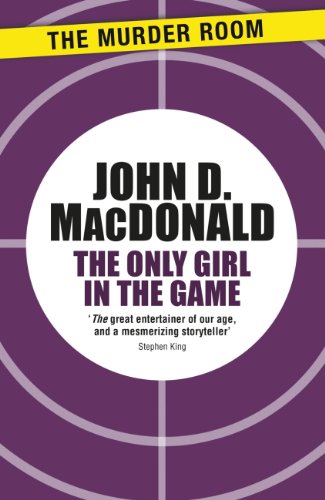
‘The Only Girl in the Game,’ by John D. MacDonald

It seemed to Hugh as he sat there that this was a very bad place on the face of the earth, that it was unwise to bring to this place any decent impulse or emotion, because there was a curiously corrosive agent adrift in this bright desert air…. It would not be a good thing to stay in such a place too long, because you might lose the ability to react to any other human being save on the level of estimating how best to use them, or how they were trying to use you. The impossibility of any more savory relationship was perfectly symbolized by the pink-and-white-and-blue neon crosses shining above the quaint gabled roofs of the twenty-four-hour-a-day marriage chapels.

As I’ve been reacquainting myself with John D. MacDonald’s non-McGee novels, happily republished by The Murder Room in Kindle format, I’ve had one nagging worry. I remembered that one of these books in particular was a heartbreaker, a really tragic story. Now I don’t have to worry about it anymore, because I just read The Only Girl in the Game, and it turns out that’s the one. It knocked me down, made me cry, and took my lunch money. Excellent book.

Hugh Darren manages the Cameroon Hotel in Las Vegas. It’s interesting work and it pays well, which will help him with his dream of eventually opening his own resort in the Bahamas. He knows that the mob owns the place, but they’re on the casino side. Hugh just deals with food suppliers, employees, and customer complaints, that sort of thing. Oh, from time to time his genial, party animal boss asks him for a little favor, and he gets an off-the-books gift when he does it, but they’ve never asked him to do anything illegal.

He particularly delights in Betty Dawson, his new girlfriend. She’s a singer with a regular show in one of the small lounges. She’s tall and beautiful, smart and funny. Hugh is head over heels in love with her, but she’s made it clear she wants only a casual relationship.

What he doesn’t know is that their boss owns Betty. He has leverage on her, and that enables him to require her – not often, only once or twice a year – to do something that makes her hate herself, that makes her feel dirty. Nothing personal, it’s just business.

One day they’ll ask Betty to do something she knows she can’t do. And that day she’ll break free. Then everything will go very bad, very quickly.

The Only Girl in the Game was originally written for the cheap paperback originals market. It includes the obligatory scenes of sex and violence (though fairly mild by 21st Century standards). But it’s also a remarkably well-written and morally centered book. It’s all about the effects of gambling, on individuals and on communities. We’ve come to accept those effects since casinos have been legalized most everywhere, but we’ve paid a price. If you want to understand that price, this is a good book to start with. If you’re thinking of going to a casino for fun, this is a good book to read.

Highly recommended, with cautions as specified above.

‘Out of the Shadows,’ by Sigmund Brouwer

We do not want to risk coming out of the shadows, preferring to remain in the darkness of lives of quiet desperation, afraid of all that is unknown about God and holding on to our only certainty, even if this certainty is the pain we know and understand.

How come nobody ever told me about Sigmund Brouwer before? (I’ll bet somebody did, and I overlooked it.) He’s a Canadian writer, and yet in Out of the Shadows he’s produced an excellent mystery in the Southern Gothic style. It reminded me a little of Walker Percy.

Nick Barrett is a son of Charleston aristocracy, but only in a marginal way. His mother married into the old, moneyed Barrett family, but then bore a child – Nick – out of wedlock. After she disappeared, with Nick’s trust fund money and (according to rumor) with yet another lover, Nick was raised in the family home and tolerated. But they never let him forget his inferior status. He thought he’d beat them all when he married the beautiful Claire, also from their circle. But that all blew up a few nights after the wedding, when several of the young people were in a car accident. Nick lost half his leg in that accident, while Claire’s brother was killed. And Nick found himself faced with an ultimatum from the corrupt county sheriff – sign an affidavit admitting to being the drunk driver (which he wasn’t) or go to prison. Nick left town, the marriage was annulled, and he traveled the world before settling down to teach astronomy at a small college in the southwest.

But now he’s gotten an anonymous letter, telling him that if he comes back to Charleston he can learn the truth about his mother’s true whereabouts. He goes back, limping on his prosthetic leg, to face the still-hostile relatives, and starts kicking over stones and stirring up hornet’s nests. People will die, including (nearly) Nick himself, before the truth comes out and he learns the true power of love, the reality of forgiveness, and something about God.

Out of the Shadows knocked me for a loop. It was thoughtful, lyrical, and even action-packed (I didn’t see that coming). I’ve read a fair number of Christian novels, but never one where the actual act of conversion is portrayed as effectively and movingly as it is here. I was reminded of Leif Enger, but Brouwer is more explicit in his message.

Highly recommended. Really, you need to read Out of the Shadows.