All posts by Lars Walker

Netflix film review: ‘The Professor and the Madman’

Back in 2015, I read Simon Winchester’s The Professor and the Madman (which I reviewed here) as part of my graduate school work. It was one of the few pleasures that course of study provided me. So I was delighted to learn that a movie had been made of the story, and that it was available on Netflix.

According to what I see online, star Mel Gibson (who plays Prof. James Murray, head of the Oxford Dictionary of the English Language project) was very unhappy with the way the film was made. He and writer Farhad Safinia sued the producers, and they finally came to an undisclosed settlement. Apparently the film we have is not the one Gibson dreamed of.

I’m glad I read about that after I’d seen the film, because what I saw pleased me immensely.

Overall, the movie covers events as described in the book. Dr. William Minor (Sean Penn), an American military surgeon unbalanced by his experiences in the Civil War, murders an innocent London laborer, under the delusion that he is an Irishman who’s been persecuting him. Judged insane, Minor is confined to the Broadmoor Insane Asylum. His life begins to find some focus again when he answers Prof. Murray’s appeal for volunteers to hunt out historical citations of various English words for the dictionary. Working obsessively with books allowed him by the asylum director, he provides the project with a much-needed boost.

Meanwhile, Prof. Murray, who lacks a university degree but got his position through plain expertise in languages, suffers professional and social opposition from the scholars at Oxford University Press. A long-distance friendship arises between him and Dr. Minor, but it’s only when he finally goes to present Minor with a first printing of part of the work that he discovers his friend is a madman.

Meanwhile, Minor – though still delusional about many things, is tormented by guilt and attempts to get his pension money conveyed to his victim’s widow. At first she rejects his help angrily, but in time her genuine desperation and his genuine remorse result in a strange affection – leading to a shocking outcome.

As in all dramatic productions, events are rearranged and re-molded to suit the creators’ vision. And dramatic moments happen that never happened in our world. But the film’s vision, as I perceived it, was a very fine one. It has to do with guilt and forgiveness and love, and the importance of work in our lives. It doesn’t rise quite to the level of Christianity, but there are Christian themes all over the place.

The depiction of Victorian England is rich and convincing. The performances are excellent.

My one great complaint is that in one scene, a character – an Oxford scholar, no less – misuses the phrase, “begs the question.” That just isn’t done, old man.

Cautions for very disturbing scenes of violence and insanity. Not for the kids.

“Except for the porridge”

In pursuit of my mission to enlighten the world on Norwegian Christmas customs, I offer the clever TV commercial above, complete with English subtitles.

It will help your comprehension to know that the “nisse” is roughly what the English would call a brownie, or possibly a gnome. He is distinguished by his characteristic red cap. Every farm has at least one, and they control the farm’s luck. Get on his wrong side and he’ll sour the milk, sicken the livestock, sabotage the equipment, etc. My maternal grandmother’s father, according to my mother, blamed everything that went wrong on his farm on the smågubbe, the “little old man,” who was the same as the nisse (like the elves, they prefer it if you don’t use their name).

One matter of supreme importance in coexisting with the nisse is the Christmas porridge (julegrøt). The nisse expects to get a bowlful of the family’s Christmas porridge every Christmas Eve. You leave it out in the barn for him. He especially requires that a generous pat of butter be placed on top. Neglect that, and you can expect a very bad year. Sometimes it’s the farm owner’s fault, and sometimes the fault of a lazy servant. It makes no difference. The nisse must have his due. (I wonder who screwed up last Christmas.)

Tine is a popular brand of butter in Norway, and they did themselves proud with this charming and technically excellent ad, a few years back.

‘Victims of Foul Play, by Patricia Lubeck

I feel a little badly about reviewing this book. It was not written by a professional, and does not pretend to literary quality. It’s aimed at a very small public. But I read it as a favor to someone, and I feel that calls for a review.

On a December morning in 1961, farmer Clarence Larson of rural Garvin, Minnesota called for a neighbor’s help. His wife was dead, her body wrapped around the power take-off of their tractor. He said she’d been helping him “elevate” some corn into a bin (a procedure employing an augur in a chute; I know it well) when she got caught in the mechanism. (This was not uncommon; I heard many stories of people losing arms in power take-offs when I was a kid, and I knew a guy whose brother was killed by one of them.) However, in this case, an unexplained injury to the back of the woman’s head, plus the condition of the body, along with the presence of a new insurance policy, aroused suspicions. The county, however, was unable to prove Clarence’s guilt to a jury, and he went free.

Clarence moved to Tracy, Minnesota, and remarried. In 1980, his new wife disappeared. She failed to show up for regular appointments, and left behind personal possessions to which she’d been attached. When people asked about her, Larson gave conflicting explanations. The county sheriff called in the state Bureau of Criminal Apprehension (which you may know from John Sandford’s Lucas Davenport novels), and even a psychic. But sufficient evidence was never found to convict Larson of murder.

Patricia Lubeck’s book, Victims of Foul Play, is a bald and artless chronological account of events. There can be no doubt that the author believes Larson got away with murder. But in the end, she leaves us with the same thing the authorities had to accept: the man was a clever murderer who managed to hide any really incriminating evidence.

Victims of Foul Play will be of interest to people interested in the local history of Lyon County, Minnesota. I can’t recommend it to anyone else. It is not well written.

‘Quantum Kill,’ by Blake Banner

“Of course you are. You’re James Bond cleverly disguised as an inbred redneck.”

“Thanks, I love you too. Actually, in my experience, most rednecks I have met were very fine people with solid values. And the worst inbreds I’ve met were among the European aristocracies and the Boston Brahmins.”

Harry Bauer, hero of Blake Banner’s Cobra series, is an assassin working for a private security firm that contracts to the government (for deniability). He is deadly and efficient and ruthless, but he has a code – he only kills the worst of the worst.

So he’s surprised when, as Quantum Kill opens, his bosses call him out of a well-earned vacation, asking him to do a job entirely outside his wheelhouse. There’s a woman (they won’t tell him who) at a certain place in Canada. Harry is to pick her up and transport her to Washington DC by a certain date, by a devious route he can work out for himself.

When he finally meets the woman, she’s a puzzle. She’s attractive, but strangely distant and affectless. She makes no effort to make friends, but soon they have more to worry about than their relations, when hit teams locate them – they can’t figure out how – and Harry has to do what he does best to keep her alive. It gets more puzzling when he figures out that the hit teams are CIA.

As they take a roundabout route as far out of their way as the Azores, the barriers between them start to break down. But more is going on than Harry and his employers have been told, and in the end he will resolve the problem through doing what he does best, in a shocking but oddly satisfying climax.

I’ve read some of Blake Banner’s books outside the Cobra series, and I was disappointed in certain attitudes and plot elements, especially in religious matters. But in this series, I haven’t had that problem – such opinions as Harry Bauer expresses generally please me.

I’m torn a bit as to how strongly I should recommend this series to our readers. In terms of reading pleasure, it’s top notch. My interest never flagged from the first page to the last (and as I grow older, flagging interest is a problem I have increasingly as I read). But the violence is harsh and stark and uncompromising. I feel a certain amount of guilt for enjoying it so much.

But enjoy it I do.

‘The Moon Is Down,’ by John Steinbeck

Tom wiped his forehead. “If we get through, we’ll tell them, sir but—well, I’ve heard it said that in England there are still men in power who do not dare to put weapons in the hands of common people.”

Orden stared at him. “Oh! I hadn’t thought of that. Well, we can only see. If such people still govern England and America, the world is lost, anyway. Tell them what we say, if they will listen. We must have help, but if we get it”—his face grew very hard—“if we get it, we will help ourselves.”

In 1940, author John Steinbeck spoke with Pres. Roosevelt and began doing volunteer work with government intelligence and information agencies. He spoke to Col. William “Wild Bill” Donovan of the OSS about the need for effective Allied propaganda for distribution in occupied countries. This led him to write a short novel called The Moon Is Down.

The Moon Is Down begins with the invasion of a small town in a country that resembles (but is not identical with) Norway. The town falls with minimal bloodshed, because a local businessman – a collaborationist – has prepared the way for the occupiers (who are obviously German but not specifically identified as such). The officers take up residence in part of the Mayor’s Palace. Mayor Orden seems a strangely passive leader – he considers himself the voice of the people, and he isn’t sure yet what the people think about all this.

Over time the people’s opinion becomes very clear. They hate the occupiers and will do everything they can to obstruct them, especially through slowing and sabotaging the work at the local coal mine. The reader spends a lot of time with the occupying officers, who are little happier about the situation than the locals. They‘d expected to be greeted as friends and heroes, but instead found constant hatred and ostracism, which saps their spirit.

In the end, major sacrifices will be demanded of the locals, but they are sacrifices they are willing to make – because you can’t suppress free people forever.

The Moon Is Down is an effective story – though a little rose-colored for my taste. The author’s professed confidence in the resilience of free men seems a little naïve in light of recent history – give the enemies of freedom control of the media and education for a couple generations, and we’ve seen what they can do. Editor Donald V. Coers, in his introduction, makes much of the surprising fact that the book was harshly criticized by American liberals (prominently Clifton Fadiman and James Thurber), who condemned it for humanizing the occupiers rather than demonizing them. But Steinbeck seems to have been right, because the citizens of occupied countries found the book highly evocative of their own experience. Thousands of illegal copes were cranked out on mimeograph machines (if you’re as old as I am you might remember how much work that entailed) and secretly distributed all over Europe.

I first learned of the existence of The Moon Is Down while reading The Jøssing Affair, which I reviewed a few days back. I was surprised I’d never seen it mentioned before, but having read it, I think I know why. Modern leftists find the liberty Steinbeck celebrates here a little excessive, especially the parts (more than one) where he celebrates the importance of owning weapons.

The Moon Is Down is a simple book that reads almost like a stage play (it was, of course, made into a play as well). Worth reading for the quality of the writing, and for a look into an older, wiser kind of liberalism.

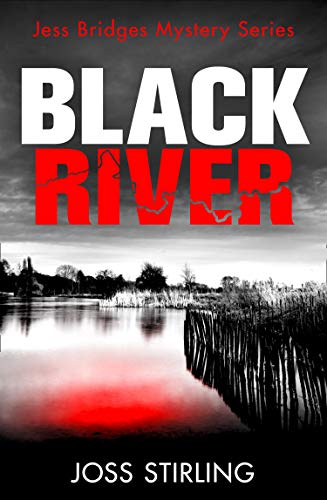
‘Black River,’ by Joss Stirling

Oxford. The Thames Valley Police. Names that evoke, in mystery fans, the unforgettable characters of Morse and Lewis, and the televised “Endeavour” prequels. But this is not one of those stories.

Black River, by Joss Stirling, is a different sort of mystery altogether, in the same setting. It’s billed as the first book in a series, although the story harkens back to previous events in the main character’s life, as if the reader already knew about them. Perhaps it’s a spin-off of another series.

Our heroine and central character is Jess Bridges, a short, pretty, curvaceous young woman who has ADHD, which makes her both impulsive and (apparently) ditzy. She has recently set up as a private investigator, specializing in missing persons. Currently she’s trying to contact a teenaged girl who has moved out on her mother and in with her recently divorced stepfather.

But that inquiry gets interrupted when, inspired by a bestselling book on “wild swimming” in England, she goes skinny-dipping at one of the author’s recommended spots, only to discover the body of a murdered man in a boat. This results in her meeting Jago Jackson, the author of the book himself, who happened to be cycling in the area, and Inspector Leo George, who heads up the murder investigation. The three of them (and several others) will meet again and again, as Jess goes undercover, taking a job with a movie crew filming at an Oxford college, and the two cases start overlapping. At least in terms of location.

The plot was complex – which really isn’t a negative criticism for a mystery. It was a pretty easy read, and the writing was good. There was a touch of French farce about the whole thing, as Jess tends to land in repeated, embarrassing sexual situations. My stuffy puritanism found that a little excessive.

However, I also noted that the author made an effort to avoid foul language. I didn’t love this book, but you very well might like it better.

‘Intolerance’

Still from D. W. Griffith’s “Intolerance,” (1916)

I posted this on Visage Volume yesterday, and though I garnered some quibbles, I still think it holds up.

The issue of Christianity’s “intolerance” has come up. I often hear the contention that the “old gods” were tolerant, while Christianity introduced intolerance. This is based on an uninformed assumption that the old days were just like ours. In fact, the “old gods” were not tolerant, and certainly not universal. They were parochial. They cared about their own people (when it suited them), and no others. Zeus cared nothing for the Parthians. Thor couldn’t care less about the Irish. Christianity brought in a new idea (anticipated by the Jewish prophets) that one God had created all, loved all, and redeemed all. If that’s true, then His message is applicable to all. The moment you make the statement, “God loves everyone,” or “everyone matters,” you are appropriating Christian theology.

Concerning garlands

I posted this video of Sissel singing “Det Lyser i Stille Grender” the other day. Watch it if you missed it before, or watch it again; it’s worth it.

There’s one detail I wanted to comment on. That concerns the Christmas tree standing behind the singer. Note what they did with the shiny garlands.

In America, it’s customary to wind the garlands around the tree, top to bottom (or bottom to top, if you prefer; I’m not dogmatic on the point). The effect is similar to what snow looks like as it lays on the branches of an evergreen after a snowfall. But in Norway it’s common (though not universal) to arrange the garlands as you see here – hanging straight down from the star (or angel; again, I’m not dogmatic) at the top. The idea here (I believe) is to suggest the rays of the star shining down from Heaven. If you set a Nativity creche underneath, that works even better. I did a search for pictures of Norwegian Christmas trees, and often they look very much like ours, but I’ve rarely seen the star-ray configuration on an American tree.

Another difference is in the use of flags. A popular decoration in Norway is a garland of little paper Norwegian flags on a string. You arrange them on the tree as you would any other holiday garland. That sort of thing’s pretty much unknown in America, even in Republican households. We try to separate Church and State – but in Norway they had a State Church up until fairly recently. And the flag, after all, does feature a cross.

It’s common to deride American conservatives as flag-worshippers, but really the Norwegians have us beat on that point. Through the periods of agitation for independence under Denmark and Sweden, the display of a “pure” Norwegian flag (one not quartered with the flag of the “parent” country) was subversive, but relatively safe. During the Nazi occupation, having the flag was less safe, but that made it all the more precious. To this day, old people get tears in their eyes when they remember the day it was finally safe to display the flag again.

No doubt, as that generation dies off, this passion for the flag will diminish.

‘The Jossing Affair,’ by J.L. Oakley

The title of this book probably requires a little explanation, and I’m just the man to do it (though I actually had to look it up in Norwegian Wikipedia).

“Jøssing” was a common word used in Norway during World War II to describe patriots, those who opposed the Quisling collaborationist government. It arose after an incident in 1940, when British commandos attacked a German ship in the Jøssingfjord, rescuing 300 British POWs. The incident was one of the incitements for the German invasion, and the Nazis themselves originated the term as an insult against anti-Nazis. Like the name “Christian” in Roman times, the people who were being laughed at adopted it and wore it with pride.

The hero of J. L. Oakley’s The Jøssing Affair is Tore Haugland, a Resistance agent. He lives in the Norwegian town of Fjellstad, working as a fisherman’s helper. He poses as a deaf-mute. In fact he’s a University graduate and a former athlete, trained as an agent in England. He operates a secret radio transmitter and organizes “imports” and “exports” through the Shetland Bus – which at this point in the war (late 1943) no longer consists of Norwegian fishing boats, but of English submarine chasers.

Anna Fromme is the widow of a Resistance hero, a man who was tortured to death by the Gestapo. He was also a close friend of Tore’s, though Tore keeps that a secret. In spite of her husband’s heroism, single mother Anna is a pariah in Fjellstad – because she’s German. No one is sure of her loyalties, and no one trusts her.

Tentatively and almost involuntarily, the two of them slip into friendship, and then love. But that love – and much else – will be threatened when Tore is betrayed into the hands of the Gestapo, and the Nazis, aware they’re losing the war, crack down harder than ever on the Resistance, exploiting love, friendship, loyalty and trust to crush all opposition.

Author J. L. Oakley is – based on my reading of this book – a good storyteller, but a less good writer. The story had lots of dramatic tension, and I cared about the characters. It illuminated splendidly a part of World War II history that most people don’t know, and I myself wasn’t entirely aware of – the time at the end of the war when German armies were surrendering all over Europe, and the free world rejoiced – but in Norway the Nazis held on fiercely, declaring their determination to defend Fortress Norway or die in a Götterdämmerung, taking the Norwegian people down to hell with them.

What I liked less about the book (and I’ve been complaining about this in my reading reports here) was the sheer length of the thing. I thought the story could have been told faster and more simply. I had trouble keeping the characters straight (even the hero – he uses multiple aliases). Also, there were a number of word mistakes and typos in the text.

Some sexual content, but it was fairly mild. All in all, The Jøssing Affair was a good book and I’m glad I read it. (Some of the action takes place on the island of Hitra, where one of my great-grandmothers was born. I also liked the absence of pro-Communist cant, which you often find in such stories.) But it sure took a while to read. (There was a strange sense of déjà vu as I read about a population suffering deprivation, looking for liberation by Christmas, but having to wait until spring for relief. Hmm, what does that remind me of?)

‘Det Lyser i Stille Grender’

I’m pretty sure I’ve posted this number by Sissel here before (though not this performance, which conveniently includes subtitles). But it’s high on my list of Norwegian Christmas songs that deserve to be known outside the neighborhood.

According to this Norwegian account, the lyrics come from a poem by Jakob Sande. It was first published in 1931, but the author didn’t think much of it. When Lars Soraas, who was putting a Christmas songbook together in 1948, asked him for permission to use it, Sande had forgotten about it completely. Since then it’s become his best-known work.