Sofia Helin (Crown Princess Martha) tries to persuade Kyle MacLachlan (Pres. Franklin Roosevelt) to support the Norwegian government in exile, in a scene from Atlantic Crossing.
I happened to check the IMDb page for Atlantic Crossing, the coming miniseries I helped translate, yesterday. I found the above picture there, and thought it might interest you. I happen to know, through my high-level personal connections in the industry, that this scene was filmed in Czechoslovakia, last month. My boss, who’s one of the script writers, sent me a picture of herself sitting at that desk, in the set replica of the Oval Office.
Don’t rush to pencil in a viewing date, though. The thing apparently won’t be released until early 2021 — and that’s in Norway. Heaven knows when it’ll be available here.
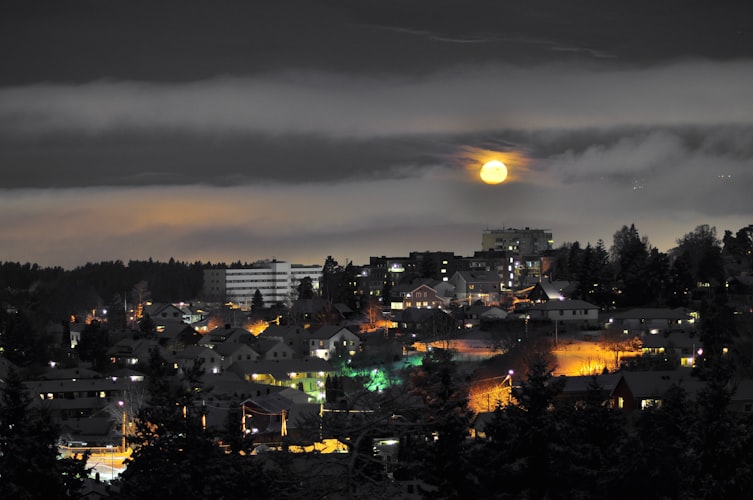
Oslo, where I work. OK, remotely. But this is how it looks while I’m working. Photo credit: Håkon von Hirsch@hakonvh
Sorry about not posting yesterday. That will happen from time to time, under the new regime. My schedule is not my own.
Last week I got zero assignments. Null, as we say in Norwegian. In the resulting vacuum, I went a little nuts. I developed a sudden mania I’d never had before – I went out to lunch every day, sometimes to restaurants I’d never visited. I felt I needed to discover my options, up my dining game a little. It passed, thank goodness. I ain’t made of money.
Yesterday a job came in – and, not surprisingly, it was a
big one with a tight deadline. I always get a little nervous when I take one of
those on, because I’m still uncertain of my powers. I live in terror of not
meeting a deadline – causing my boss to fail to deliver on a contract, bringing
the whole business down in ignominy. In fact, I’m better than I think, and I don’t
generally have much trouble. I got this job done before I expected to.
And today, another job and another tight deadline. But I
finished the first draft before supper, and I’ll give it a polish this evening
and send it off, so they’ll have it in Oslo when business starts tomorrow. No
sweat.
But I did sweat, a little. I’m a worrier.
General observations on the Norwegian film industry from my perspective: I’d say 60 to 80% of my work is on scripts concerning spunky single mothers trying to make it in a man’s world. (Even the one I can tell you about, Atlantic Crossing, is about a woman raising her children alone – though she’s a princess without many career worries.) That scenario appears to be what they think people want to watch just now. I suppose it indicates that the bulk of the audience, both for movies and TV, is women. Which is probably true. But is it cause or effect?
Not to say that these scripts are heavy with radical feminism
or man-hatred. They’re generally pretty good in that regard. It just seems that
the production companies want to see stories through women’s eyes.
From Dr. Jackson Crawford, a list of introductory books for those interested in Viking studies. The list is deficient, of course, as it doesn’t mention my novels or Viking Legacy. Nevertheless it is not without value.
From time to time I talk to you about the parish of Avaldsnes in Norway, where my great-grandfather was born, and where one of the most dramatic events in Erling Skjalgsson’s career occurred.
They’re very aware of their Viking heritage at Avaldsnes, as you can see by viewing the short video below. This is the Viking farm they’ve built on the nearby island of Bukkoy. I’m not sure why they identify the naust (boathouse) as a great hall — except that that’s how it’s used in the TV series Northmen, which is filmed there. But still, this video will give you some idea of the place.
I’m continuing to read (and enjoy) Nancy Marie Brown’s Ivory Vikings, about the Lewis chessmen. In spite of my enjoyment, I’m making slow progress in reading. So I have embedded the short video above to give you some background, if you’re interested.
Fun fact from Brown’s book: The Lewis chessmen are the oldest we have with “bishops.” Earlier sets used other figures in that position. So they may mark a point of departure in chess history.
In this strange life I’ve stumbled into, I spend a lot of time living inside a foreign language. I think I’m beginning to develop a slight empathy for what foreigners encounter when they try to learn our very bizarre English tongue.
What struck me the other day was the way we use (or torture)
the letter S.
At the end of a word, “s” can mean one of three different
things in English:
It can mean a simple plural: “dog” becomes “dogs.”
If we precede it with an apostrophe, it means a possessive: “Edward’s” (except in the case of “its,” an unfortunate and confusing side effect of the very problem I’m complaining about).
Finally, when used with a verb, it means present tense: “This is the product Acme makes.”
This is all the result of bad table manners on the part of
the English people – bolting down a Germanic language and Old French without
chewing them properly (Old Norse for dessert).
Norwegian is much more rational (a final “s” means possessive. That’s all). I’ll bet Chinese is too.
And pretty much any other language you could name.
But I love English. It’s kind of like one of those exclusive neighborhoods with the winding, poorly marked streets: “Welcome to Pretentious Heights, Minnesota. If you can’t find your way around, it’s probably because you don’t belong here in the first place.”
Happy Friday. I’ll kick off the weekend with another Erik Werenskjold illustration of a moment in the life of Erling Skjalgsson, hero of my Viking novels. This is an event I plan to describe, not in my next book (which is being prepared for publication), but in the one after that. It must have been the most satisfying event in Erling’s life, though its ultimate consequences were bloody and tragic.
I won’t tell you the whole story. If you’re familiar with Heimskringla, you know it already. If you’re waiting for my book, I won’t spoil it for you.
What you see above is a gathering at the royal farm at Avaldsnes (which was the scene of the snippets I posted recently). The short man you see through a gap in the ranks on the left is (Saint) Olaf Haraldsson. The tall man near the door of the hall on the right is Erling, elevated by the height of his schadenfreude. He has just outmaneuvered Olaf, who wanted to hang the young man in the hat on the right, and is about to humiliate him.
You can’t see much scenery in this picture, but Werenskjold has taken a chance in including a tree in the background. There’s some dispute among historians as to whether Karmøy island (where Avaldsnes is) had any trees at all in the Viking age. The place was denuded by sheep grazing for a very long time. But I think a few trees, especially around the royal farm, is a reasonable assumption.
I’m going to be a while reading Jane Austen’s Emma. So in the meantime, I must think of things to write about that are consistent with the purposes of this blog – whatever those are.
I thought I’d share a few noted illustrations featuring Erling Skjalgsson, hero of my Viking novels. These pictures come from the classic edition of Heimskringla, the Sagas of the Norwegian Kings, by Snorri Sturlusson.
In 1900, the Norwegian Parliament authorized a new translation of Heimskringla. This was not a politically neutral act, as the stories in Heimskringla were the basis for many arguments used by activists agitating for independence from Sweden. The book came to be about as common as the Bible and Luther’s Small Catechism in Norwegian homes, the three of them often constituting the whole family library. (I have a copy.)
Especially for this edition, the government authorized a series of woodcut illustrations to be done by prominent Norwegian artists. Among them was Erik Werenskjold (1855-1938), who is perhaps most famous for a series of remarkable illustrations he did, along with Theodor Kittelsen, for collections of Norwegian fairy tales by Asbjørnsen and Moe.
Werenskjold did many of the illustrations for the section of Heimskringla containing the story of Erling Skjalgsson.
The picture above is perhaps the most famous picture of Erling ever done. It pictures him as Snorri describes him, as a “good farmer,” directing his thralls in the fields. We know from the saga that these men are working for their freedom, and will all be free in three years at most. Werenskjold did some research to make this picture authentic. The landscape is what Jaeder looks like – I expect the location could be identified, with some work. I’m guessing that’s Hafrsfjord in the background. The spades the thralls are holding would be made of wood. Up until recent times, farmers in Jaeder routinely used such spades to turn the earth before planting – they didn’t use plows, because the extremely rocky ground would break them. Erling looks as tall and handsome as, by all accounts, he was.
What does one do on a book blog when one hasn’t finished a book to review?
Oh yes. One talks about one’s day. That’s why they call it a web log.
It was a mixed weekend for me. I got one piece of good news
and one piece of bad news. The bad news I’ll probably never tell you about (though
I can be bribed, if it’s that important to you), but the good I’ll trumpet to
the skies – if it works out. Watch this space.
Today was a big one, because I had a doctor’s appointment,
which meant actually leaving the house and interacting with other sentient organisms.
I once knew a man who refused to ever see a doctor. He was retired, living in
Florida, and he spent his days by his pool, drinking beer and netting away any
stray leaf or insect that happened to land on the water surface. He had skin
the color and texture of fine Corinthian leather. I seem to recall he died
suddenly one day, but I don’t know whether he passed the actuarial average or
not. With that skin it was hard to guess his age.
Today’s was one of those appointments where you have to fast before you go in, so they can judge your blood impartially. Not that big a sacrifice, really. The doctor and I had the usual conversation, in which he reaffirmed the miraculous current state of prostate testing – you can either take a flawed test which is likely to give you a false positive and result in them carving out your bagel for no good reason, or you can wait and see. I chose to wait and see, rather than buying a chance in the prostatectomy lottery.
I told him what I do for a living now, and he thought it was
pretty cool. I love talking about that.
The nurse stuck me twice, trying to draw blood, and failed to extract any. Which is slightly unnerving, though I knew my heart was beating, so I was pretty sure there was blood in there somewhere. She referred me to a technician who got it done in a minute. I acquired a flu shot and the second pneumonia shot, too.
I also got two things accomplished today that I’d been putting off – one of them being taking the Christmas tree down. And in the afternoon my forebodings of job disaster, roused by several idle days, were eased by a new translation assignment.
Reconstructed longhouse at Lofotr Viking Museum. Photo 2008 by Jörg Hempel
I raised my face to look at him. “Why have I never heard of this?”
I asked. “I’d think Augvaldsness would be a place of pilgrimage for the whole
north – for the English and the Franks as well.”
“We’ve been chary
of the great Roman church here in Rogaland,” said Baard. “They keep throwing
that Arian thing you touched on in our faces, when they notice us at all. We’d
as soon not have them looking too closely at our ways. We’ve learned that when
the Romans look for error, they generally find it, whether it’s there or not.”
“As an Irishman, I
know what you mean,” I said.
Baard slipped the
cover back on the reliquary, and we went back out into the dark. You’d think
that that revelation would be my chief memory of that night, but it pales in recollection,
because of what followed.
As we stepped back
through the entry and into the hall, a figure filled my view, dark against the
light, haloed like a saint in some eastern icon. She sidestepped right to let
me pass, and I stepped left to let her pass, and so we did that foolish dance
you do in narrow places, each trying to make way for the other. At last we both
stopped and laughed, and by now I could see her face.
It was the
loveliest face I’d ever seen on human head. She was woman in her full bloom,
but slender. A few strands of hair that peeked from under her headcloth were
light brown, and her eyes – those eyes! I see them even now – large and blue
under dark brows slightly curved. Her face was longer than an oval, rather
triangular in shape to make room for those great eyes, and her lips were full, but not to excess.
At that very
moment I felt my stomach lurch, as if I’d stepped down a well in the dark.
I closed my eyes
and shook my head, fearing I’d eaten something bad and was about to shame
myself before this woman, through being sick. The feeling passed.
Then I looked back
in her eyes, and my stomach went whump again.
I looked away. All
was steady.
I looked back at
her.
Whump.
I was lost for
words to say, but Baard moved up from behind me and broke the moment.
Websites store cookies to enhance functionality and personalise your experience. You can manage your preferences, but blocking some cookies may impact site performance and services.
Essential cookies enable basic functions and are necessary for the proper function of the website.
Name
Description
Duration
Cookie Preferences
This cookie is used to store the user's cookie consent preferences.
30 days
These cookies are needed for adding comments on this website.
Name
Description
Duration
comment_author
Used to track the user across multiple sessions.
Session
comment_author_email
Used to track the user across multiple sessions.
Session
comment_author_url
Used to track the user across multiple sessions.
Session
These cookies are used for managing login functionality on this website.
Name
Description
Duration
wordpress_logged_in
Used to store logged-in users.
Persistent
wordpress_sec
Used to track the user across multiple sessions.
15 days
wordpress_test_cookie
Used to determine if cookies are enabled.
Session
Statistics cookies collect information anonymously. This information helps us understand how visitors use our website.
Google Analytics is a powerful tool that tracks and analyzes website traffic for informed marketing decisions.
Used to monitor number of Google Analytics server requests
10 minutes
__utmb
Used to distinguish new sessions and visits. This cookie is set when the GA.js javascript library is loaded and there is no existing __utmb cookie. The cookie is updated every time data is sent to the Google Analytics server.
30 minutes after last activity
__utmc
Used only with old Urchin versions of Google Analytics and not with GA.js. Was used to distinguish between new sessions and visits at the end of a session.
End of session (browser)
__utmz
Contains information about the traffic source or campaign that directed user to the website. The cookie is set when the GA.js javascript is loaded and updated when data is sent to the Google Anaytics server
6 months after last activity
__utmv
Contains custom information set by the web developer via the _setCustomVar method in Google Analytics. This cookie is updated every time new data is sent to the Google Analytics server.
2 years after last activity
__utmx
Used to determine whether a user is included in an A / B or Multivariate test.
18 months
_ga
ID used to identify users
2 years
_gali
Used by Google Analytics to determine which links on a page are being clicked
30 seconds
_ga_
ID used to identify users
2 years
_gid
ID used to identify users for 24 hours after last activity
24 hours
_gat
Used to monitor number of Google Analytics server requests when using Google Tag Manager
1 minute
_gac_
Contains information related to marketing campaigns of the user. These are shared with Google AdWords / Google Ads when the Google Ads and Google Analytics accounts are linked together.
90 days
Marketing cookies are used to follow visitors to websites. The intention is to show ads that are relevant and engaging to the individual user.
A video-sharing platform for users to upload, view, and share videos across various genres and topics.
Registers a unique ID on mobile devices to enable tracking based on geographical GPS location.
1 day
VISITOR_INFO1_LIVE
Tries to estimate the users' bandwidth on pages with integrated YouTube videos. Also used for marketing
179 days
PREF
This cookie stores your preferences and other information, in particular preferred language, how many search results you wish to be shown on your page, and whether or not you wish to have Google’s SafeSearch filter turned on.
10 years from set/ update
YSC
Registers a unique ID to keep statistics of what videos from YouTube the user has seen.
Session
DEVICE_INFO
Used to detect if the visitor has accepted the marketing category in the cookie banner. This cookie is necessary for GDPR-compliance of the website.
179 days
LOGIN_INFO
This cookie is used to play YouTube videos embedded on the website.