Category Archives: Fiction

Klavan on becoming a writer

In the wake of my fulsome review of Andrew Klavan’s A Strange Habit of Mind yesterday (it was so gushy it even embarrasses me a little, but I meant every word), I thought we could have some advice from the master on starting out as a writer. So here’s a video, which is apparently about a year old, since he plugs When Christmas Comes.

I should probably take this advice myself, though I wonder how many agents are interested in bright young authors in their seventh decades.

‘A Strange Habit of Mind,’ by Andrew Klavan

She made a movement then—just a small one, very subtle. A little nod of the head while her hand tugged gently at the edge of her skirt. That was all. But to Winter it was clearly suggestive of a curtsey, a gesture so ladylike and anachronistic that it seemed to strike clean through him like a saber thrust. When she returned to her table to gather her overcoat and her purse, he felt as if she had left a jagged hole of loneliness at the center of him, front to back.

The paragraph above is as good a description of a certain male experience (one of our nobler ones) as I’ve ever read. Which is just the kind of writer Andrew Klavan is. He’s the best at what he does. We American conservatives (and Christians) aren’t worthy of his talent.

But be that as it may, we are the happy recipients of another book in Klavan’s Cameron Winter series, which is cause for rejoicing. The first Cameron Winter book, When Christmas Comes, was released around this time last year, and it floored me. I prayed there’d be more, and A Strange Habit of Mind, just released, is my Christmas miracle for 2022.

Cameron Winter, you may recall, is an English professor at a college in an unnamed midwestern state. (I was pretty sure it was Indiana while reading the last book, but we learn now that it borders Minnesota, so I’m guessing Wisconsin.) He’s independently wealthy and working at a job he loves, but he’s also lonely and depressed.

So he sees a psychologist, an older woman. To her he confides the causes of his depression and isolation. Partly they come from his tragic childhood, but much of it is due to his previous career. He used to work for an organization called the Division, which trained him to be an assassin. Not like in the movies. Their methods were far more subtle than the silenced pistol or the garotte in the dark. They knew ways to destroy people by exploiting their personal hungers and weaknesses, and to kill them in ways that looked like natural death, or accidents.

Cam recently got a text from a former student who’s been living in San Francisco. Just two words – “Help me.” Cam called back immediately, but got no reply.

Later he learns that the young man threw himself off the roof of his apartment building shortly after sending the text. Cam is troubled and looks into it. The young man had left school under a cloud, and his subsequent history said little for his character. A drug dealer. A girlfriend abuser. Really, he was no loss to the world.

But Cam can’t let it go, for some reason. He has, as he tells his counselor, “a strange habit of mind,” a gift that was useful to him in his work for the Division. When he ponders an event, his mind unconsciously reorganizes data, enabling him often to discern underlying crimes. And as he looks into the student’s world, he finds that the girlfriend he beat up just happens to be a sister to Molly Byrne, “the Cinderella girl,” the woman who married Gerald Byrne, the richest, most powerful man in the world. (Think Jeff Zuckerberg, but crazier and with more power.)

That leads him into Byrne’s personal history, and a pattern begins to emerge. People who hurt people Byrne cares about tend to have bad accidents. Not only that, but people who oppose Byrne’s social and political causes tend to suffer similar fates.

And something else is plain to Cam. These are exactly the kind of “accidents” he and his colleagues in the Division used to orchestrate. And now, with a few more strategic deaths, nothing will stand in the way of Byrne fundamentally transforming the global order.

So the showdown is inevitable – Cameron Winter vs. the Most Powerful Man in the World.

There wasn’t a moment of slack in this plot. I was riveted from the first page to the last. Not only that, but the bare act of reading was a pleasure, because the prose was so perfect, so evocative and satisfying, like a delicious meal. I may read it again soon, just to savor it.

I recommend A Strange Habit of Mind as highly as is humanly possible. Thanks, Andrew Klavan.

‘Little Drummer,’ by Kjell Ola Dahl

My relationship with the Nordic Noir genre, as you may recall, is troubled. Though I’m generally a Scandinavian booster, I have my pet hatreds (Ibsen and Stieg Larsson, to name a couple), and I’m cold to Nordic mysteries overall (except for Jørn Lier Horst’s Wisting, probably because I worked on two seasons of the TV miniseries). I’ve read one of Kjell Ola Dahl’s Oslo Detectives books before, and didn’t care for it a lot. I found it depressing and distasteful. But I bought Little Drummer on a whim (it was on sale), and I liked this one a little better.

Lise Fagernes is an Oslo newspaper reporter. She finds herself, to her shock, part of a news story herself when she discovers a woman’s body in a car in a parking garage. The police consider the death an accidental overdose, as the fatal needle is right there. But one of the brass, on a hostile whim, assigns the case to his enemy, Inspector Gunnarstranda. And Gunnarstranda, on a hunch, asks for a toxicology test. Turns out it wasn’t an accidental overdose after all. The woman was chloroformed before being injected.

Together with his partner, Frank Frøhlich, Gunnarstranda starts looking into the woman’s background. Turns out she was friends with a student from Kenya who has just been reported missing. When he proves to have fled the country, Frøhlich will have to travel to Africa. There he encounters Lise, who’s still on the story. They circle each other warily before forming a temporary alliance – both in business and personal terms.

The case will lead to international medical conglomerates, African relief, and the general fecklessness and corruption of Western aid to the Third World.

About the highest praise I can give to a Nordic Noir novel is that it didn’t make me want to kill myself. Little Drummer was better than most in that regard. But it was hardly cheery, and I suspect the political underpinnings are anti-capitalist.

Still, not bad, and the translation is good. Cautions for the usual.

‘Romeo’s Rage,’ by James Scott Bell

Sometimes somebody has an idea that just works. When an author comes up with a series character who engages mind and heart, and places him or her in stories that mean something to the reader, he’s got gold. James Scott Bell has produced gold in the Mike Romeo series, about a one-time cage fighter and certified genius on a quest for virtue. Romeo’s Rage entertained me and moved me.

Mike Romeo gets a call from a friend, a reformed gang member who now does Christian ministry with urban youth. It’s a hush-hush thing – the friend knows about a “package,” a child being delivered for prostitution purposes. He doesn’t have to ask twice for help in intervening. Mike and his friend execute a professional extraction and get the little girl to an “underground railroad” site.

Then things turn bad. The girl is taken again, and Mike’s friend is killed. They underestimated the bad guys.

Mike was mad about this criminal operation from the start. Now he’s really mad. And they won’t like him when he’s mad.

As Mike makes his plans and implements them, he’s assisted and restrained (somewhat) by his boss, Ira Levin, a wheelchair-bound ex-Mossad agent and current lawyer. Also he’s reevaluating his relationship with his girlfriend Sophie. He truly loves her, but feels her being close to him will make her a target – if not now, someday. If he loves her, he feels, he’s got to break it off.

Of course, Sophie might have something to say about that herself.

I want to be Mike Romeo when I get younger. Romeo’s Rage was thrilling and moving. I shed manly tears. Highly recommended.

‘Halo Dolly,’ by Rick Dewhurst

Rick Dewhurst, I have it on good authority (Phil’s), is a good guy. He’s also a good – if quirky – writer. And I can only assume he has masochistic side, because he keeps sending me his books to review, even though I can sometimes be hard on them.

His Joe LaFlam series is particularly challenging to me. In the first book, Bye Bye Bertie, we were introduced to Joe as a delusional young Christian man. His real name was John Doe, he didn’t know what city he lived in, and he thought he was a private eye when he was actually a cab driver.

Through his subsequent adventures, he has become Joe LaFlam in fact, and has been united with his real parents, who are billionaires. So as Halo Dolly begins he is living and working in a penthouse (in a big city “a lot like Seattle”), running a detective agency with his friends Alfred (a former hit man, now a Christian) and Abner (a former drunk, now a conspiracy-minded Christian). A beautiful (and rich) young woman named Grace (also a Christian, of course) walks into the office saying she needs protection from a kidnapping threat. Joe immediately takes the job (not unmindful of the fact that Grace is very good marriage prospect), and it doesn’t take long for Grace to be kidnapped from right under their noses. So begins a series of implausible and slapstick developments which lead them to his old menace, the sinister Spelunkers International organization. And to even more evil forces, including demons from the pit of Hell. Or maybe not.

As with Bye Bye Bertie, I was mostly perplexed as I read Halo Dolly. I never know how to take these books. Bertie is less delusional now than he used to be (probably), but the Christian self-talk in his narration makes me uncomfortable. I’m not sure whether I’m supposed to laugh at it. It’s so much like my own self-talk, frankly, that it seems hypocritical. Or else I just don’t get the joke.

I think it may go back to what I call the Aunt Midge Syndrome. That name refers to my own late Aunt Midge, who reacted almost violently once at a family gathering, when the Carol Burnett Show was on. Carol was playing a character with low self-esteem, who talked too much and apologized too much and self-deprecated all the time. I noted that this was precisely what Aunt Midge was like and reasoned, based on her reaction, that people in general aren’t amused by jokes dealing with their own quirks and hang-ups, even ones they’re not aware of. (This is possibly the only insight into human psychology I’ve ever had.) So it may be that I’m just too much like Joe to appreciate the joke.

Anyway, there’s nothing offensive in this book, and much mirth is derived from lampooning popular conspiracy theories – except that they seem to be generally correct here. The joke’s on all of us, I guess.

Thanks to Rick Dewhurst for a free copy.

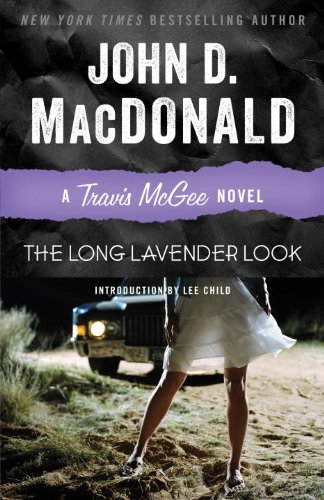
‘The Crossroads,’ by John D. MacDonald

I am and mean to remain a big booster of the author John D. MacDonald, especially his Travis McGee novels. That doesn’t mean, however, that I like all his books equally well. The Crossroads, published in the Murder Room series, is not (in my opinion) one of his stellar achievements.

Back in the early 20th Century, old Papa Drovek, cheerful and parsimonious, invested every dollar he could save up in buying land along the highway. In time it became a major intersection. He built a gas station. Then a café. And as the crossroads experienced increasing traffic, his little empire grew – a truck stop, hotels, strip malls. Today he’s retired, still living in his little cottage, keeping an eye on his beloved children as they carry on the business. He’s old school in his habits, and keeps his money in cash, in a safe deposit box at the bank.

But his children are not entirely happy. His oldest son Charles (Chip) has a good head for business, and is ambitious and hard-working. But his home life is tragic. The woman he married is now a barely functioning alcoholic. Chip loves another woman, but the doctors have told him that any major change in his wife’s situation will certainly lead to her rapid decline and death. So he sticks.

His sister Joan is equally smart and energetic. But she married a drone who seems content to go fishing and live off her money.

Their youngest brother, Pete, has never grown up. Given work in the company, he soon loses interest and turns his attentions to golf. He married a pretty girl, a former model, who shows no sign of any brain wattage whatever.

What none of them knows is that they have an enemy. A man with a deep grudge and a twisted plan to get his hands on Papa Drovek’s money. The plan will involve taking a couple lives, but that’s a sacrifice he has no trouble making.

The Crossroads seemed to me essentially a tragic soap opera. There are no real surprises in the story, and no real hero. Just fairly ordinary people making fairly ordinary mistakes and – in the end, if they’re lucky — learning from them. I’m afraid I found it all kind of dreary.

One thing I noticed in this book – and I probably should have noticed before in reading this series – is that it’s set up in British orthography. “Gas” is always “petrol.” “Gray” is spelled “grey.” “Dispatch case” is “despatch case.” Turns out the Murder Room series is published by an English company, and they must be using text from English editions of the books.

Not that there’s anything wrong with that. It just makes the American dialogue awkward at times.

‘Right to Kill,’ by John Barlow

The narrow stairs creaked a little, but they were carpeted now. It hardly seemed like the same house. The chilly bareness of the disused top floor had gone, replaced by the smell of someone else’s children, like cheese rinds and warm flowers.

When you pick up books by unfamiliar authors based on online deals, as I do, you read a lot of pretty amateurish prose. As you may have noticed, I do a fair number of negative reviews here.

But now and then you find a gem. John Barlow’s Right to Kill is a superior novel, worthy to stand proudly in any genre.

Detective Sergeant Joe Romano is a cop in Leeds, North Yorkshire. Once a promising officer, he got his career stalled during a stint in Interpol, and now he’s back in Leeds, reduced to missing persons cases, no promotions in sight.

When a mother calls in to report her son, Craig Shaw, missing, no one is very concerned. First of all, Craig is legally an adult. Secondly, he’s a known drug dealer, no loss to anybody but his distraught mother. But Joe has principles about these things. He investigates seriously.

When Craig turns up dead, bizarrely murdered by a pencil in the eye, the cops have to take it seriously. But there’s still not much enthusiasm. The working theory, as we’re repeatedly reminded, is that some people just don’t rate the effort. The formula is 1-66 – that one person out of every 66 causes all the trouble in the world, and we’re better off without them.

But Joe can’t get Craig’s mother’s grief out of his mind. And when a second pencil murder is discovered, the media start paying attention. Too much attention, from Joe’s point of view, as his picture goes viral on Whatsapp in an embarrassing context. Soon he’s off the case, on the edge of dismissal.

And still he won’t give up. He’s no super-cop. He makes mistakes and pays for them. And in the end he’ll pay a high personal price for imperfect justice.

John Barlow is an excellent writer, a genuine wordsmith. It’s a delight to read his prose. On top of that he’s very good with characters, finding the hearts of even the worst offenders.

I had some problems with the story on a personal level, though it could have been much worse (and would have been in the hands of a less professional author). Social issues come up constantly, and we deal with some right-wing groups and characters. Although the author does a pretty good job humanizing people he disagrees with, he can’t shake the liberal (I assume he’s a liberal) conviction that all conservatives must be racists. He does his best to be fair to the racists, though.

Some statements surprised me along the way, though they probably shouldn’t have. He speaks of the famous English grooming gangs as if they were no big deal – something only a racist would worry about. Jordan Peterson is spoken of as obviously some kind of fascist. Joe finds it hard to comprehend a statement that there are things we’re not allowed to say anymore. (Maybe he’s just too young to remember.)

But he has clearly made an effort to play fair. And mostly it works.

Highly recommended. Cautions for language and stuff.

‘Made a Killing,’ by Zach Abrams

When a free (or cheap) British mystery, in a series new to me, shows up, I’m inclined to give them a try. I like the settings, and sometimes the books can be good.

Made a Killing by Zach Abrams had some things going for it, but ultimately I wasn’t pleased.

DCI Alex Warren of the Glasgow police goes to view a grisly crime scene. Scott Stevenson, a local antique dealer with a bad reputation, has been stabbed to death with a bizarre weapon – a carved elephant tusk. Nobody, except for the victim’s old mother, is mourning him. The man was widely hated, and Alex has personal knowledge of his deceiving and defrauding numerous people.

But murder is murder, and when potential witnesses start dying by stabbing soon after, the investigation ramps up. Meanwhile, Alex is also increasingly aware of the sexual interest of an attractive co-worker.

The story was all right, the setting interesting. But I did figure out the culprit before the end. And Alex’s affair with a colleague struck me as professionally dubious.

But most annoying was a writing problem, dangling modifiers. Sentences like, “Being the weekend, it could take time…” and “Although cold and dark, they found a bench to sit on…” appear again and again. There were other problems with diction too, like, “The flat itself comprised of an entrance hallway….” And “She bade them to sit on the couch….”

All in all, I wasn’t much impressed.

Old Ogden Nash Hardcovers, Praising e-Readers, and Brain-Changing Reading

For some years, I’ve had a water damaged copy of Ogden Nash’s Good Intentions. Here’s a look at a good copy of it; this one has the slip cover too (I hadn’t seen it before).

Yesterday, I found similar red, hardback copies of Many Long Years Ago, a collection of mostly previously published verse from 1931-1945, and The Private Dining Room, new verse published in 1953. I refrained from replacing Good Intentions or buying another volume they had, so you know what that says about me. We don’t need to say it out loud. I also could have purchased one of a couple more recently published anthologies. This is one of them. But, if I do anything, I’d like a set of the five red hardcovers.

Here are a few lines from Many Long Years Ago.

“Who wishes his self-esteem to thrive
Should belong to a girl of almost five.”

“We’ll remind each other it’s smart to be thrifty
And buy our clothes for something-fifty.”

“If turnips were watches they’d make as good eating as turnips.”

Reading: In praise of e-readers and the joy of winning an argument with a print-only reader who has so many books that he loses the ones he has.

How would Jesus advertise? I have a hard time believing Jesus would encourage us to spend millions on advertising his character traits. How many vice is being funded with a Super Bowl ad? But I also have a hard time throwing stones at this.

Does reading change the brain?When it comes to a cultural trace in the form of literature, we would really like to know whether there is some sort of permanent alteration to the structure of the brain.” They chose Robert Harris’s Pompeii to see if they could detect a small brain change.

Banned Books: Anthony Sacramone has a book challenge for public schools. “Try and get all these at one go onto a public school curriculum (NYC, LA, SF) and see how that goes. I’d love to be proven wrong.”

Mystery: John Wilson reviews another Cameron Winter story, A Strange Habit of Mind, by Andrew Klavan, to be released in a few days.

‘The Good Client,’ by Dan Decker

Mitch Turner is a criminal defense lawyer, I’m not sure where (either author Dan Decker didn’t say, or I just didn’t notice). His practice is new, but he’s aggressive and doing well for himself.

As The Good Client begins, Mitch gets a call in the middle of the night from his office intern, Timothy Cooper. Mitch hasn’t been impressed with Timothy’s work. He considers him too shy and nerdy to ever succeed in criminal law. But now Timothy is knee deep in a criminal case of his own. His roommate, he says, has been shot to death, and the police are there. He thinks they suspect him of the crime. Mitch instructs him to say nothing more to the cops; he’ll be right over.

He finds that the police have, indeed, already homed in on Timothy as the killer. No one else was in the apartment, and there are no signs of forced entry. It isn’t long before Timothy is arrested, and Mitch has his investigator looking into the young man’s movements that night. This proves harder than expected — Timothy proves to be an uncooperative, and surprisingly temperamental, client. Also, his parents are strangely unsupportive, and they start looking suspicious in their own right. But that makes no sense – would they frame their own son? Mitch discovers evidence the police overlooked, which both surprises him and puts him in an ethical dilemma. The evidence is damaging to his own case, but professional ethics force him to turn it over anyway.

The whole thing is complicated – and somewhat improbable, in my view. Some of the legal and police actions taken strike me as implausible (of course, I’m not a lawyer). The final solution also seemed like a stretch, though the culprit was no big surprise.

The book wasn’t terrible. The writing was okay, with only minor syntax errors compared to most books I see nowadays. But it lacked spark. The characters seemed kind of dull (nobody had a sense of humor).

On the plus side, the occasional mentions of religion were fairly positive. No major cautions are needed for language or sexual content.

I’m on the bubble on this one.