Everyone’s favorite author of pirate stories, Robert Louis Stevenson, once wrote to Henry James that he, J.M. Barrie, and Rudyard Kipling “are now my Muses Three. And with Kipling, as you know, there are reservations to be made. And you and Barrie don’t write enough.”
Stevenson was writing from Samoa during this time. His letters have been published in various collections, but his correspondence with J.M. Barrie has lacked Barrie’s letters until now.
Dr. Michael Shaw of the University of Stirling found the letters in a cardboard box at Beinecke Library in Yale University, not realizing they were unpublished until later when he followed up his research with the published correspondence.
“I just assumed that they had been published and I didn’t know about them,” he said. “I was judging myself, thinking I really should have read these.”
Apparently Stevenson told Barrie how to get to his Pacific island, a little over 4,800 miles southwest from the San Francisco bay, in this way: “You take the boat at San Francisco, and then my place is second to the left.”
I’ve answered several political surveys this year. My state has three contested congressional races on top of the presidential election, so pollsters want to know what we’re thinking. My ‘favorite’ line of questions sound like an exercise in sowing deception. They give you statements you’re asked to assume to be true in order to predict whether you would be more or less likely to vote for the dirt-bag candidate who hates children or the saint who is sponsoring this poll. I told one pollster after he had read a glowingly positive statement about a candidate, “If you put it that way, how could I not vote for him?”
I’d like to know what Americans (or even people throughout North America) believe about normal life. For instance, how many of us would agree that life is conflict? Thinking of Jurassic Park, perhaps more of us would accept life as change or growth, but both change and growth involve straining against the current state and that’s a type of conflict. It may be man against nature or against himself.
I wonder how many of us see conflict as a natural part of communication. I can’t say I do. Minor conflicts jar me too much. It can be embarrassing to step on someone’s toes because your responsibilities overlap with theirs. Or you’re in someone’s home and they do something you think is unnecessary, and you say what you think. Those are the negligible conflicts that inspire people like me to worry. They can feed a lingering suspicion that we are always wrong and should avoid speaking up in any situation, just because someone doesn’t see it our way or know the same things we know.
And if we did do something wrong, that only multiplies our bad feelings. Of course, we don’t really believe we’re always wrong. If we did, we’d never get the mail. But our suspicion has that absolute quality to it. That slip-up we made, we believe, illustrates everything notable about our lives.
If we were to see conflict as a natural part of life, then we should expect to disagree without incurring a moral problem. No one has to have sinned during the commission of this disagreement/conversation. We were just talking. And talking entails conflict (or change or growth).
The Lord said he would fill every valley and lower every hill; he would beat smooth every rough path. That’s going to be difficult, but the Lord hasn’t called us into it to handle on our own. He is our king, master, and ruler. Even in this, his burden is light.
Regardless our feelings, when we rest in Christ we are not wrong.
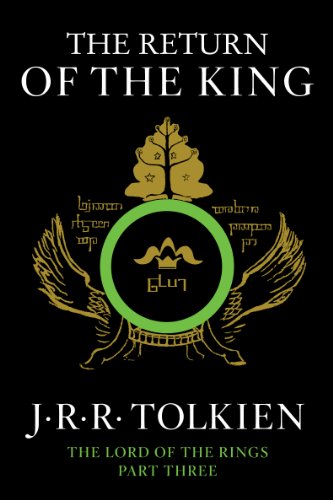
I have come to the end of the story. For each reader of The Lord of the Rings hereafter, I expect, one of the final impressions of reading the saga must be the Scouring of the Shire, made conspicuous by its absence from the Peter Jackson movies.
I’m not going to look back and check, but I’ll bet the last time I did this pilgrimage on this blog, I remarked on this very subject. I can see why, for dramatic reasons, a filmmaker might leave the Scouring out the story. It makes for a substantial anticlimax, which might detract from the eucatastrophe of the defeat of Sauron.
But I have an idea there might be other reasons.
Moviemakers today, it would be redundant to say, are generally leftists. The Scouring is highly problematic for leftists, particularly in these times. The same people who read the books as Hippies in the ‘60s, and cheered when Merry, Pippin, and Sam tear down all the signs posted by the Chief’s men, are now Woke leftists. There’s nothing Woke leftists today love more than lots of cautionary signs – No Smoking, No Firearms, No Automobiles (Tolkien wouldn’t have minded that one), No Pets, Please Recycle, Masks Must Be Worn.
There’s a quotation making the rounds in which Tolkien says that his political views tend toward Anarchism. He didn’t mean 19th Century, bomb-throwing Anarchism, of course. Those guys assassinated kings, and Tolkien loved kings. He meant something more like what we call Libertarianism today (I’m not a Libertarian myself, so I have my own issues here). The fans of the movies, who often believe (I suspect) that it’s all about environmentalism, probably don’t enjoy reading about the hobbits tearing signs down and smoking all over the place (in the movie they suggest that pipeweed is really marijuana, but they’re wrong). But Tolkien’s environmentalism is different from that of today’s left. The professor loved trees, but he didn’t love wilderness as such. In the time of the King, he writes:
…the evil things will be driven out of the waste-lands. Indeed the waste in time will be waste no longer, and there will be people and fields where once there was wilderness.
Tolkien’s ideal world is a world of villages, solidly middle-class and bourgeois.
One other point is even more delicate. The Shire needs scouring because Saruman has filled it with foreigners. Men of low character who bully the hobbits and have no respect for their property or traditions.
For today’s England, and for most of the West, that’s a subject best left alone.
Modern Age asked several people who they want for president, “any character from any book, film, play, television program, poem, or folk tale” or anyone else. If you’re still looking for an outside candidate, you could consider one of these.
George Bailey, an American ideal, “a supporter of small business, an advocate for those working hard to enter the middle class, and a fierce defender of free and competitive markets against monopolizing power.”
Frodo Baggins, “a natural aristocrat” who eschewed power when he had it wheld.
Monty Bodkin. “He kisses babies with the best of them, and he knows his way around an office, having once helped edit the journal Tiny Tots.”
Lettice Douffet. “’Language alone frees one!’ Douffet declaims, and what is in more need of repair than our regal English language, reduced as it is to epithets, expletives, and texted LOLs?”
Hazel. “He’s not the biggest or the smartest rabbit in his warren, but he’s the best leader.”
And he sang to them, now in the elven-tongue, now in the speech of the West, until their hearts, wounded with sweet words, overflowed, and their joy was like swords, and they passed in thought out to regions where pain and delight flow together and tears are the very wine of blessedness.
I’ve gotten through the hardest part. The ring is destroyed, Sauron is fallen; his followers are scattered and defeated. The great evil has passed, and the world begins to heal under the wise power of the King and the White Wizard.
Tolkien’s essay on Fairy Stories emphasizes the importance of the Eucatastrophe – the surprising happy ending. The eucatastrophe doesn’t work unless the dramatic tension is intense. All must seem lost. Any hope that remains must be no hope at all. “We must do without hope,” as one of the characters says. Only after the good side has lost hope and continues fighting merely out of a stubborn determination to die on the right side, if the right must fall – only then can you have a real eucatastrophe.
It seems to me that most writers – and I am certainly one of them – are a little shy about happy endings. We know how to pile up the obstacles; we know how to frustrate our heroes and test them past the point of despair. But when – beyond all expectation – they triumph in the end, we’re not sure what to do with the victory. Mustn’t do an end zone dance, after all.
Tolkien does an end zone dance. He knows that the drama doesn’t exist for its own sake. It exists for the sake of the happy ending, just as the saga of humanity itself exists only for the sake of Christ’s Kingdom. The Return of the King should be read side by side with the Book of Revelation.
He describes in loving detail how friends are reunited, the wounded are healed, the land is cleansed, the pollution is washed away, and justice is restored. He understands that after the sufferings his characters (and the reader, vicariously) have endured, they well deserve a reward.
I need to bear this in mind as I work on my latest Erling book. My current story actually involves a happy ending with historical warrant. I need to be less shy about rejoicing and vindication.
Like most modern people, I know more about depression than rejoicing. More about ambivalence than victory. I need to look to the Word of God to guide me in subcreation.
I’m going to have to give you a little bit of Sissel tonight, and then I’ll be gone for a couple days. I have to go out of town tomorrow to do a lecture, and today I got a (relatively) big translating job I have to finish before I leave. So I must post and run.
The song is a Norwegian classic. The tune is by the violinist Ole Bull, a world celebrity in his time. The words are by Jorgen Moe. The title is “The Seter Girl’s Sunday.” A seter was a mountain pasture, where livestock were kept over the summer, so they could graze there and take pressure off the home meadows. Servant girls would be sent up with the animals, and would commonly spend long periods of time up there, sometimes in relative solitude.
The girl in the song is watching the sun, knowing that when it reaches a certain point above the mountains, the folks at home will be hearing the church bells and heading to church. It’s an important social time in a country community, and she is lonely.
It’s a moving scene in the book, and moving in the movie too – the scene with the “healing hands of the king.”
“For it is said in old lore: The hands of the king are the hands of a healer. And so the rightful king could ever be known.’
Then Aragorn exercises his healing arts on Eowyn and Merry and Faramir. It’s beautiful in itself, and an evocative image of Christ as King and Healer. Lovely.
I don’t know where Tolkien first came across the idea of the king having healing hands, but I’m pretty sure I know one place where he read about it – Snorri Sturlusson’s Heimskringla. But in Snorri it’s a far darker story. Snorri generally shows conventional reverence for Olaf Haraldsson as the patron saint of Norway. But his treatment can be ambivalent, and it’s at this point in Olaf’s saga, not long before his exile to Russia, that Olaf loses the sympathy of a lot of readers. Historically, it certain lost him some allies.
The situation is this: Thorir Olvesson, a young man with important family connections, is getting married, and King Olaf and his entourage are invited. The hospitality is splendid. Food and drink are plentiful, and everyone is having a good time. But one of Olaf’s men whispers to him that Thorir, the bridegroom, has been bribed by King Canute of England/Denmark to murder the king.
From Lee Hollander’s translation:
When the king sat at table and the men had drunk for a while and were very merry, while Thorir went about, serving the people, the king had Thorir called before him. He came up to the king’s table and rested his elbows on it.
“How old a man are you, Thorir?” asked the king.
“I am eighteen years old,” he replied.
The king said, “A big man you are for your age, Thorir, and a fine fellow.” Then the king put his hand around Thorir’s right arm and stroked it above the elbow.
Thorir, said, “Gently, sire! I have a boil on my arm.” The king held on to his arm and felt something hard underneath.
The king said, “Haven’t you heard that I am a healer? Let me see that boil.” Then Thorir saw that it would not do to conceal it any longer and took off the ring and showed it to the king. The king asked whether it was a gift from King Knut. Thorir said he would not deny it.
The king had Thorir seized and put in chains. Then Kalf [Arnesson] came forward and asked for mercy, offering money for him. Many supported him and offered compensation. The king was so furious that no one dared to address him. He declared that Thorir was to have the same sentence [of death] which Thorir had intended for him, and had him killed afterwards. But that deed created the greatest ill-will….
Reading impressions: I was struck, as most readers will forever be now, I suppose, by the differences between the movies and the books. I know this, and yet it always sort of surprises me. The impression I always get from the movies (and of course it’s much easier to watch the movies than read the trilogy) is that the movies are pretty faithful, except for a few obvious changes. The role of Arwen is the most famous. The omission of Tom Bombadil is another. And we could go on and on, in orders of relative importance.
But in fact, the movies are very different from the books. The general plot lines are largely the same, though the order of presentation has often been shuffled. But there are actually few scenes in the films that are presented substantially as Tolkien described them. Compression and economy have had their effects everywhere. Most of the dialogue is new, too. We notice the direct quotations when they come, and quote them in Facebook memes. But they’re actually relatively rare. Most of the dialogue is new – streamlined paraphrases of Tolkien’s general sense.
Every fan of the movies should read the books at least once.
Of course, they won’t.
Looking at the story through the eyes of a Viking buff, one thing struck me in my recent reading. When Denethor commands that Faramir be carried into the kings’ tombs, the entrance is described like this:
Turning westward they came at length to a door in the rearward wall of the sixth circle. Fen Hollen it was called, for it was kept ever shut save at times of funeral, and only the Lord of the City might use that way, or those who bore the token of the tombs and tended the houses of the dead.
In other words, bodies were not carried in through the main entrance, but through a separate, smaller, door. I’m probably reaching, but this reminded me of a Norse custom known from the sagas. We’re told that when someone died in a house, the corpse was not carried out through the main door. Instead a hole was broken into a side wall, and the corpse carried out that way. Then the hole would be repaired. The idea was that if the dead person were to “walk again,” they would try to get back in the way they left, and be unable to find that door. This would protect the residents.
The two things are different, in that one involves carrying corpses in, and the other involved carrying them out. Still, I thought it might have been in the back of the Professor’s mind.
I’ll write about something other than the (brilliant) Norwegian miniseries, Atlantic Crossing (on which I did translation work – not sure I’ve mentioned that), one of these days. But that will only be when there isn’t amazing news to tell about it. And today is not that day.
It was just announced – and I just got word – that Atlantic Crossing will be part of the Spring 2021 lineup on the prestigious PBS “Masterpiece” series (which most of us still call “Masterpiece Theater”) this spring (scroll down to the Spring listing).
I need hardly mention that I’m over the moon about this. While I was working on the series, I thought more than once that this was perfect material for “Masterpiece.” But I had the idea they only broadcast British stuff.
In point of fact, this will be the first time a Norwegian series has ever been broadcast on “Masterpiece.”
I humbly take personal responsibility for all this success.
“Vanity, vanity,” said the author of Ecclesiastes, “all is vanity.” Most modern people, on hearing that verse in the King James version, assume it refers to an attitude of arrogant self-centeredness.
In fact, though (as I’m sure all our readers know), the meaning of “vanity” has changed over time. Nowadays, a better translation would be, “meaninglessness” or “futility.”
I think I’m guilty of both.
I learned that translators are not customarily listed in production credits in movies and TV. This began to nag at me, because I expect someone, someday, to challenge me on whether I participated in Atlantic Crossing (and other fine productions, I hope). I won’t be able to say, “Pause the credits on the DVD. My name’s right there.”
So I joined IMDb Pro today. I hesitated, because membership isn’t pocket change. But finally I went ahead and did it, and attached my name to the Atlantic CrossingIMDb page. I’m not sure how much non-members can see, but I can now be found under “Series Additional Crew.” At the very bottom, until such time as the Master of the Feast shall call me up unto a higher place.
This action plunged me immediately into confusion and distress.
Was this hubris? Where did I get off, trying to pass myself off as an entertainment professional?
On the continuum between self-abasement and self-aggrandizement, I never know where the sweet spot is. All I know is, I’m usually at one extreme or another, and mistaken about it. I have two great regrets in my life – not putting myself forward enough, and ever putting myself forward at all.
The great thing is that I’m pretty sure nobody will ever notice.
Websites store cookies to enhance functionality and personalise your experience. You can manage your preferences, but blocking some cookies may impact site performance and services.
Essential cookies enable basic functions and are necessary for the proper function of the website.
Name
Description
Duration
Cookie Preferences
This cookie is used to store the user's cookie consent preferences.
30 days
These cookies are needed for adding comments on this website.
Name
Description
Duration
comment_author
Used to track the user across multiple sessions.
Session
comment_author_email
Used to track the user across multiple sessions.
Session
comment_author_url
Used to track the user across multiple sessions.
Session
These cookies are used for managing login functionality on this website.
Name
Description
Duration
wordpress_logged_in
Used to store logged-in users.
Persistent
wordpress_sec
Used to track the user across multiple sessions.
15 days
wordpress_test_cookie
Used to determine if cookies are enabled.
Session
Statistics cookies collect information anonymously. This information helps us understand how visitors use our website.
Google Analytics is a powerful tool that tracks and analyzes website traffic for informed marketing decisions.
Used to monitor number of Google Analytics server requests
10 minutes
__utmb
Used to distinguish new sessions and visits. This cookie is set when the GA.js javascript library is loaded and there is no existing __utmb cookie. The cookie is updated every time data is sent to the Google Analytics server.
30 minutes after last activity
__utmc
Used only with old Urchin versions of Google Analytics and not with GA.js. Was used to distinguish between new sessions and visits at the end of a session.
End of session (browser)
__utmz
Contains information about the traffic source or campaign that directed user to the website. The cookie is set when the GA.js javascript is loaded and updated when data is sent to the Google Anaytics server
6 months after last activity
__utmv
Contains custom information set by the web developer via the _setCustomVar method in Google Analytics. This cookie is updated every time new data is sent to the Google Analytics server.
2 years after last activity
__utmx
Used to determine whether a user is included in an A / B or Multivariate test.
18 months
_ga
ID used to identify users
2 years
_gali
Used by Google Analytics to determine which links on a page are being clicked
30 seconds
_ga_
ID used to identify users
2 years
_gid
ID used to identify users for 24 hours after last activity
24 hours
_gat
Used to monitor number of Google Analytics server requests when using Google Tag Manager
1 minute
_gac_
Contains information related to marketing campaigns of the user. These are shared with Google AdWords / Google Ads when the Google Ads and Google Analytics accounts are linked together.
90 days
Marketing cookies are used to follow visitors to websites. The intention is to show ads that are relevant and engaging to the individual user.
A video-sharing platform for users to upload, view, and share videos across various genres and topics.
Registers a unique ID on mobile devices to enable tracking based on geographical GPS location.
1 day
VISITOR_INFO1_LIVE
Tries to estimate the users' bandwidth on pages with integrated YouTube videos. Also used for marketing
179 days
PREF
This cookie stores your preferences and other information, in particular preferred language, how many search results you wish to be shown on your page, and whether or not you wish to have Google’s SafeSearch filter turned on.
10 years from set/ update
YSC
Registers a unique ID to keep statistics of what videos from YouTube the user has seen.
Session
DEVICE_INFO
Used to detect if the visitor has accepted the marketing category in the cookie banner. This cookie is necessary for GDPR-compliance of the website.
179 days
LOGIN_INFO
This cookie is used to play YouTube videos embedded on the website.