When I reviewed Mark Stone’s novel Lucky Break, first in his “Lucky John” series, the other day, I said (in so many words) that the book was slight, inconsistent, but rather fun. Having read book number two, Lucky Draw, I think I’ve had enough. It’s possible to be too slight.
“Lucky John,” the hero, is John Lucky, a former soldier and trucker who won the lottery and moved to Bonita Springs, Florida. He gets involved in investigating crimes, largely to keep himself occupied. In Lucky Draw, he’s hired to board a casino ship and participate in the world’s top poker tournament, in order to recover sensitive data that’s a threat to national security. He goes in accompanied by the girl who bought his winning lottery ticket, and they are soon surrounded by danger and betrayal.
The Lucky John books show strong signs of being written fast and not proofed for consistency. For instance, in the first book we were told John won the lottery in Iowa, and then he went on to tell people it wasn’t Iowa, but Indiana. Now we’re told it was in Illinois. I don’t think the author cares much.
The action is frequent and implausible, and in one scene I had no idea what was going on – the description didn’t make any sense to me. There was a nice moment when John counsels a young man to avoid pornography, but overall the story was long on fistfights and shootouts, and short on characterization.
It was fun for a while, but I think I’ve had enough now.
I believed, therefore I spoke, “I am greatly afflicted.” I said in my haste, “All men are liars.” (Psalm 116:10-11)
I felt a bit triggered today when I saw someone casually mention the 9/11 attacks were an inside job. Were Bin Laden and his disciples bought and paid for by U.S. government officials? How does that explain anything better than the attack being their best effort to harm the country they hate? It doesn’t, but it is more tantalizing, more sensational, more of the prideful vein of being able to see through the lies powerful men sell us.
Earlier this week we said conspiracy theories were attempts at better explanations and they seem to ignore human neglect that causes all kinds of trouble. They also seem to ignore the common pride and self-interest that easily allow or actively pursue exploitation and hatred. We don’t need evil puppet masters pulling our strings to put our comfort or success over everyone around us.
Many people say prejudice isn’t natural, that people have to be taught who to dislike. I think prejudice is the most natural thing we do. It’s the easiest thing in the world to notice a difference in someone else and believe that difference makes you better than them. And it only takes the right flow of circumstances, rumors, and actual injuries to turn prejudice into hate.
I’ve read this is how the civil war in Rwanda was seeded. Belgian colonialists sowed racism among Rwandans a century ago, dividing them into ethnic groups in order to keep them under control. The people accepted this division and after a few decades began to hate each other. You could call that a conspiracy, but the colonial powers only wanted control; after they left, the hatred they sowed bore fruit in genocide.
Our own civil war was arguably worse, because we mostly wanted to exploit the labor of enslaved foreigners. Along comes General Lee to say, “What we wanted was the right to govern our lands by our own judgement.” But our judgement was an economy of exploitive labor, which many people both North and South supported. As long as we weren’t doing the hard work, we supported it. And along comes the Marxists to say, “All labor is criminally exploitive! We will lead a revolution to overthrow the current exploitation so that we can exploit the workers the right way–to our benefit!”
The Lord tells us to love him with all of our heart, soul, and mind, and to love our neighbor as ourselves, and if ever a commandment demonstrated our depravity, it’s this one. Who among us doesn’t want our neighbor to simply keep to himself? How many of us are willing to allow risks for people who are removed from us and not for those close to us?
This week, a friend on Twitter described his neighborhood as being on the wrong side of the tracks. When the city scheduled a day for big item pickup in the nice parts of town, it sent several trucks, and teams of people volunteered to help. For his neighborhood, it sent one truck at a time with one driver to clear off the things his neighbors set out on the sidewalk. Some of those things couldn’t be picked up for various reasons; the city felt no compulsion to get them completely cleared away. And so the poor are further impoverished by the carelessness of the privileged.
I’ve heard that pharmaceutical companies run drug trials in African nations, where people have less ability to push back when things go wrong. People are complaining that their neighbors are being experimented on. This, dear believer of conspiracies, is the way of the world. No evil society with mythical power to command presidents and CEOs. Just regular people seeking their own interest and likely not thinking too long about the best interests of their neighbors.
Recently, a friend reminded me of my review, some years ago, of A Mighty Fortress, the first book in the Milo Porter mystery series by S. D. Thames. I had lost track of this author, so I checked to see if there were more books. And there is one. Nothing But the Blood was published in 2017. I note that there have been no further Milo Porter books. I hope the author hasn’t given up, because he writes my kind of story.
Milo Porter is a Gulf War veteran who now lives in Tampa and works as a private investigator and process server. He suffers from PTSD, which expresses itself in bad dreams, (possible) hallucinations, and risk taking. He’s a Christian, as are most of his friends, who are also (including his girlfriend) mostly weight lifters. Milo is a pretty good lifter himself, and has just set a record. During the big lift, he sees a vision of blood and of his personal guardian angel.
That vision motivates him to take a job he’s offered the same day. A representative of a major league football team hires him to watch a young player whom they plan to select in the upcoming draft. Milo encounters surprising hostility from the player and his entourage. But then the player dies in a highly suspicious weight lifting accident, and Milo finds a new client and a new challenge – to unravel a complicated, ruthless conspiracy of fraud.
I enjoyed Nothing But the Blood a little less than A Mighty Fortress, probably because the pro football world doesn’t interest me a lot. But I was again impressed with the author’s professional prose, good characterization and plotting, and skillful manner of incorporating Christian faith into a (mostly) realistic story. I recommend Nothing But the Blood, with the caution that this isn’t a Frank Peretti book. Which, from my point of view, is a good thing.
Dame Diana Rigg (1938-2020) died today in London. An accomplished actress whose intelligence always shone through the camera lens, she first became famous playing Emma Peel in the classic English TV series, “The Avengers” (not to be confused with the Marvel franchise; see the intro and outro credits above). She had a long and successful career, playing the only Bond girl to actually marry the spy in “On Her Majesty’s Secret Service,” and most recently carrying a role on “Game of Thrones.”
I was desperately in love with her in her “Avengers” days. According to my reading, she was a practicing member of the Anglican Church.
I sometimes joke about the infinite number of fictional detectives today who live on a Florida beach, in emulation of John D. MacDonald’s Travis McGee. And yet they never do seem to run out. My latest discovery is the Lucky John series by Mark Stone, of which the first installment is Lucky Break. “Lucky John” is actually (if improbably) named John Lucky. A former soldier and over the road truck driver, he rescued a girl in a truck stop from a robber one night. In gratitude, she made out a lottery ticket for him using her phone number. The number was drawn, and John Lucky suddenly had more money than he’ll ever spend. (He did give the girl a piece of the prize.)
Having no real roots or family of his own, John decides to move to the place he liked best of all the places he’s ever visited – Florida. He buys a house in Bonita Springs, with his amiable buddy Davey, who seems to have been born to be a sidekick. Before long they’ve found a new favorite bar together, and shortly thereafter John defends the attractive bartender from her angry ex-husband. This leads to a complicated (and implausible) adventure in which John finds himself suspected of murder before uncovering and thwarting a diabolical revenge plot.
Believability isn’t a big consideration in Lucky Break. Details are contradictory, and extreme, movie-style dangers come at our hero rapid-fire. There is little time for meditation on life. The book is a fast read that probably didn’t take long to write.
But I kind of enjoyed it. Lucky John is a likeable hero, and the general mood is sunny, which is nice for a change. I bought the second book.
A little sleep, a little slumber, A little folding of the hands to sleep— So shall your poverty come on you like a prowler, And your need like an armed man. (Proverbs 6:10-11)
Yesterday, I talked about what conspiracies are in light of the World cover story on QAnon claims taking hold within the church. Why people believe unproven and often outlandish theories about select people or the world at large is hard to pin down.
One idea is that the theory of evil conspirators pressing toward world government flattens all the bad news into a single problem, drawing a battle line between the light and the night. One cultural commentator said the QAnon theories resemble the rumors of Satanic rituals circulating among believers in the 80s. In a way this makes sense. Who is the biggest corrupter of our world, if not Satan himself?
But if you’re inclined to agree with that, think about why creation is under a curse to begin with. In Adam’s fall sinned we all. Sure, the devil fed us a line, but we bought it and rejected what our Lord told us. It wasn’t his rebellion that brought down the curse; we earned that ourselves.
This is the big reason world conspiracies fall short. Humanity isn’t a flock of sheep, many of whom falling victim to a few evil goats who are themselves being manipulated by the devil. A strain of evil runs through every one of us.
“For the good that I would I do not: but the evil which I would not, that I do” (Rom 7:19).
It is Christ’s work in us that keeps us from grassroots sin: pride, selfishness, and seeking our own interests. It is Christ’s work in the world that keeps unrepentant sinners from ruining themselves and those around them. We don’t need a secret society to pressure us into sin. We do it willing, even as we tell ourselves to stop.
Many great evils occur throughout the world as a result of normal people making choices. The explosion of 2750 tons of ammonium nitrate last month in Beirut, killing over 200 people, ruining a vital port that will harm countless civilians for months, and shutting down the government completely, was the result of neglectful politicians who saw no reason to clean up a mess. What harm was it doing to anyone two months ago?
A scientist who was nearby said, “I heard a terrible wheeze, a sinister noise. I saw a huge cloud flashing in my direction. I lived through the civil war in Lebanon, but this was the moment I was sure I was going to die.”
Unintended consequences and unforeseen events have caused wide ranging damage from ruined birthday parties to ruined lives. A famished president ate a pile of fresh fruit that killed him with cholera. Poorly designed o-rings allowed a spaceship to explode. And that thing you said to your friend at work? That’s why you’re meeting with the boss in the morning. We don’t often go looking for harm; we just run into it along the way.
Neglect is only one form of grassroots sin. We’ll talk about another form in another post.
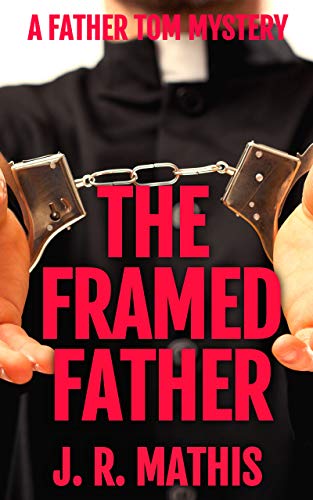
In the second book of the J. R. Mathis’s Father Tom mysteries, The Framed Father, our hero is called back to the town of Myerton, Pennsylvania, where he recently solved the cold case murder of the woman he was married to before he became a priest. He left the parish in the hands of Father McCoy, a callow young priest who seemed the most innocent and inoffensive of men. But accusations have reached the archbishop that Father McCoy has been carrying on with his attractive administrative assistant. So Father McCoy is sent off into retreat, and Father Tom must take over at St. Clare’s once again. But when scandal turns to murder, Father Tom will again team up with Helen, his ex-fiancee, now a police detective (who is improbably open to amateur help) to try to save the young priest’s name and liberty.
I reviewed the previous book in the series, The Penitent Priest, as morally upright and well-composed, but weakly and improbably plotted. I thought The Framed Father somewhat better. There are still too many coincidences, but I didn’t guess the solution this time.
No bad language, heavy violence, or sex scenes to caution you about. Matters of the Catholic faith are treated seriously, and there are good depictions of crises of faith. Father Tom is a little too much the intuitive detective for my personal taste, but the book wasn’t bad.
I’ve heard a little about QAnon in the wild, primarily that one of my congressional candidates has favorable views on it. World’s current cover story reports the rising concerns among Christians over friends and family members who profess to believe in the QAnon conspiracy. As I understand it, they believe an secret society of Satanists is running the world or pushing toward an evil one world government and Donald Trump is the chosen one to defeat them. I’ve read that he has already defeated many of them in secret ways the public may never know.
“In the pandemic lockdown, QAnon accounts exploded in popularity as people spent more time online,” Emly Belz writes. “Many Christians have sunk so deeply into Q that it fills a lot of their conversations and most of their time online.”
The theories spun are the sticky, tangled kind. I don’t want to try to refute specific claims here, but I do want to talk about conspiracy theories in general, their uselessness, and how they run contrary to what we know of human nature. First, let’s look at what conspiracies actually are.
You could easily come to think a conspiracy theory is just wild hare, an elaborate explanation for a particular disaster with an unsatisfactory explanation or a series of unthinkable events. The Kennedy assassination, the Zodiac killer, and why Firefly was cancelled are prime subjects for theories like this. The official explanations are either incomplete or unsatisfactory, so some people construct better theories.
Conspiracy theories argue that the powerful have fed us these incomplete explanations because the lie is better than the truth at maintaining the status quo. They remain theories because investigators cannot unearth enough facts to prove them; if the claims were to be revealed as true, we would call start called the theories “history.”
The world’s most famous actual conspiracy led to the death of Christ. Temple leaders, including the high priest, wanted Jesus of Nazareth dead for political, and ultimately spiritual, reasons. They were powerful men, but they didn’t have that kind of power. If Herod or Pilate or Caesar Tiberius had wanted him dead, they could have given the order, but the high priest didn’t have the power to execute people. Plus he didn’t have the backing of all of the temple leaders. Plus the optics weren’t right; too many people loved this wandering rabbi. So a few of them conspired behind the backs of other temple leaders to conduct a mock trial, get him before Pilate, lobby for his execution, and have him dead before Monday. That’s a conspiracy.
The Gunpowder Plot that launched the face of a thousand Guy Fawkes was an attempt to blow up the House of Lords with the king and many supporters with it. They had to plot in secret because they didn’t have any real power to direct or overthrow their own government. They had to try unexpected brute force. What they should have tried was some explosive ideas, but with all of this gunpower lying around, why let it go waste?
This is how conspiracies actually work (or don’t). These secret cabals didn’t have the power to accomplish their goals outright, so they did what they could in the shadows. Compare that to modern day China murdering and abusing the Uighurs for the last few years. They aren’t conspiring against them; they are directly abusing them and lying to the world about it. The only secret is what the outside world knows about it. This is not like the QAnon claims of the powerful directing our society through shadow strings, celebrity endorsements, and trafficking networks. We’ll get to a better explanation in another post.
As Abe Lincoln’s first VP, Hannibal Hamlin, famously said, “Once the twenty-four news gets ahold of this, there’ll be a conspirator in every pew. Verily.”
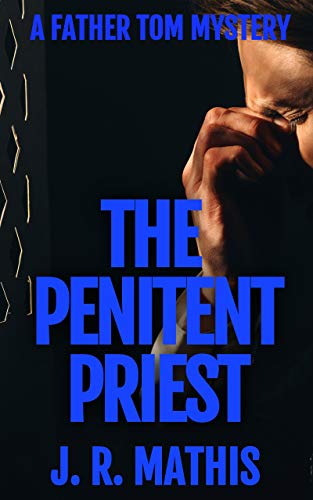
I probably wouldn’t have purchased J. R. Mathis’s mystery novel The Penitent Priest if I’d noticed that its tagline said “A Clean Murder Mystery.” (Puts me in mind of the old joke about “a nice old-fashioned murder with no immorality in it.”) When the first recommendation a book offers is its lack of dirty words and sex scenes, it’s not usually a guarantee of literary quality. But The Penitent Priest turned out better than I would have expected.
Father Tom Greer came to the priesthood late in life, after the murder of his beloved wife. So he’s somewhat nervous when the archbishop assigns him to temporarily replace the parish priest at St. Clare’s in Myerton, Pennsylvania. Myerton is where he lived as a married man and buried his wife, and where he abruptly left a number of old friends when he dropped out of sight afterwards. So he has some personal fences to mend.
But when an unseen stranger tells him secrets no innocent person should know in the confessional, Father Tom knows he has the opportunity to finally identify his wife’s killer. But he’ll also have to face his own fears and guilt.
I was impressed with the writing in The Penitent Priest. You rarely run into a novelist these days who can parse a decent English sentence and spell words right. The plotting, unfortunately, was less wonderful. As is not uncommon among starting authors, author Mathis has laid on too many coincidences. Why should the archbishop assign Father Tom to precisely this parish, considering his personal history and the fact that he’s still a person of interest in his wife’ murder? And is it really likely that the woman to whom Tom was engaged before he met his wife should show up as a police detective here?
Also, the big surprise at the end of the story might as well have been printed on the title page in big red letters.
But because I liked the writing, and because Father Tom is a good character, I bought the sequel.
Having at last finished Neal Price’s very long – and enjoyable – survey, Children of Ash and Elm: A History of the Viking Age, I find my feelings definitely mixed. There is much in this book that I admire and value. I learned from it. But I found what seem to me certain debilitating flaws in it.
I might mention, first of all, that (although he does not cite Viking Legacy, the great book to which I am immortally linked as translator) author Price takes the same line on the historical validity of the sagas – that they are not straight history and cannot be treated as such, but that they do contain useful information for the historian who employs them with care:
Even the most sceptical of literary researchers, those who generally reject the Old Norse texts as viable sources (however remote) for the actual Viking Age, do not always go on to confront the question this viewpoint requires: why, in that case, would medieval Icelanders have created—over several centuries—the most remarkably detailed, comprehensive, and consistent corpus of historical fiction in the world?
Author Price is an accomplished archaeologist, who has spent decades studying the Viking Age. His research is extensive, and he writes with the authority of long familiarity. His purpose in this book is more than to tell the story of the Viking Age. It is to draw on his learning and experience to try to convey to the modern reader the essence of the Vikings – how they saw the world, how they felt. I think he succeeds to a commendable degree.
Most big books on any subject try to offer a new theory or insight, and Children of Ash and Elm does this through a couple (relatively) new ideas – that the Viking Age began earlier and lingered longer than is generally assumed, and that the two Viking enterprises, the “west Viking” and “east Viking” currents, were in fact one and the same, with no real separation.
Hidebound non-specialist that I am, I must admit I’m not convinced by these arguments. Inception and terminus dates are notoriously hard to nail down, but Price points especially to a mass ship grave containing Swedish skeletons, found in Estonia and dated around 750 AD (he always uses CE dating, of course). I don’t entirely buy this argument. It’s hard to identify a “Viking raid” on the basis of a single burial, however impressive.
As for the unity of east and west, I have long held, and continue to hold, that the location and power of Denmark is a central issue in understanding the Viking Age. The simple fact that passing into or out of the Baltic required paying tolls to the king of Denmark tended to send Norwegians west and Swedes east, just to avoid his domains. The compartments weren’t watertight, but I think they existed.
I noted what seemed to me a telling omission in the book’s account of Viking slaving activities. Price makes no secret (quite rightly) of the fact that the Vikings routinely took and trafficked in slaves, and profited greatly from the trade. He speaks movingly of the suffering of those in bondage. But he seems to minimize the role of the Muslim world in it. He does mention the Arab markets, but only more or less in passing. Reading this book, you’d think most Viking slaves ended up toiling on Scandinavian farms. In fact, the great majority were headed into the insatiable maw of the Islamic slave markets.
The book was also marred, for me, also by occasional genuflections toward political correctness. Here and there, author Price finds it necessary to apply concepts like “privilege,” “intersectionality,” and “gendering” to the Vikings. I don’t think this is useful or illuminating in historical context.
Nevertheless, I found Children of Ash and Elm fascinating and informational. It’s written (and well-written) with a clear passion for the subject and a practiced critical eye. I recommend it, with cautions.
Once, in the Russian urban centre of Novgorod, where the waterlogged soil preserves such things well, I breathed in the scent of fresh pine a thousand years old, the whole site just saturated in the fragrance from all the woodworking waste lying where the Viking-Age carpenters had left it.
Websites store cookies to enhance functionality and personalise your experience. You can manage your preferences, but blocking some cookies may impact site performance and services.
Essential cookies enable basic functions and are necessary for the proper function of the website.
Name
Description
Duration
Cookie Preferences
This cookie is used to store the user's cookie consent preferences.
30 days
These cookies are needed for adding comments on this website.
Name
Description
Duration
comment_author
Used to track the user across multiple sessions.
Session
comment_author_email
Used to track the user across multiple sessions.
Session
comment_author_url
Used to track the user across multiple sessions.
Session
These cookies are used for managing login functionality on this website.
Name
Description
Duration
wordpress_logged_in
Used to store logged-in users.
Persistent
wordpress_sec
Used to track the user across multiple sessions.
15 days
wordpress_test_cookie
Used to determine if cookies are enabled.
Session
Statistics cookies collect information anonymously. This information helps us understand how visitors use our website.
Google Analytics is a powerful tool that tracks and analyzes website traffic for informed marketing decisions.
Used to monitor number of Google Analytics server requests
10 minutes
__utmb
Used to distinguish new sessions and visits. This cookie is set when the GA.js javascript library is loaded and there is no existing __utmb cookie. The cookie is updated every time data is sent to the Google Analytics server.
30 minutes after last activity
__utmc
Used only with old Urchin versions of Google Analytics and not with GA.js. Was used to distinguish between new sessions and visits at the end of a session.
End of session (browser)
__utmz
Contains information about the traffic source or campaign that directed user to the website. The cookie is set when the GA.js javascript is loaded and updated when data is sent to the Google Anaytics server
6 months after last activity
__utmv
Contains custom information set by the web developer via the _setCustomVar method in Google Analytics. This cookie is updated every time new data is sent to the Google Analytics server.
2 years after last activity
__utmx
Used to determine whether a user is included in an A / B or Multivariate test.
18 months
_ga
ID used to identify users
2 years
_gali
Used by Google Analytics to determine which links on a page are being clicked
30 seconds
_ga_
ID used to identify users
2 years
_gid
ID used to identify users for 24 hours after last activity
24 hours
_gat
Used to monitor number of Google Analytics server requests when using Google Tag Manager
1 minute
_gac_
Contains information related to marketing campaigns of the user. These are shared with Google AdWords / Google Ads when the Google Ads and Google Analytics accounts are linked together.
90 days
Marketing cookies are used to follow visitors to websites. The intention is to show ads that are relevant and engaging to the individual user.
A video-sharing platform for users to upload, view, and share videos across various genres and topics.
Registers a unique ID on mobile devices to enable tracking based on geographical GPS location.
1 day
VISITOR_INFO1_LIVE
Tries to estimate the users' bandwidth on pages with integrated YouTube videos. Also used for marketing
179 days
PREF
This cookie stores your preferences and other information, in particular preferred language, how many search results you wish to be shown on your page, and whether or not you wish to have Google’s SafeSearch filter turned on.
10 years from set/ update
YSC
Registers a unique ID to keep statistics of what videos from YouTube the user has seen.
Session
DEVICE_INFO
Used to detect if the visitor has accepted the marketing category in the cookie banner. This cookie is necessary for GDPR-compliance of the website.
179 days
LOGIN_INFO
This cookie is used to play YouTube videos embedded on the website.