All posts by Lars Walker

‘Ride the Devil’s Herd,’ by John Boessenecker

Notions of personal honor aside, a clash between the Cowboys and lawmen was inevitable. Since November 1878, the Cowboys—from Bob Martin to Curly Bill to the Clantons and McLaurys—had been largely unopposed. On the border the Cowboys had bullied and raided and smuggled and robbed. They had killed anyone who dared oppose them. They had, prior to that fateful October day, murdered at least thirty-two men in New Mexico, Arizona, and Mexico.

Over the years, I’ve read a number of books on the Earp brothers and the OK Corral gunfight. To be fair, plain “debunkings” of the “Earp myth” have grown rare of late. Writers tend to concentrate on the ambivalence in the historical record. The Clantons and their Cowboy allies look bad, but the Earp brothers look pretty bad themselves. Writers find it hard to take sides.

John Boessenecker, author of Ride the Devil’s’ Herd, has no such problem. He reports on the Earps’ corporate and individual transgressions with perfect candor (as far as I could tell), but makes a valuable contribution by doing a job most historians have skipped – he clearly documents the long and bloody history of the Cowboys who were the Earps’ enemies. And balanced in that scale, he has no problem siding with the Earps.

I’d always assumed that the horrific first scene of the movie, “Tombstone,” was an example of cinematic hyperbole – like the entirely fictional opening to “Braveheart,” designed to get us to hate King Edward I from the git-go. But although the specific incident of the wedding massacre never happened, it’s entirely consistent with their habitual behavior. The Cowboys’ history as a criminal organization went back to the 1877 Salt War in Texas. The Salt War, a fight over mineral rights to salt in dry lakes, was a vicious racial conflict between Anglos and Mexicans, and the Cowboys took the opportunity to give full vent to their cravings for theft, rape, and murder. Afterward they mainly specialized in cattle rustling, primarily stealing cattle in Mexico and selling them in the US, though they were perfectly willing to do it the other way around when convenient. They also stole horses, robbed stagecoaches, and walked off with anything not nailed down. They could be charming when they wished to, but made sure to beat or kill anyone they thought might not fear them sufficiently. These were not the “rustlers” of the northern range wars, small ranchers resisting being bulldozed by the big cattle interests. They were, in fact, a terroristic organization. They scared off capital investment, and more than once they precipitated diplomatic crises between the US and Mexico.

The Earps, when they arrived in Tombstone, Arizona, were not a respectable family. They were gamblers (not above cheating), and had been confidence men, horse thieves, arsonists and pimps. A couple of them still were wanted in other states.

But (at least as author Boessenecker portrays it), they came to town intending to turn over a new leaf. Gambling was considered a respectable occupation on the frontier, and as a group they’d built a reputation as formidable police officers. Their record for courage is remarkable, and they were men with “no back-up in them,” as they used to say. They couldn’t be intimidated. They were exactly the men to take the Cowboys down. And that, they came to hope (especially Wyatt), would make them respectable at last.

The rest is history. The proximate reason for the gunfight at the corral was trivial, but the conflict was essential to the time and place. The Earps (as the author sees it) were the necessary implements of civilization to remove a deadly social cancer.

Boessenecker sees Wyatt Earp’s Vendetta Ride in much the same way, but more extreme. By now Wyatt had acquired a Deputy US Marshal’s appointment, and he possessed legal authority to arrest the men who killed his brother Morgan. Instead he chose to murder them. He didn’t trust the Cochise County sheriff, his enemy John Behan, to keep them locked up for trial (Boessenecker defends Behan’s record, however, saying he was never complicit with the Cowboys, only friendly with some of them). Wyatt’s means were illegal, immoral and “in the worst tradition of American law enforcement.’ But they were effective. When he was done, the Cowboys were broken, never to rise again.

Just like in the movies.

I enjoyed Ride the Devil’s Herd very much. The writing wasn’t of the top rank, but it did the job of communicating the narrative. There were lots of interesting anecdotes along the way, and good photographs, well placed in the text. Sources are well-cited. If you’re a Western buff, Ride the Devil’s Herd is well worth your time and money.

Not 1, but 2, Scandinavian stories

My own photo of the reconstructed Viking houses at L’Anse Aux Meadows, some years back.

File this under “News That Surprised Absolutely Nobody:”

Counting tree rings reveals that wooden objects previously found at an archaeological site on Newfoundland’s northern peninsula were made from trees felled in the year 1021. That’s the oldest precise date for Europeans in the Americas and the only one from before Christopher Columbus’ voyages in 1492, geoscientists Margot Kuitems and Michael Dee and colleagues report October 20 in Nature.

You can read the rest here at Sciencenews.org.

1021 is actually fairly late in the game, if you give the sagas any credence. But most of us believe the Greenlanders were here for quite a few years. The sagas describe three expeditions in detail, and it seems probable that the Greenlanders would have exploited American resources (especially lumber) for quite a long time, even after they gave up on the idea of a colony.

I hold to the widely-held theory that the L’Anse Aux Meadows site in Newfoundland is not the entire Norse American enterprise, but merely a station – possibly a pretty insignificant one. The only real activity we can identify there from the archaeology is boat repair and its ancillary crafts.

Our good friend Dave Lull sent me this article from The American Conservative: A Norwegian American Journey, by Sam Sweeney.

Growing up in rural Montana, I was a bit removed from the Norwegian enclave in western North Dakota that my mom’s family is from. We ate lefse at Thanksgiving, but other than that, compared to my cousins I was not particularly in touch with my Norwegian heritage. I never felt a particular connection to Norway as a country, but do mention my heritage to Norwegians I meet, as there are a surprisingly high number of them in the Middle East, where I’ve spent much of the last decade. Reading Giants in the Earth, however, was an enlightening experience, and it brought to life the journey that my ancestors took from Norway to the Dakotas.

After reading O. E. Rolvaag’s Giants in the Earth and Peder Victorious, the writer goes on to ponder Scandinavian cinema (I myself have seen The Last King and The King’s Choice, but none of the other films he describes). The article is interesting, though I was wondering by the end what its point was.

I personally am not a fan of much Scandinavian literature or film, as I expect I’ve made pretty clear. I read Giants In the Earth in college, and my major take-away was what a depressing book it was. I never read the sequel, Peder Victorious, but a friend described it to me, and the description didn’t appeal much (here’s a hint – the name “Victorious” [Norwegian Seier] is darkly ironic). The same friend described other books by Rolvaag, like The Boat of Longing, and that sounded even worse. I do not recommend reading Rolvaag if you struggle with suicidal ideation.

Scandinavians have a bent for looking at things coldly and in a brutal, unsentimental light. When the Scandinavians were Christian, I think, they found ways to mitigate that brutal honesty. Now that they’ve mostly “transcended” Christian faith, they seem to have settled on a glum fatalism, like those dogs in the famous Learned Helplessness experiments.

I think that probably explains most of their current social policies.

Epic writing update

Still got some reading to do before my next book review. Picked up yet another book about Wyatt Earp and the OK Corral. I don’t know why I keep reading these things. Officially, I’m a Wild Bill Hickok partisan, but there aren’t as many books being written about the Prince of Pistoleers (got to check if there’s anything new out there). But that OK Corral business just keeps fascinating people. The book I’m working on seems promising, in terms of fresh information.

That put me in the mood to watch “Tombstone” again. Like all Earp movies, it falsifies all sorts of stuff, but it works so well as a film – and they did make the effort to make it look authentic. Love those costumes.

And it has some great epic moments. I so love epic moments, where your heart soars a few yards, like Soti in The Year of the Warrior. Made me wish I could write some of my own.

And what do you know? I have some to write! A Work In Progress nearing completion, just needing a few more edits to steer it the tradition of Cecil B. DeMille. Or Sergio Leone. Or whoever directed “Tombstone.” (I forget.)

I finished another draft of King of Rogaland last night. Then this morning as I got up, I thought of a few lines I needed to add, to contribute to the general transcendence of the epic as a whole. Tonight, I start another read-through. I’m close now, I think. This book seems to have more moving, intersecting parts than anything I’ve written before. I think I’ve got most of my ravens in a row now – I’m only aware of one point I’m still not sure about.

Of course, you never know what self-inflicted follies, of my own creation, still lie in wait for me. That’s all part of the (epic) process.

‘The Saint on the Spanish Main,’ by Leslie Charteris

Besides, a flurry of that kind was practically an obligatory incident at a certain stage of any good pirate-treasure story, and the Saint was rather a traditionalist about his stories. He liked to feel that all the time-honored trimmings were in their proper place. It encouraged a kind of light-hearted certainty that virtue, which of course he represented, would be triumphant in the end.

I think I’m going to have to re-think my opinion of Simon Templar, the Saint, Leslie Charteris’ famous thriller (I won’t say detective) hero. When I was a boy, Roger Moore represented the Saint, and I’ve never much cared for Roger Moore. Always found him unaccountably lightweight. Still not sure why. But a Kindle edition of the story collection, The Saint on the Spanish Main, came up at a cheap price, and I read it and quite enjoyed it.

The Saint on the Spanish Main is a collection of six short stories, all set in the Caribbean. Most of them were written in the period 1952-1953, when author Leslie Charteris had recently married his fourth wife. He was aging by then and had largely given up on writing, but the relationship seemed to invigorate him. The couple traveled much in the Islands, inspiring these stories. By and large they are well-written, efficient, and tight, with plausible characters and a strong sense of justice motivating the hero. The Saint was originally conceived as a kind of puckish trickster, but gradually developed into something smoother and darker. He’s often described as a Robin Hood character – he seems to have plenty of money that enables him to travel, so he mostly waits for Fate to throw some evil in his path. Then he does something about it. Very often, these are “sting” stories. Unlike your average police detective or private eye, the Saint does not hesitate to take justice – even capital punishment – into his own hands.

It seems that whenever you review old books, you have to provide warnings about treatment of race. There are cringe moments in this book, as you’d expect considering the time and locale, but I think it’s educational to understand how people talked in those days. Also, it should be noted that author Charteris was himself Chinese-English, and had grown up ostracized due to racial prejudice, a circumstance that turned him into a reader. (He had a brother, by the way, Roy Henry Bowyer-Yin, who was an Anglican priest and hymn writer.) Simon Templar has a habit of referring to villains as “the ungodly,” but religion is generally avoided, except in the final story, which deals with voodoo. A notable moment of implausibility in another tale involves a giant octopus, which doesn’t stand up in light of what we’ve since learned about those shy cephalopods.

I need to read some more books in the Saint series. This was fun.

‘The Dead Never Forget, by Jack Lynch

I had never heard of the author Jack Lynch, or his private eye character Pete Bragg, who flourished in the ‘60s and ‘70s, roughly contemporary with John D. MacDonald and the Travis McGee books. But The Complete Bragg compendium (final collection in a series reprint) became available at a low price, and I downloaded it to my Kindle. I was pleasantly surprised. The first book in this volume is The Dead Never Forget.

Pete Bragg was once a newspaper man in Seattle, but now he’s a private eye in San Francisco. When a large, dangerous-looking man comes to invite him to talk to Armando Barker, a retired mobster now gone legit (or so he claims), he can’t afford to turn down profitable work.

Barker explains that he’s been getting cards threatening him and his employees. He wouldn’t worry about that, but now they’ve threatened his 11-year-old stepdaughter, whom he’s maintaining in an expensive private school. Bragg takes the job, and then one of Barker’s employees is murdered, raising the stakes considerably. Bragg is certain the background of the threats must be hidden in the casino town of Sand Valley, Nevada, where Barker used to operate. Barker doubts that, but Bragg follows his instincts and visits the town.

Homages to Akira Kurosawa’s film “Yojimbo” are almost a subgenre in several different storytelling genres. Most famous of the homages is probably the film, “A Fistful of Dollars.” But (or so I’ve read) the original inspiration for that movie was Dashiell Hammet’s novel, Red Harvest. So mystery homages are a kind of closing of the circle. I saw a lot of “Yojimbo” in this book, where the criminals who run The Truck Stop whorehouse at one end of town go to war with the criminals who run the Sky Lodge casino at the other end, and the bullets fly fast and thick enough to call down government intervention. And in the middle is Bragg, trying to make sense of who’s actually profiting from all the chaos. Deduction is not Bragg’s strong point – he’ll only figure it all out when it’s pretty much laid out for him by the last person he suspected.

The Dead Never Forget was a lot of fun to read, for this reader. Uncomplicated by political correctness, with an engaging narrator and lots of action (and sex, though it’s not explicit), it was pretty much exactly what the doctor ordered. Reminiscent of MacDonald, but a little shallower, I think. My only grumble is that I learned at the end that Bragg’s a casual pot smoker. I always dislike that in my heroes. But I paid for the whole collection, so I expect I’ll read the rest, and even have a good time.

‘Unnatural Death,’ by Dorothy L. Sayers

Miss Climpson was one of those people who say: “I am not the kind of person who reads other people’s postcards.” This is clear notice to all and sundry that they are, precisely, that kind of person. They are not untruthful; the delusion is real to them. It is merely that Providence has provided them with a warning rattle, like that of the rattle-snake. After that, if you are so foolish as to leave your correspondence in their way, it is your own affair.

In the third volume of Dorothy Sayer’s Lord Peter Wimsey series, Unnatural Death, the mystery comes along by accident. Lord Peter is having lunch with his friend and future brother-in-law, Inspector Parker, when the man at the next table interrupts their conversation, prompted by an overheard comment. He says he’s a doctor, and he knows of a situation that might have been murder, but he can’t prove it. An old woman under his care, who was living with her grandniece and heir, died suddenly, and something about the circumstances just strikes him as wrong. The old woman was dying of cancer, and had shown great reluctance to making a will. But he considers her death suspicious, though he can’t prove foul play. And he can’t imagine a motive, since the intended heir inherited as planned.

Insp. Parker isn’t much impressed, but Lord Peter is intrigued by the whole thing. He dispatches his faithful agent, the admirable spinster Miss Climpson, to ensconce herself in the town and learn what she can by way of gossip. Very gradually, a ruthless plot will be revealed. (Also, this may possibly be the first appearance in literature of a manner of secret murder that’s since become a cliché. But I’m not sure.)

Having read all these books before, I find Unnatural Death the one that left the least impression on me. I believe the problem was that the book is so slow-moving and talky. Everything gets talked over thoroughly in between actual events in the story, which are brutal but rare. It was, frankly, surprisingly dull work from a writer of Dorothy Sayers’ skill. Though the “moral” of the exercise was a good done.

Also, a warning needs to be added that 1920s attitudes toward race are on display here. By the standards of the time, I think Miss Sayers handled the black character in the story pretty well, making him a decent and sympathetic man. But her descriptions and language don’t fly well with the modern reader. There’s also a passing Jewish slur, unnecessary to the plot.

I recommend all the Lord Peter Wimsey books, but I suspect you’ll love Unnatural Death less than the others.

Not alone in my madness

My friend Gene Edward Veith posted today, on his Cranach blog, concerning a theory about Tom Bombadil, which he found at the GameRant website, by a Melissa C. The conclusion: “Tom Bombadil would be the equivalent of Adam.”

Although Dr. Veith is a self-confessed fan of my novels, it seems he doesn’t follow this blog. I advanced this theory sometime in the dear, dead long-ago, in the earlier version of Brandywine Books that was lost when we changed hosts. But I refer to it in this post from last year.

I hasten to clarify that I do not charge Melissa C. with plagiarism. The theory seems fairly obvious to me, for anyone familiar with the Bible.

I simply reserve the right to do a little gloating dance, in the presence of friends.

Tribute to a helper: Paul Nash

It occurred to me today that the tribute I posted on Monday to my friend and former boss Paul Nash, who died Saturday, was missing an important element.

I forgot to talk about his gift for helping. That’s a biblical gift (1 Cor. 12:28), and Paul had it to a greater degree than anyone I’ve ever known.

In the years I worked for him, I can’t recall ever hearing him turn anyone away who came to him for help. If he couldn’t help by himself, he could always think of someone on his extensive contacts list who’d be able to. Most of the time, though, he could help personally, because he was one of those omni-competent people who make lesser men feel inadequate. He was physically strong, and good with his hands, and he’d grown up on a farm and knew how to tinker with things. He knew work-arounds. He knew a trick or two they don’t teach you in school.

And he always had time. Even if the day was full of important phone calls and meetings (they usually were; his schedule was insane), he could take an hour or two to help you out. He could always finish the rest of his work later that night. Maybe he’d only get a few hours of sleep. Or none at all. Sleep was boring, anyway.

I’m not like that. I’m good for about two things in the world – writing (translation is a sub-category thereof), and acting/reading copy. If I try to help you out with any problem outside those areas, I’ll probably drop something or step on it or set something on fire.

I’m not sure whether the world needs a lot of people with my gifts. It never runs out of the need for people like Paul. He’ll be missed, by many, many people.

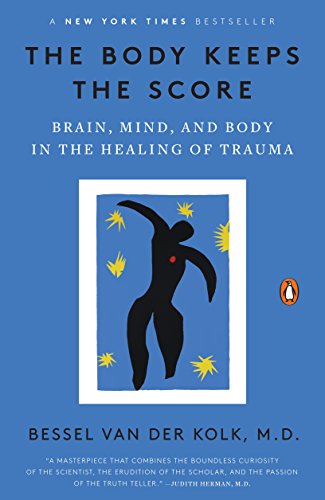
‘The Body Keeps the Score,’ by Bessel van der Kolk

After trauma the world is experienced with a different nervous system that has an altered perception of risk and safety.

Some years back I read about a new psychiatric diagnosis called Complex PTSD. The idea is that symptoms displayed by children who’ve been subject to abuse over long periods of time are very similar to symptoms common to adults who suffer from PTSD due to trauma, as in combat. The difference is that the Complex kind is harder to treat. This is of considerable personal interest to me, for reasons I won’t detail here.

Somebody on Facebook mentioned this book, The Body Keeps the Score, by Bessel van der Kolk, and I was intrigued enough to buy the Kindle version. Turns out Dr. van der Kolk is one of the researchers who came up with the idea of Complex PTSD (which has not to date been accepted for the APA’s book of recognized diagnoses).

The major argument made in this book is that many of our psychological disorders rise from trauma, and that trauma actually makes physical changes in the brain. Current treatment tends to lean toward drug therapy, which (the author argues) only masks the problem. What we need to do is help people to retrain their brains, to reorganize the various areas of the brain to work again in a normal fashion, instead of the abnormal ways they’ve adopted in order to cope with shocks they’ve suffered.

A number of treatments are suggested and evaluated, based on Dr. van der Kolk’s extensive personal experience as a clinician and researcher. These include yoga, biofeedback, and participation in drama.

I found the book largely persuasive (as if I were qualified to judge). I absolutely agree about Complex PTSD. I’m not so sure of the author’s strong defense of Suppressed Memory – he defends it strongly, but completely ignores the numerous cases where it has been used to persecute innocent people, such as day care workers. As a Christian, I’m dubious about yoga.

And the author spoiled it to some degree, for this reader, by his political conclusions. He sees it as self-evident that what will really solve our social problems is national health care and government preschools. I am personally doubtful that bureaucracies are ever going to fill our lives with empathy and caring.

The author is also prone to fall into the refrain of, “The medical establish has never appreciated my genius.” That does raise skepticism in this reader.

But most of the book is convincing, and all of it is worth reading. Recommended, with cautions for disturbing subject matter.

R.I.P., Pastor Paul Nash

I’m busy with translation work today, and I’m still reading the long book I’ve been working on. But I do have something to write about.

My friend and former boss, Pastor Paul M. Nash, passed into glory, far too young, on Saturday following hospitalization. I’m not sure of his exact age, but he was younger than me and – to all appearances – in better health.

It was Paul who hired me and brought me back home from Florida in 1995. Through the years I worked as his office assistant in the Home Missions Department of the Association of Free Lutheran Congregations, we were sort of a Laurel and Hardy team, each complementing the other in terms of our strengths.

Paul was one of the godliest men I ever knew. He wasn’t just godly in his heart – he worked actively at his holiness. He disciplined himself and kept himself on a leash. I expect I was a disappointment to him in that arena.

Yet, unlike a lot of disciplined types, he was not grim or cheerless. Quite the contrary. Paul was always the life of the party. Things got interesting when Paul showed up. Laughter soon followed.

In many ways he reminds me of descriptions I’ve read of Hans Nielsen Hauge, the founder of our branch of Lutheran Pietism, of whom I’ve written often. Like Hauge, Paul was an A-type who had trouble sitting still, who always had to be doing something useful. He loved airplanes and flew them to facilitate travel for his ministry. He got up early and worked late, and figured there’d be plenty of time to rest after death. Which, sadly, has come.

After his retirement from Home Missions, he started a work called Shamgar Ministries. There’s a brief bio there.