What’s your initial reaction to suggestion that evangelicals love doctrine over people? It’s a common claim in come circles, perhaps most common among those who feel rejected.
The other day on Twitter, a believer with a successful academic career (judging from a distance) retweeted this claim, noting its truthfulness, and another believer with a successful publishing career pushed back, saying anyone who has taught Sunday School should know how little doctrine most evangelicals understand.
This second point rings true to me and seems to be supported by surveys like Ligonier’s State of Theology, conducted again this year. If members of evangelical churches love doctrine so much, why are so many unsure of certain basic facts every Christian should know? But why is the charge of being unloving to their neighbors assumed by so many, even within the church?
Perhaps evangelicals are one of the many groups of people who claim to hold to doctrinal standards but in reality hold only to a comfort zone. I mean they love people about as much as everyone else does, but they talk up the doctrine side of things. They claim loyalty to a creed or church, but the truth is they only know what the creed sort of looks like, because what they really hold to is the comfort of the group and place. They like the habits they do all together, the people who hang out here, the tone the pastor sets in each service. They call that comfort zone the Christian faith.
If that’s true, their comfort zone won’t stay Christian long.
Of course, only some evangelicals do this; the fear is that most do it. Cultural observers frequently ask why the church isn’t known for loving our neighbors above anything else. It isn’t only due to the reporters who only report on a public figure’s faith when he or she is using it to beat down others.
On October 10, 1520, Martin Luther received an official church statement charging him with heresy. Today’s Luther says the bull got to him by a circuitous route.
The Rector of the University of Wittenberg, Peter Burkhard, received the bull from a citizen to whom a Leipzig militiaman had given it. This was, to say the least, an unusual mode of delivery of an official document, probably intended to prevent the University from refusing to accept it.
The Papal Bull condemns him for statements that are “either heretical, false, scandalous, offensive to pious ears, or misleading to the simple.” Clearly Luther was playing precursor to Osteen at this point in his career.
Ligonier Ministries has a new Reformation Day podcast starting October 10 to dramatize Luther’s actions and thoughts, starting at this point, called “Luther: In Real Time.”
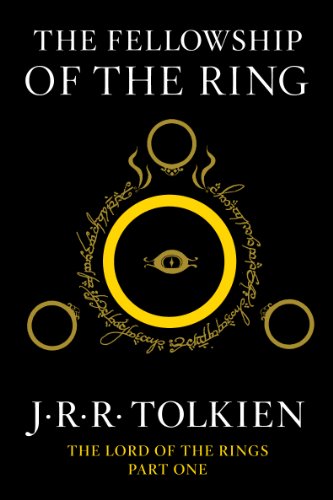
I finished reading The Fellowship of the Ring over the weekend. One can’t really review a work of this eminence. I can only write appreciations. One thing I noted was a detail I’d forgotten, one that was left out of the movies, and it’s no mystery why. It’s when Gandalf meets with Saruman at Orthanc, and learns his former master’s perfidy:
‘”For I am Saruman the Wise, Saruman Ring-maker, Saruman of Many Colours!”
‘I looked then and saw that his robes, which had seemed white, were not so, but were woven of all colours, and if he moved they shimmered and changed hue so that the eye was bewildered.
‘”I liked white better,” I said.
‘”White!” he sneered. “It serves as a beginning. White cloth may be dyed. The white page can be overwritten; and the white light can be broken.”
‘”In which case it is no longer white,” said I. “And he that breaks a thing to find out what it is has left the path of wisdom.”’
This is an amazing passage. Saruman the White, whose white color had symbolized his supreme wisdom, has broken the white color down into its constituent prismatic hues.
He’s made it into a rainbow.
We see rainbows all the time today, in churches that believe they’ve “deconstructed” traditional morality and theology.
Was Tolkien an actual prophet? Did he foretell the future of the church?
My close personal friend (well, I’ve met him in actual space and time, which makes us pretty close by 2020 standards) Hunter Baker, of Union University, has a useful article in Touchstone in which he discusses an issue a lot of us are thinking about these days — is liberal democracy failing? Is the experiment over?
Nevertheless, let me, without rehearsing all the relevant developments, simply say that many of those structural limitations have now been overcome, through either amendment, expansive court decisions, or shrewd use of the powers to tax and spend. As a result, a constitution designed to embody Cicero’s wisdom for harmonizing diverse interests and avoiding the excesses of the various classical forms of government has been substantially transformed into something much closer to an ordinary majority-rule democracy. When one notes the calls for the termination of the electoral college, the politicization of the Supreme Court, and the discrediting of federalism due to the South’s intransigence with regard to both slavery and civil rights, it becomes clear that we are reverting to the mean as our Ciceronian (and even Calvinistic, as I’ve written elsewhere) constitutional democracy becomes more typical.
I’m in the middle of Carl Trueman’s 2010 book, Republocrat: Confessions of a Liberal Conservative, which sounds like a more political book than it has been so far. His chapter on the secularization of the church suggests secular British society is similar to religious American society with mainly different comfort levels with religious words.
[David Wells] argues that many churches are as secular in their ambitions and methods as any straightforwardly secular organization. The difference, we might say, is the the latter are just a whole lot more honest about what they are doing.
This reminds me of the way some ministry leaders talk of doing big things for God, maybe pulling down a miracle or dreaming a dream only God can fulfill. I don’t want to judge the motives of people I barely know, but I’m skeptical of how much glory God receives from the city’s largest and brightest Christmas display or filling a stadium for what amounts to a religiously themed civics event.
Is it really a big dream for God’s glory when the results hit all the marks for secular success?
Years ago, I heard Cal Thomas talk about a book he co-authored with the late Ed Dobson, Blinded by Might. He said Jerry Falwell and others like him believed they were influencing the president and political leaders to take Christian approaches to civil problems, but what Thomas and Dobson saw first-hand was a willingness to compromise any issue for the privilege of remaining in the inner circle.
“Whenever the church cozies up to political power, it loses sight of its all important mission to change the world from the inside out,” Thomas writes in the book.
I thought of that Saturday while listening to the Gospel of Mark. In chapter 6 we read that John the Baptist had been put to death by King Herod, but verse 20 states, “Herod feared John, knowing that he was a righteous and holy man, and he kept him safe. When he heard him, he was greatly perplexed, and yet he heard him gladly.”
How often had John preached or spoken to Herod? What did he say? Did John think he could be in a relationship with Herod that would be similar to Daniel and Nebuchadnezzar? He was in prison because he angered Herod’s wife, but while in prison he had the king’s ear on occasion. And the king heard him gladly.
But then Herod made a vow in front of his peers, “the leading men of Galilee,” to give his wife’s daughter anything she asked for, and she asked John’s head. Where did his gladness go then? He was sorry to do it, but he would not admit to a mistake by implying, if not actually stating, that this prisoner’s life was more valuable than his oath. Nothing was more valuable than the king.
How many believers think they are making progress with political leaders because they seem to listen to them gladly, never suspecting that Christ’s call to put God’s kingdom first will never work for them. To them, God must serve their political kingdom, and humility would be great if earned votes.
While the king is in power, he may hear a preacher gladly, but when his power is threatened, then his priorities will become clear.
The title means something like “Time Runs On (like a river).” It’s a beloved hymn of the Faeroe Islands, sung here by the world’s greatest singer, Norway’s Sissel Kyrkjebo. She’s singing in Faeroese, which I understand only a little better than you do. It’s an ancient dialect of Old Norse, and the Faeroese claim that it’s closer to what the Vikings actually spoke than modern Icelandic is. But the gist of the thing is that time runs on like a river, and I am in a little boat. Who will bring me safely home? Only Jesus can do that.
Appropriate thoughts for my birthday. I had a nice day. Went out to lunch with a friend, and reveled in the pleasure of having paying work, and the promise of more to come. Thank you for your friendship here.
Correctly handling the Word of God does not permit making the text say what we want. To understand the Bible accurately, we must discover (or “exegete”) the single, God-inspired meaning of every verse before us. The text of the Bible means what God inspired it to mean, not “what it means to me.”
When praying the Bible, our primary activity is prayer, not Bible intake. Bible reading is secondary in this process. Our focus is on God through prayer; our glance is at the Bible. And we turn Godward and pray about every matter that occurs to us as we read.
Look, (Grownups skip this paragraph.) I’m not about to tell you this book has a tragic ending. I already said in the very first line how it was my favorite in all the world. But there’s a lot of bad stuff coming up, torture you’ve already been prepared for, but there’s worse. There’s death coming up, and you better understand this: some of the wrong people die…. and the reason is this; life is not fair. Forget the garbage your parents put out. Remember Morgenstern. You’ll be a lot happier.
Last night I watched the film, “The Princess Bride” for the umpty-third time. Laughed and cried.
What’s not to love? It’s the perfect confection, almost parody but not quite. Self-aware, over the top, but entirely without condescension. Everybody involved seems to be having fun, and they welcome the viewer into the fun.
I first saw the movie in its first theatrical run. It got good reviews at the time, but wasn’t a major hit. Only when home video became available did it find its audience. Now it’s one of the most beloved – and quotable – movies in the world. With good reason.
But before I was a fan of the movie, I was a fan of the book. It was published in 1973, and I must have picked it up around 1978. Frankly, I bought it out of base motives – the original cover blurb called it “A Hot Fairy Tale!” I found something way better than I expected.
The big difference between the book and the movie is what I guess you’d call the “metanarrative.” In the movie you having a charming, funny adventure story, framed by a sweet series of vignettes involving a grandfather and his grandson.
The frame of the book is much broader and more complex. Goldman fictionalizes his own life, claiming his father was an immigrant from Florin, one of the imagined kingdoms in the book. He presents himself as a screenwriter who’s gone full Hollywood. He’s lost touch with his son (in real life Goldman had two daughters). Out of guilt, he tries to connect with the boy by giving him the book his dad used to read to him, The Princess Bride, by S. Morgenstern. Only he discovers that the book isn’t what he thought – most of it is a long, dull satire on the politics of Florin and Guilder at the time of the book’s writing. The real adventure stuff was just a minor narrative threaded here and there through the text. His dad had only read him the “good parts.” So Goldman has decided (he claims) to produce a “good parts” version of The Princess Bride.
But he can’t resist adding his own commentary, in pretty large doses, in footnotes and parenthetical interpolations. He talks about his childhood, his dreams, his disappointments. The movies he loves. The movies he wrote, and what he was trying to accomplish with them. How his life has consistently fallen short of the aspirations that romantic books and movies arouse in him. The book ends differently from the movie. The movie’s ending is sweet and heartwarming. The end of the book is ambivalent. They lived happily after…. But.
What The Princess Bride (novel) is about is the tragedy of impossible yearning. Most of us respond to the great stories. Our hearts are moved by the happy ending, the eucatastrophe, the fulfillment of True Love.
But we live (and who would know this better than a Jewish author?) in a world where True Love doesn’t guarantee that your beloved won’t be killed by a mugger or a pogrom or a stray meteorite. There’s something in our hearts that tells us True Love has to conquer all. Yet all around us we see that it doesn’t.
I have no idea what William Goldman’s spiritual beliefs were, if any. If he’d asked, someone could have told him about a True Love that does guarantee a miracle resurrection.
This is not a book review, but – what shall I call it? – a book notice. You may be surprised to know that there’s a book out there about an aspect of Lutheran history in America, which mentions me.
The book is Fifty Thousand Evangelists, by Jonathan D. Anderson (whom I have met and assisted a little with a different project). I’m sure it will be a surprise to many, in view of the state of Lutheranism today, but there was a time – not so awfully long ago – when an estimated more than 65,000 young college-age Lutherans, mostly from mainline church bodies, went out to preach the inerrancy of Scripture and the importance of having a personal encounter with Jesus. At least at the beginning, and for a long time.
It was part of the wider Jesus Movement, and I was there. And so my picture and name, along with that of the group I sang with, is in Fifty Thousand Evangelists, on page 83.
I was motivated to buy the book, but I won’t be reviewing it. I’m pretty sure reading it would be painful for me. Subsequent events have poisoned all my memories of what was, in the experience, the happiest time of my life.
Websites store cookies to enhance functionality and personalise your experience. You can manage your preferences, but blocking some cookies may impact site performance and services.
Essential cookies enable basic functions and are necessary for the proper function of the website.
Name
Description
Duration
Cookie Preferences
This cookie is used to store the user's cookie consent preferences.
30 days
These cookies are needed for adding comments on this website.
Name
Description
Duration
comment_author
Used to track the user across multiple sessions.
Session
comment_author_email
Used to track the user across multiple sessions.
Session
comment_author_url
Used to track the user across multiple sessions.
Session
These cookies are used for managing login functionality on this website.
Name
Description
Duration
wordpress_logged_in
Used to store logged-in users.
Persistent
wordpress_sec
Used to track the user across multiple sessions.
15 days
wordpress_test_cookie
Used to determine if cookies are enabled.
Session
Statistics cookies collect information anonymously. This information helps us understand how visitors use our website.
Google Analytics is a powerful tool that tracks and analyzes website traffic for informed marketing decisions.
Used to monitor number of Google Analytics server requests
10 minutes
__utmb
Used to distinguish new sessions and visits. This cookie is set when the GA.js javascript library is loaded and there is no existing __utmb cookie. The cookie is updated every time data is sent to the Google Analytics server.
30 minutes after last activity
__utmc
Used only with old Urchin versions of Google Analytics and not with GA.js. Was used to distinguish between new sessions and visits at the end of a session.
End of session (browser)
__utmz
Contains information about the traffic source or campaign that directed user to the website. The cookie is set when the GA.js javascript is loaded and updated when data is sent to the Google Anaytics server
6 months after last activity
__utmv
Contains custom information set by the web developer via the _setCustomVar method in Google Analytics. This cookie is updated every time new data is sent to the Google Analytics server.
2 years after last activity
__utmx
Used to determine whether a user is included in an A / B or Multivariate test.
18 months
_ga
ID used to identify users
2 years
_gali
Used by Google Analytics to determine which links on a page are being clicked
30 seconds
_ga_
ID used to identify users
2 years
_gid
ID used to identify users for 24 hours after last activity
24 hours
_gat
Used to monitor number of Google Analytics server requests when using Google Tag Manager
1 minute
_gac_
Contains information related to marketing campaigns of the user. These are shared with Google AdWords / Google Ads when the Google Ads and Google Analytics accounts are linked together.
90 days
Marketing cookies are used to follow visitors to websites. The intention is to show ads that are relevant and engaging to the individual user.
A video-sharing platform for users to upload, view, and share videos across various genres and topics.
Registers a unique ID on mobile devices to enable tracking based on geographical GPS location.
1 day
VISITOR_INFO1_LIVE
Tries to estimate the users' bandwidth on pages with integrated YouTube videos. Also used for marketing
179 days
PREF
This cookie stores your preferences and other information, in particular preferred language, how many search results you wish to be shown on your page, and whether or not you wish to have Google’s SafeSearch filter turned on.
10 years from set/ update
YSC
Registers a unique ID to keep statistics of what videos from YouTube the user has seen.
Session
DEVICE_INFO
Used to detect if the visitor has accepted the marketing category in the cookie banner. This cookie is necessary for GDPR-compliance of the website.
179 days
LOGIN_INFO
This cookie is used to play YouTube videos embedded on the website.