
Category Archives: Goofing

‘Quick Service,’ by P. G. Wodehouse

The inner office was, however, empty when Joss entered. It was only after he had banged cheerfully on the desk with a paperweight, at the same time shouting a jovial “Bring out your dead,” that Mr. Duff came in from the little balcony outside the window, where he had been attempting to alleviate his dyspepsia by deep breathing.

“Aha, J. B.,” said Joss sunnily. “Good morrow.”

“Oh, you’re there are you?” said Mr. Duff, making no attempt to emulate his junior’s effervescence.

The managing director of Duff and Trotter was a large man who, after an athletic youth, had allowed himself to put on weight. In his college days he had been a hammer thrower of some repute, and he was looking as if he wished he had a hammer now and could throw it at Joss….

“You’re late!” he boomed.

“Not really,” said Joss.

“What the devil do you mean, not really?”

“A man like me always seems to be later than he is. That is because people sit yearning for him….”

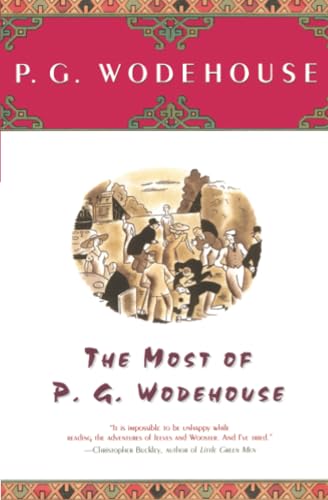
The first book of P. G. Wodehouse I ever bought was the collection The Most of P. G. Wodehouse, published by Simon & Schuster back in the ‘70s, which included the novel Quick Service as a sort of extra (it remains the most reasonably priced way to get this book, so that’s the link I’m using). Thus, Quick Service was the first Wodehouse novel I ever read. I enjoyed it immensely then, and did again on re-reading. Especially because its main character is surprisingly different from most of your Wodehouse heroes.

The plot of the story is extremely tight and complex, but cutting back to the essentials, we start at Claines Hall in Sussex, which now belongs to Mrs. Howard Steptoe, an American millionairess, and her husband. Also in residence is her poor relation, Sally Fairmile, who serves as a sort of secretary. Sally has just gotten engaged to young Lord Holbeton, another guest at the manor. The problem is that under the terms of his father’s will, Lord Holbeton can’t touch his inheritance yet without the approval of his trustee, Mr. J. B. Duff of Duff and Trotter’s exclusive grocery store in London. Sally suggests that she go talk to Mr. Duff, and see if she can’t charm him.

But when she arrives at Duff’s office, she finds not him but our hero, Joss Weatherby, an artist who works in the advertising department. Joss immediately falls in love with her. When she’s gone, Duff reappears, having learned, through eavesdropping, that Joss painted a portrait of a Mrs. Chavender, which now hangs at Claines Hall (where Mrs. Chavender just happens to be a current guest). Duff was once engaged to Mrs. Chavender, he says, and it occurs to him that her face, with its haughty sneer, would make a wonderful poster for the store. He then fires Joss, but Joss heads off to Claines Hall, to take a job as Mr. Steptoe’s valet (a job that Sally mentioned is open). His plan is to steal the portrait, get his job back, and marry Sally.

There may be other heroes like Joss Weatherby in other Wodehouse stories (my memory sometimes fails, and there are a lot of stories), but such an energetic, bright, confident type isn’t the Master’s usual fare. Uncle Fred and Uncle Galahad were probably something like this in their youths. “Aplomb” is the word that best suits Joss. It makes no difference whether he’s discovered swilling his boss’s sherry, breaking into a French window, or perched on a chair, cutting a painting from its frame, he is never dismayed. His self-confidence only ebbs in those moments when he contemplates his unworthiness of the woman he loves. And then only briefly. Joss Weatherby is a great tonic for the depressive reader.

Quick Service is a tremendous story, and everyone should read it.

‘Dave Barry Is Not Taking This Sitting Down,’ by Dave Barry

I picked up another Dave Barry book, offered at a bargain price. Short review: I enjoyed Dave Barry Is Not Taking This Sitting Down. I had a suspicion it would be funny, and it was. (The title, by the way, refers to a couple essays on modern, low-flow toilets.)

It was odd that, though this book only came out around the turn of the millennium (which doesn’t seem that long ago to me at my age), it describes a palpably different world. This was before 9/11. Before Covid-19 and the Lockdown. Many of the everyday annoyances that Barry jokes about here seem to come from a long-ago, golden age when you could be annoyed when little things went sour, because they usually went okay. Most of the time.

Memories, memories.

Here’s a few excerpts:

So your school is having a science fair! Great! The science fair has long been a favorite educational tool in the American school system, and for a good reason: Your teachers hate you.

**

The reason Congress did not get around to ordering an audit any sooner is that it has been extremely busy with its primary functions, which are (1) spending money; (2) declaring National Cottage Cheese Appreciation Week, and (3) authorizing the IRS to hammer taxpayers for inadequate record-keeping.

**

Q. When should I arrive at the airport?

A. You should arrive two hours before your scheduled departure time, so that you will be among the first to know that your flight has been delayed due to mechanical problems.

**

The most stressful part [of registering for a baby shower] is picking out the stroller. Today’s baby stroller is an extremely high-tech piece of equipment, comparable in complexity to the B-1 bomber, but more expensive.

Recommended.

‘Best. State. Ever.’ by Dave Barry

When you enter Gatorland, the first wildlife you see is—Spoiler Alert—alligators. A buttload of alligators, dozens and dozens of them on wooden platforms surrounded by water. They are sprawled haphazardly, often on top of each other, as if they’re having a wild reptile orgy, except that they are not moving. Some of them look like they have not moved since the Reagan administration. It’s like the Department of Motor Vehicles, but with alligators.

I spent 11 years of my own life in Florida, so I feel a certain ownership in the place. Thus I share with Dave Barry the slight pang that comes when I read yet another story about “Florida Man,” the archetypal doofus who does something magnificently stupid and self-destructive in the sun. In his book, Best. State. Ever., Barry provides both an apologia for, and an appreciation of, the state where he’s made his home. And, oh yes, it’s also very funny.

Most of the “Florida Men” you read about, Barry notes, actually come from someplace else, and it’s Florida’s misfortune that having water on three sides makes it difficult for them to find their way out. But that doesn’t alter the fact that strange things do go on in Florida. He proceeds to provide “A Brief History of Florida” and then to report on personal visits to a series of tourist sites that I, though I lived there a while, never got around to myself:

  • The Skunk Ape [Research Center]
  • Weeki Wachee and Spongeorama
  • Cassadaga
  • The Villages
  • Gatorland
  • Lock & Load Miami
  • LIV (a Miami nightclub that was hot at the time), and
  • Key West.

The book is, as mentioned, very funny, featuring Barry’s signature style of strategic exaggeration. It might have been funnier if it were crueler, but Barry seems to genuinely like the people he meets, and he has no intention of humiliating them.

The most striking part of the book, for this reader, was the description of The Villages, a group of large, planned communities for the elderly. All the houses look alike, and all the people seem to be alike too – they live for golf and early bird specials, and they dance – a lot – like nobody’s watching. It almost comes out sounding like a pleasant gulag, where dying people go to deny their mortality.

Kind of the perfect finale for Baby Boomers, when you think about it.

Best. State. Ever. is a very funny book. Cautions for language, drugs and mature themes.

Beautiful Summer, a Small Hotel, and Coffee Orders

Those hours that with gentle work did frame
The lovely gaze where every eye doth dwell
Will play the tyrants to the very same
And that unfair which fairly doth excel;
For never-resting time leads summer on
To hideous winter and confounds him there,
Sap checked with frost and lusty leaves quite gone,
Beauty o’er-snowed and bareness everywhere.
Then, were not summer’s distillation left
A liquid prisoner pent in walls of glass,
Beauty’s effect with beauty were bereft,
Nor it nor no remembrance what it was.
But flowers distilled, though they with winter meet,
Leese but their show; their substance still lives sweet.

— Shakespeare’s Sonnet 5, on the fading beauty of summer and distilling it into perfume to preserve it. Applies to making jams and canning vegetables too.

Sovereignty: Faith from Staton Island writes maybe her personality or being a first-born or Chinese heritage or being a mom has trained her expect to serve others all the time. “At church events, standing in line at Panera, on elevator rides with strangers, reading an email, as long as another person is in my physical or mental space, I’m “on.” Unless I’m completely alone, and sometimes even when I am, I can’t help being vigilant for needs I may be called on to meet, sensitive to what demands my presence may similarly impose on others.”

So, it’s a great relief to her that God needs nothing from us. “That he who made all things, owns all things, and doesn’t use his creation to supply his needs. Rather, he is ever the gracious Giver, ever the joyful Benefactor in our relationship, the Source of life itself.”

“If he needs nothing from me, I can pray— really pray, not worrying about my anxiety or anger or foolishness swaying his judgment or burdening his mind. I don’t need to hedge my request in polite, calculated consideration of his limited supply of patience and help.” (via Keith Plummer)

Lincoln: “Where did Lincoln stand in the vanguard of antislavery and abolitionist advocates, and did he change his views over time?” What can we learn from the many African-American visitors Lincoln received in the White House? Bishop Daniel Alexander Payne of the African Methodist Episcopal (AME) Church said, “President Lincoln received and conversed with me as though I had been one of his intimate acquaintances or one of his friendly neighbors.” (via Prufrock News)

Quaint Photos: “There’s a small hotel/ With a wishing well/ I wish that we were there together.” Here’s a photo essay of the Stockton, New Jersey hotel that inspired that Broadway song.

LOTR: You were asking yourself the other day what characters from The Lord of the Rings would order from a coffee shop, weren’t you? Kaitlyn has your answer. “Merry Brandybuck orders an Irish Cream Cold Brew with cold foam and cocoa powder sprinkled on top.”

Photo: Library (Allegretti Architects), Saint Joseph, Missouri. 1991. John Margolies Roadside America photograph archive (1972-2008), Library of Congress, Prints and Photographs Division.

The mark of Merlin

Today started out kind of gray, but it gradually grew brighter and warmer. Right now it’s just about a perfect spring evening.

Got an amusing letter, from a friend. I’d give his name, but maybe one shouldn’t throw names around on the internet. Though one feels one ought to cite one’s sources.

Anyway, the letter came as a surprise. It was a one-page, photocopied missive, telling about what he’s been reading, and about being on vacation in Oregon. He said he found himself near the town of Merlin, Oregon. And he had a bunch of USPS dragon stamps.

He couldn’t resist sending a letter with a dragon stamp and the postmark, “MERLIN.”

When ‘Brunch’ Was New, the Limits of Science, and Worthless Commercials

Something inspired me to look up a distinct definition for the word brunch the other day, and I happened upon this piece from Punch magazine in 1896. Merriam-Webster says the earliest brunch is believed to have appeared in print in 1894, and this aligns with that claim.

“According to the Lady, to be fashionable nowadays, we must “brunch.” Truly an excellent portmanteau word, introduced, by the way, by Mr. Guy Beringer, in the now defunct Hunter’s Weekly, and, indicating a combined breakfast and lunch. At Oxford, however, two years ago, an important distinction was drawn. The combination-meal, when nearer the usual breakfast hour, is “brunch,” and, when nearer luncheon, is “blunch.” Please don’t forget this. 

Tis the voice of the bruncher., I heard him complain,  
“You have waked me too soon, I must slumber again!  
When the clock says it’s 12, then perhaps I’ll revive,  
Meanwhile, into bed, yet once more let me dive! 

“The last meal I had was 3:00 AM.;  
I’m a writer, so please don’t such habits condemn!  
This cross between supper and breakfast I’ll name,  
If you’ll let me, a ‘suckfast’ –and ‘brupper’ ‘s the same!”

It goes on to lesser effect. What else do we have?

Lewis on Science: C.S. Lewis understood the limitations of science better than many scientists. Michael Ward writes:

What is frost to someone who has never encountered it? What is a degree of frost? Ordinary language would be more helpful in explaining the situation: “Your ears will ache … you’ll lose the feeling in your fingers” etc. The word numb will convey more than any number.

However, what Keats tries to convey in his poem can’t be rendered as a thermometer reading. It is not univocal or universal; we can’t translate his poem into, say, Japanese without loss or at least alteration. And yet if we want to know just what it feels like to go outside and breathe the bitterly chill January night air, Keats paints for us a very vivid and sensible picture. He communicates knowledge to us that the ordinary and scientific ways of speaking leave out.

In other words, poetry is a kind of knowledge, and since knowledge is a synonym for science we could quite legitimately say – if we wanted to – that poetry is a branch of science. 

“Numb and Numb-er,” by Michael Ward, Plough.com

Lewis on Science-Fiction: Lewis wrote about science-fiction a good bit and broke it down into several genre categories.

Poetry: How Fame Fed on Edna St. Vincent Millay

And this video by Rachel Oates, “Atticus Is Everything Wrong With Modern Poetry,” is an amusing criticism of a published writer who appears to have turned his Instagram posts into a paper-published thing.

Commercials: “If I were endowed with wealth, I should start a great advertising campaign in all the principal newspapers. The advertisements would consist of one short sentence, printed in huge block letters — a sentence that I once heard spoken by a husband to a wife: ‘My dear, nothing in this world is worth buying.’ But of course I should alter ‘my dear’ to ‘my dears.’”

Photo: The Big Shoe, Bakersfield, California. 2003. John Margolies Roadside America photograph archive (1972-2008), Library of Congress, Prints and Photographs Division.

‘A Voice From the Past’

As a man who likes to work (and needs to work) I’m pleased to say that I’m kind of snowed under these days. Which leaves me little time for either reading (for reviews) or composing those pearls of wit and wisdom that make me so beloved by more discriminating spirits on several continents. So of what shall I blog?

I remembered an old British TV series, “Wodehouse Playhouse,” of which I’ve seen a few episodes. I searched YouTube and found only one — this one, which I haven’t seen. However, it starts well, and it’s a Mulliner story. It’s presented in segments, and (if I understand correctly) you can follow them through the suggested links, collecting them all and impressing your friends.

Have a good evening.

‘Medieval help desk’

The video above is quite old now, but I don’t think I’ve ever shared it here. Fits our topic, and it’s in my wheelhouse, too, as the language is Norwegian. It comes from the Norwegian national broadcast service. If you’ve never seen it before, it’s pretty clever.

Today was another of those clear, bright, bitter cold days in Minneapolis. I’ve mentioned the word “apricity” before – it means the warmth you feel when the sun shines on you, warming you a little on one of these polar days. This was an apricitous day.

I went to the gym (8 below) and then went to my tax preparer (about zero). Those two things are the sum of my achievements thus far, but I still felt worn out. Taxes will do that to you. My return is on hold, since it turned out a couple forms I need haven’t arrived in the mail yet. Next year I need to make a later appointment.

Now I’ll try to work on the novel. This thing is kicking my fundament. Every time I do a revision, I find more that needs fixing. I just discovered that in one story line, I put an effect ahead of a cause. This will have to be fixed.

I think it’s a good story, but it’s like a black hole. I like to think the book is smarter than I am, and I just need time to catch up with it.

Librarians are not against book banning

Photo by Anastasiia Krutota. Unsplash license.

Periodically we note great outcries in the media about “book banning.” The banning of books is indeed a serious issue, when it actually happens, but what these scares are about is almost never real banning. Banning means a book is declared illegal, and its publication and possession are forbidden by law. The closest thing to that that’s going on these days is when conservative books get cancelled by publishers. Which isn’t real banning, either.

Let me divulge (once again, because people keep forgetting) a secret from the forbidden world of librarians – librarians are not actually against banning (in their own sense of the term) books. They call it banning when parents want books kept out of libraries, or at least out of their children’s hands. But the fact is, librarians keep books off the shelves all the time. Deciding what books to acquisition, and what books to reject, is part of a librarian’s job.

The librarians aren’t against books being “banned” in that (erroneous) sense.

They’re against the peasants doing it.

Librarians believe that they themselves, as the anointed priesthood, have the sole right to “ban” books. They go into a snit when mere parents and concerned citizens violate their turf.

I used to be a librarian, but I’m out of the racket now. If I mysteriously disappear, you can be sure the Enforcers of the ALA have abducted me, and I probably sleep with the discards, for violating the Unwritten Code.

Winter’s tale

Nansen’s ship “Fram,” frozen into the polar ice, 1893. Photo from the Fram Museum, Oslo.

It was a nice quiet weekend, just the way I like it. I continue reading Fridtjof Nansen’s interminable book on his Fram expedition. It’s not boring – I’d have dumped it if it was. But it’s suitable to its subject – grim and dark and uncomfortable. It correlates well to the weather we’re experiencing. I can’t resist tailoring tonight’s post to the pattern of his daily journal entries:

January 10, 2022: The day dawned bright and cold. I made my way to the gym again, after skipping most of last week due to my temporary attack of an unspecified ailment. I don’t believe it was Covid; the symptoms seemed wrong. But if it was, all the better; in that case I’m over it now. The temperature was -6 Fahrenheit as I drove; it reached a high of 3 above during the afternoon. Tomorrow looks to be warmer. When shall spring come? Will I live so long? Ah, for the warm zephyrs and green grass of June! It seems so far away in these dark days.

It appears most of the people at the gym are wearing masks again now. For some time they’d become rare. I’m still going barefaced. I believe the vaccine has some benefits, but I think I’ve become a mask skeptic.

At lunchtime I tried to get into Arby’s again, and again the dining room was closed, in spite of a big sign saying the room is open as a general principle. I hold no grudge; no doubt they’re doing their best to recruit workers. But once again, as has happened so often of late, I ended up at Perkins, which is nearby and where I can count on a table to sit at in comfort. The manager actually mentioned, as I paid my bill, that he’d been seeing me a lot lately. I had to confess I hadn’t set out with his restaurant in mind. Perhaps I should have let him believe he’d won a devoted fan, but that would just have left him with an illusion sure to be shattered. My meal was jumbo shrimp, which Perkins does pretty well, though I noticed the shrimp aren’t as jumbo as they used to be. Restaurant management is a tough business just now – I don’t begrudge them a few economies. The place is warm, the food is good, and the help is friendly.

This afternoon I girded up my loins and addressed a job I’d been putting off – filing and paying my Minnesota sales tax for books I unloaded during my summer adventures. I’ve never had any serious problem with the process, and yet I always approach it with fear and trembling. Great was my relief when I got the job done (online) and printed out my receipts (duplicates, because you can never be too careful). My only regret was that the money I transferred doubtless works out to sunk costs.

Yeah, that’s about the right town. Winter in Minnesota / dead reckoning trekking on an ice floe in the Arctic Ocean. Essentially the same thing.