Today I have a piece in The American Spectator Online that expands on my earlier post here, concerning Col. Hans Christian Heg, whose statue in Madison, Wisconsin was destroyed by rioters recently.
One of my ancestors knew Abraham Lincoln. All right, that’s not strictly true. He was a collateral ancestor of mine, half-brother to my great-great grandfather. An early Norwegian settler in Illinois, he was active in the Republican Party. His obituary called him a “friend of Abraham Lincoln.” I take that to mean he was acquainted with Lincoln through party business.
But this story isn’t about him. There was nothing remarkable in an Illinois Norwegian being a Republican. You’d have had to search pretty hard to find one who wasn’t in those days. Antislavery feeling ran high among them, and they were eager volunteers for the Union Army when the war broke out.
There had to be something in me that liked it this way. Something crooked that I couldn’t make straight. Or didn’t want to.
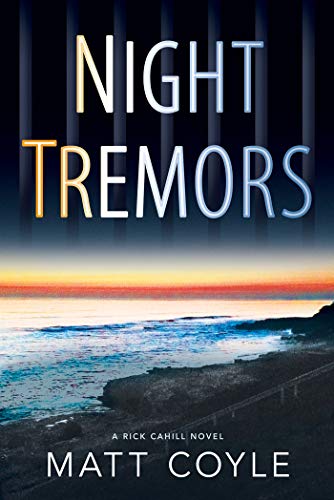
The saga of Rick Cahill continues in Matt Coyle’s Night Tremors. Our haunted La Jolla hero is no longer managing a restaurant. He’s doing something more suitable to his talents – working for an old friend’s private investigation agency.
But that job mostly involves sneaking photos of adulterers, not a pursuit nourishing to the soul. So when a lawyer approaches him with a case involving undoing an old injustice, Rick takes a leave of absence. Eight years ago, Randall Eddington was convicted of the murder of his parents and sister. Ever since he has stoutly maintained his innocence. Now the lawyer has turned up a witness, a genial stoner who says he heard a motorcycle gang leader boast of committing the crime himself. He even said where he’d thrown the murder weapon. If that weapon can be located, it will be enough to get Randall a new trial. Rick’s job is to look for corroborating evidence, and to keep an eye on the witness’s safety.
Rick takes the case up with a sense of mission. This is what he’d become a cop to do, back when he was a cop. The motorcycle gang is a dangerous one, with even more dangerous connections in organized crime. And the corrupt La Jolla police department, now headed by his old nemesis, is particularly determined that one of their proudest solved cases should remain solved.
But this case is about more than that. Rick is a man who can’t be satisfied with easy answers. His compulsion to tie up every loose end will lead him where nobody wants him to go. And some people will go to any lengths to keep the secrets that remain covered up.
As was the case with Yesterday’s Echo, the first book in the series, the writing in Night Tremors is very good indeed. Rick Cahill is an intriguing character who draws your sympathy. The plotting is relentless.
My only real complaint here is the same as it was for that book – it’s really gloomy. I’m planning to continue with the next entry in the series, but I plead with the author – give us a little hope, please! If Rick’s luck doesn’t turn a little, I’ll have trouble comprehending why he just doesn’t commit suicide. And you’ll lose me as a reader.
I recognized the house from my infrequent trips up to the cross at the top of the Mount Soledad. Unassuming from the front, its backside hung off a cliff, splayed out like a giant glass-and-copper crab ready to pounce.
I think it was President Truman who said, “If you want a friend, get a dog.”
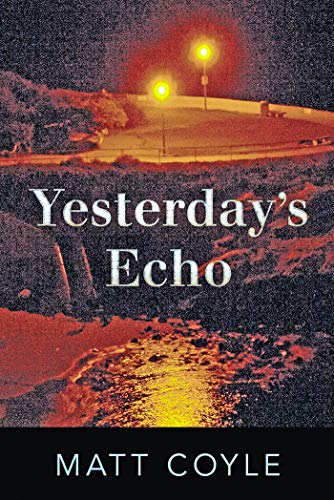
That might be the motto of Rick Cahill, hero of Matt Coyle’s hard-boiled California mystery series, of which Yesterday’s Echo is the first installment.
Rick’s life has been a series of betrayals. First when his policeman father, whom he worshiped, was thrown off the force for corruption. Then, after he himself became a cop, trying to restore the family honor, his wife was killed and he was blamed. He was never convicted, but he was fired, losing all his friends but one. That’s his old buddy Rusty, who runs a steakhouse and bar in La Jolla. Rick manages it now, and studiously keeps away from most relationships and anybody’s problems. He spends quality time with his black Labrador, Midnight, and that’s enough for now.
Until Melody Malana, a beautiful TV news reporter, walks into the bar and is accosted by a couple drunks. Rick steps in to protect her, and they begin a relationship – the first one Rick has really cared about since his wife died.
Then a couple of guys surprise him and beat him up, demanding to know where Melody is. And Melody is arrested for murder. Rick goes back into cop mode to try to clear her, but only manages to become the subject of an arrest warrant himself. The (corrupt) La Jolla police department is taking its orders from very high places, and Rick is working against the clock and very short of friends.
I mentioned narrative voice in hard-boiled fiction in a recent review. For me, that Philip Marlowe voice, slightly scratchy from cigarettes in one’s imagination, is almost a necessary element of hard-boiled. I’m sure good hard-boiled in the third person has been produced, but I like that imaginary voice-over. Rick Cahill has an excellent hard-boiled voice. I took to him from the start. The writing was crisp and evocative in the classic Chandler style.
My main reservation is that this book is very dark, and presents a world with very little hope in it. I enjoyed reading Yesterday’s Echo, but it left me sad.
Oddly enough, I didn’t notice much objectionable language. There were a couple misspelled words.
He was smiling in that friendly way friendly fascists smile in California. I guess the sunshine makes our fascists mellow.
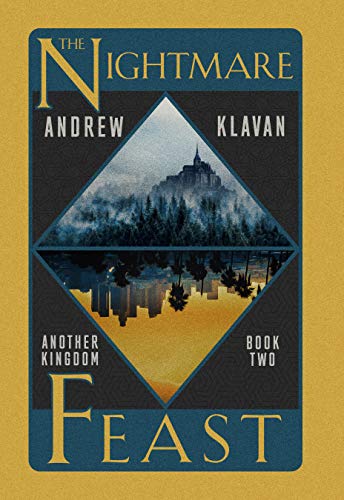
Andrew Klavan continues his Another Kingdom fantasy series with The Nightmare Feast.
If you recall the plot of the previous book, Another Kingdom, Austin Lively is a pretty unremarkable Hollywood loser, working as a studio script reader. All that really distinguishes him is his dysfunctional background – neglectful academic parents who ignored him and his little sister but heaped attention on his golden boy older brother. Only recently has he learned the full extent of their betrayal – they are part of a world-wide conspiracy organized by a power-hungry multibillionaire, Serge Orosgo.
But Austin has chanced to get a look at a rare manuscript, a book called Another Kingdom, which Orosgo will go to any lengths to get his hands on. Austin’s brief reading of it somehow bestows on him the power to pass through portals into a medieval world called Galiana. In Galiana, Austin has become a knight and been sent on a quest to deliver a plea for aid to the distant Emperor. On the way he must fight monsters and magicians and sinister illusions (interrupted, of course, by unexpected forays back into our own world, generally just at the moment someone is trying to kill him). In our own world, after somehow eluding multiple assassination attempts, Austin comes face to face with Orosgo himself, and draws closer to locating his sister, who is in hiding with the manuscript.
Andrew Klavan is a past master at plotting an exciting story – readers of The Nightmare Feast will need to make time to catch their breath, because the author gives them none. Granted, as a fantasy snob who approves very few authors besides Tolkien, Howard, and myself, I found the fantasy elements just a little thin, though at least the horse gets a rubdown this time out. Anyway, stuff keeps happening so fast, who has time to nitpick details?
I got a kick out of The Nightmare Feast, and eagerly await the next volume. Not for younger kids.
When the taste for physical pleasures in such a nation grows more speedily than education or the habit of liberty, a time occurs when men are carried away and lose self-control at the sight of the new possessions they are ready to grasp.
Casey Chalk quotes Tocqueville above in an article on digital minimalism and how we can reclaim our attention and improve our country.
Americans engage in self-congratulatory, pseudo-civic activism on social media simply by clicking the “like” and “share” buttons or changing their profile picture—activities that amount to little. “Men travel faster now,” observes a character in Willa Cather’s Death Comes for the Archbishop, “but I do not know if they go to better things.”
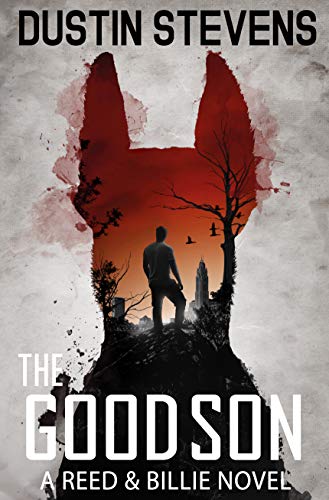
This is the second book in a series of police procedurals by Dustin Stevens. The first was The Boat Man, which I reviewed here. Now comes The Good Son.
Reed Mattox is a detective on the Columbus, Ohio police force. He suffers from PTSD since the killing of his (female) partner. But he continues working the night shift, which allows him to operate mostly alone, except for his new K-9 partner, a Belgian Malinois named Billie.
During a stretch of blistering summer heat, EMTs are called to an old woman’s house. She’s dead when they get there, but what’s curious is that someone called 911 for her, though there’s no one in the house and no phone in the room where she died in bed. Soon there are other deaths – by different means, but always with a 911 call. Somebody is killing people but summoning help.
As Reed and Billie hunt for clues where none can be found, we also observe the unnamed murderer, whose back story is as pathetic as his motives are opaque. Reed will have to work with other cops (something he’s reluctant to do) and take some risks to catch the killer.
As a non-cop, I got the impression of a pretty high level of realism in this book. Sadly, that also tends to make the book less exciting than its competition – Reed spends a lot of time doing the mundane shoe leather work and paper work that real policing demands. However, the dramatic tension does rise steadily, and the payoff is fairly satisfying. There is a problem of homonym confusion — close-sounding words used in each others’ places. A copy editor would be helpful.
I’m not over the moon about The Good Son, but it wasn’t bad.
Today’s big news in the Norwegian-American community is sadly something we might have seen coming. The Bolshevik mob in Madison, Wisconsin, in its zeal to judge people by the color of their skin, not the content of their character, has torn down, decapitated, and drowned (in Lake Monona) the memorial statue of Civil War officer and abolitionist Col. Hans Christian Heg.
Col. Heg was born in Lier, Buskerud, Norway in 1829. He came to America with his parents in 1840, spent time in the California gold fields, and then returned to Wisconsin.
A fervent opponent of slavery (like most Norwegian immigrants), he joined the Free Soil Party, and the Republicans after that, becoming the Wisconsin state prison commissioner. He was the first Norwegian-American to be elected to state-wide office in that state. As an abolitionist, he joined the Wide-Awakes, an anti-slave-catcher militia. He sheltered fellow Wisconsin abolitionist Sherman Booth, who had incited a jail break to free an arrested escaped slave.
Later in the fall several prominent Norwegian immigrants gathered in Madison, resolving then and there to organize a Scandinavian regiment to contribute to the civil war. They recommended to the governor that Hans Heg should be appointed colonel and regimental commander…. Hans Heg was a well-known figure in the immigrant community with many friends, and of course he made use of his influence. “The country which we immigrants have made our homeland has received us with friendship and hospitality. We have the same rights as those who were born here. Let us show ourselves deserving of this, and demonstrate that we are descended from the Norse heroes.” This was part of what he said in his speeches. Hans Heg came originally from Lier in Drammen, and a monument has been raised there in his honor. We find this same impressive monument outside the capitol in Madison. The monument in Lier is actually a copy of the original in Wisconsin.
Further on:
The regiment participated in no less that 27 major battles. Losses were great, and the 15th Wisconsin was one of the units in the northern army to lose the most soldiers. But it was not in battle that the regiment suffered most. Many more actually died of disease than from southern bullets. Officially the regiment lost 33% of its full strength, but a notation attached to the regimental banner in the historical museum in Madison says that the total loss was all of 38%. It states that fully 345 soldiers of the regiment died, either in battle, of illness, or due to accidents. Col. Hans Heg was one of the many who never returned to his Gunhild, his beloved wife. He was killed in the great battle of Chickamauga, together with many other soldiers of the regiment. No fewer than 49 soldiers of the 15th Wisconsin died in the famed Andersonville death camp in Georgia….”
“Don’t threaten people while you’re bleeding on the floor,” I interrupted. “It comes off as insincere.”
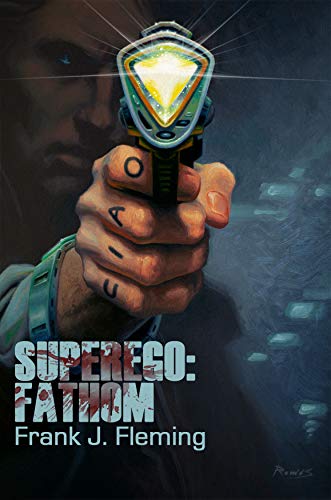
Intergalactic hit man, genetically engineered psychopath, and inadvertent hero Rico Vargas is back in his second satirical Sci Fi thriller, Superego: Fathom.
In the previous book, Rico brought down the criminal syndicate that was taking over the Galactic Alliance. Now the remnants of that alliance are faced with an even greater threat – the Fathom. The Fathom is a mysterious organization nobody knows anything about for sure, except that they have dangerous agents who seem to appear anywhere at will, and a huge mother ship with tentacles. They are rumored to be aliens with strange powers.
Rico finds himself in the unusual – for him uncomfortable – position of working with a team. One of them is Diane, the woman he’s unwillingly fallen in love with, and from whom he’s been trying to distance himself, for her own good. He maintains his strength, speed, and lightning reflexes, but now he suffers from a handicap. Due to a dose of a powerful drug, he now suffers excruciating pain after even the slightest injury. Which means he’s only good on the offensive, and needs back-up.
Also, he’s about to sink to moral depths he’s never reached before: he’s going to become a politician.
As the story proceeds, there are plots within plots, wheels within wheels, and every fresh surprise only sets the stage for a larger surprise to come. The final payoff is very gratifying for the reader, only it’s not the final payoff.
Lots of fun, and very funny, with serious spiritual themes underlying the black comedy. I enjoyed Superego: Fathom very much. Something different for your light reading.
When someone introduced food writer Osayi Endolyn to Plantation Pineapple Rum, she says she was immediately suspicious. Plantation was not a neutral word for her because her grandparents had fled from the Jim Crow South years ago. But the rum was good enough to put those thoughts aside for a while.
Later she asked a bartender for the name of the pineapple rum in her drink. The woman seemed embarrassed to admit it was Plantation Rum.
Why would anyone be embarrassed about a brand called plantation? What would a company mean by choosing that name? Bigelow sells a Plantation Mint tea and Charleston Tea Plantation sells a variety teas. Plantation Peanuts of Wakefield sells gourmet peanuts grown in Virginia. Carolina Plantation sells rice. Many recipes have plantation in their name, such as Plantation Skillet Cake and Auntie Crae’s Plantation Chews, so surely the word connotes an idea or mood the owners wish to convey to others. (This is has begun to change.)
Endolyn dug into the meaning of the rum brand by talking to its owners and learning a bit of French and Barbadian history that supported using the word plantation over the equivalent farmland. What would you expect from those words in food brands? Are they interchangeably applicable to rice, butter, peanuts, leaf tobacco, bread flour, and beef?
For a short time, you can listen to an episode of The Sporkful in which they ask about this idea to as many brand owners as will take their questions. Bigelow, for example, wouldn’t talk about it. But some people said the word calls back to an easier way of life. When you think of it that way, you may start to ask whether life was easier and for whom.
I like honesty. You hardly ever see real honesty in the universe. Nothing scares people more.
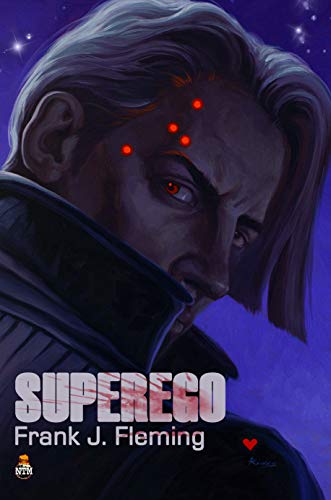
Rico, the hero of Frank J. Fleming’s novel, Superego, is an intergalactic hit man in the distant future. He is particularly good at his job due to being genetically engineered. First of all, he’s remarkably strong, with extremely fast reflexes. Secondly, his brain is wired for multitasking. Thirdly, and most importantly, he has no empathy at all. To him, innocent bystanders are just part of the furniture, entirely expendable.
Until one day, on a planet where a major interplanetary conference is about to start, he kills a group of terrorists and (wholly unintentionally) saves many innocent lives. Suddenly, Rico is a hero – which gives him no pleasure. The local police ask for his help (though, annoyingly, they keep taking his guns away), and he finds himself working with a police woman named Diane. Diane doesn’t trust him (which only shows her good sense). But gradually – as they survive several other hairy situations and become even bigger heroes – he starts having feelings for her. This has never happened before, and he hadn’t thought it was possible. Which only complicates his life, which is already complicated enough as one surprise after another begins to reveal the true scope of the corruption within the Galactic Alliance.
I’ve known author Frank J. Fleming for many years – first through his hilarious blog, IMAO, and more recently as a leading light at America’s new Paper of Record, The Babylon Bee. I wasn’t sure what kind of a novelist he’d be. But I was pleasantly surprised.
Superego provides a fusion of Hard-Boiled thriller and space opera, and works extremely well on both levels. But what makes the book really work (as with all great Hard-Boiled) is the voice of the narrator. Rico’s psychopathy gives the ironic tone an extra punch, and Frank J.’s signature sense of humor provides many a (black comedy) laugh.
Oh yes, there are Christian themes here too – Diane is a Christian and attends church, and Rico even attends a Bible study. His awkwardness with that social situation exactly corresponded to my own experience, by the way, and that gave me a moment’s pause even as I laughed.
Websites store cookies to enhance functionality and personalise your experience. You can manage your preferences, but blocking some cookies may impact site performance and services.
Essential cookies enable basic functions and are necessary for the proper function of the website.
Name
Description
Duration
Cookie Preferences
This cookie is used to store the user's cookie consent preferences.
30 days
These cookies are needed for adding comments on this website.
Name
Description
Duration
comment_author
Used to track the user across multiple sessions.
Session
comment_author_email
Used to track the user across multiple sessions.
Session
comment_author_url
Used to track the user across multiple sessions.
Session
These cookies are used for managing login functionality on this website.
Name
Description
Duration
wordpress_logged_in
Used to store logged-in users.
Persistent
wordpress_sec
Used to track the user across multiple sessions.
15 days
wordpress_test_cookie
Used to determine if cookies are enabled.
Session
Statistics cookies collect information anonymously. This information helps us understand how visitors use our website.
Google Analytics is a powerful tool that tracks and analyzes website traffic for informed marketing decisions.
Used to monitor number of Google Analytics server requests
10 minutes
__utmb
Used to distinguish new sessions and visits. This cookie is set when the GA.js javascript library is loaded and there is no existing __utmb cookie. The cookie is updated every time data is sent to the Google Analytics server.
30 minutes after last activity
__utmc
Used only with old Urchin versions of Google Analytics and not with GA.js. Was used to distinguish between new sessions and visits at the end of a session.
End of session (browser)
__utmz
Contains information about the traffic source or campaign that directed user to the website. The cookie is set when the GA.js javascript is loaded and updated when data is sent to the Google Anaytics server
6 months after last activity
__utmv
Contains custom information set by the web developer via the _setCustomVar method in Google Analytics. This cookie is updated every time new data is sent to the Google Analytics server.
2 years after last activity
__utmx
Used to determine whether a user is included in an A / B or Multivariate test.
18 months
_ga
ID used to identify users
2 years
_gali
Used by Google Analytics to determine which links on a page are being clicked
30 seconds
_ga_
ID used to identify users
2 years
_gid
ID used to identify users for 24 hours after last activity
24 hours
_gat
Used to monitor number of Google Analytics server requests when using Google Tag Manager
1 minute
_gac_
Contains information related to marketing campaigns of the user. These are shared with Google AdWords / Google Ads when the Google Ads and Google Analytics accounts are linked together.
90 days
Marketing cookies are used to follow visitors to websites. The intention is to show ads that are relevant and engaging to the individual user.
A video-sharing platform for users to upload, view, and share videos across various genres and topics.
Registers a unique ID on mobile devices to enable tracking based on geographical GPS location.
1 day
VISITOR_INFO1_LIVE
Tries to estimate the users' bandwidth on pages with integrated YouTube videos. Also used for marketing
179 days
PREF
This cookie stores your preferences and other information, in particular preferred language, how many search results you wish to be shown on your page, and whether or not you wish to have Google’s SafeSearch filter turned on.
10 years from set/ update
YSC
Registers a unique ID to keep statistics of what videos from YouTube the user has seen.
Session
DEVICE_INFO
Used to detect if the visitor has accepted the marketing category in the cookie banner. This cookie is necessary for GDPR-compliance of the website.
179 days
LOGIN_INFO
This cookie is used to play YouTube videos embedded on the website.