‘Death in the city’

Perhaps you’ve been wondering what I’ve been thinking about the recent tragic events that began in Minneapolis.

I’ve been reluctant to talk about it. Frankly, I’ve just been hunkered down, “sheltering in place,” as the saying goes. I’ve reduced my talk radio listening, because it’s just too sad and depressing. I’ve buried myself in light reading, which is why I’ve been doing so many book reviews lately.

I’ve actually seen none of the rioting. Property destruction was centered in the southern inner city, far from my home. Some damage has been reported in a suburb north of me, but the boarded-up store windows I’ve seen personally have been precautionary.

But the area of main damage in Minneapolis, around the intersection of Hiawatha Avenue and Lake Street, was my old stomping grounds. I lived in that area for much of my twenties. Not only am I familiar with some of the destroyed businesses, I even remember what businesses were there before them. Spent a lot of time waiting for buses around there, back before I owned a car.

The most famous casualty for readers is of course Uncle Hugo’s Science Fiction Bookstore. Uncle Edgar’s was its twin, serving the mystery market. Uncle Hugo’s was not only a cultural landmark but one of the seedbeds of the whole Fandom movement.

I wasn’t a regular customer at Uncle Hugo’s, but I’d been there a number of times. I participated in a book signing there once (that was where I met Lois McMaster Bujold).

And it was there I had gone way back in 1984, flush with the excitement of my first commercial short story sale, to Amazing Stories. I asked the owner to order me extra copies so I’d have a stock to give away (I wasn’t aware I could order them from the publisher – that’s how green I was). When I went to pick them up, he asked me to sign a couple copies he’d ordered for himself – “So I can show them to people when you’re rich and famous.”

If those copies still existed, they’re ashes now.

Another loss – not burned but trashed – was a local Scandinavian meat market and gift shop. I bought stuff from them every year. I think I won’t provide their name here, since I assume they’re ELCA Lutherans and wouldn’t care to be associated with me. But they’d been on Lake Street since the 1920s, back when the place was thick with Scandinavian immigrants. Over the decades, through multiple population changes, they’d stayed committed to the neighborhood.

No good deed goes unpunished, as the saying goes.

When the George Floyd tape was first released, I was horrified. But I also thought – just for a moment – that this might bring us all together, in common outrage.

Instead it gave a golden opportunity to the neo-Maoists.

Pray for us. Especially for the poor who, as always, pay the highest price for the ideological games of intellectuals.
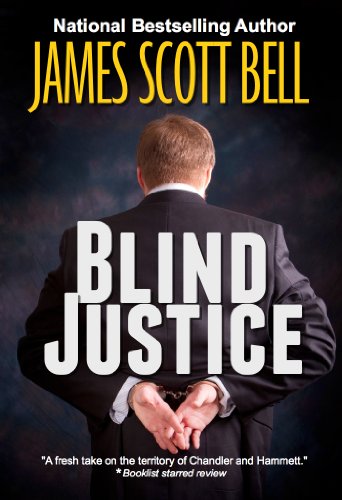
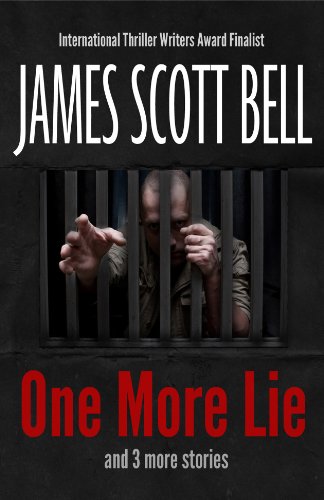
Double review: ‘Blind Justice,’ and ‘One More Lie,’ by James Scott Bell

Not that I am unemotional, but I do have a certain kind of permanent brain damage known as the “legal mind.”

Jake Denny, the hero of James Scott Bell’s Blind Justice, is a legal accident waiting to happen. Fiercely determined to succeed, he came to Los Angeles and had some success, before developing a drinking habit and suffering the breakup of his marriage. Now he’s looking at the end of the line, without work and facing eviction from his shabby little office.

Then he gets a call from the mother of Howie Patino, a childhood friend. Howie was below average in intelligence, but sweet natured and harmless. Now he’s been arrested for the brutal stabbing murder of his wife in the small town of Hinton.

Jake knows this case could be his redemption, but his confidence is gone. On top of that, Howie himself insists he’s guilty – though his story doesn’t make much sense, including the part where he says he saw the devil. Still, Jake’s the only lawyer the Patinos can afford, and he doesn’t feel he can turn them down.

When it comes to the trial, he has two seemingly invincible opponents – the small town district attorney who masterfully opposes him, and his own incompetence, fueled by alcohol. The worse things go for him, the more he drinks.

But he has a couple friends supporting him – one is his investigator, the other is Howie’s sister. They both tell him God can help him, and warn him of dark spiritual forces at work in Hinton.

There was a lot to like about Blind Justice. I personally thought the supernatural elements that got worked in (the book veers toward horror in places) were distracting and unnecessary. But I enjoyed the book overall. This is Bell, so there’s no obscenity.

Just me and a tray of cold cereal and a roll they could have picked off the ice at an L.A. Kings game. Coffee squeezed from the underside of a welcome mat after a hard rain.

I’m reluctant to tell you too much about the plot of James Scott Bell’s novella, One More Lie. There are so many surprises coming so fast that I’d spoil them for you.

Suffice it to say that Andrew Chamberlain, the hero and narrator, starts out the story on top of the world. He’s a highly successful Los Angeles lawyer with a beautiful wife and all the toys money can buy. Very suddenly his world goes to pieces – he’s accused of murder, and very neatly framed. In spite of the services of a friend who’s a top criminal lawyer, he finds himself on trial for his life. He will hit bottom hard before he begins to realize what really happened to him.

One More Lie is an engaging story, though I must tell you I figured out the last big surprise ahead of time. However, there are lots of other surprises to keep you interested.

One More Lie is, as I said, a novella. Three clever short stories are also appended, to give you your money’s worth.

It should be no surprise by now that there’s no obscenity in the book.

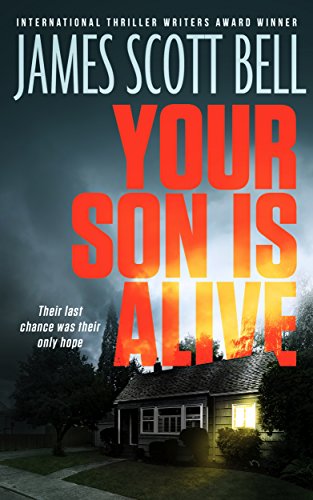
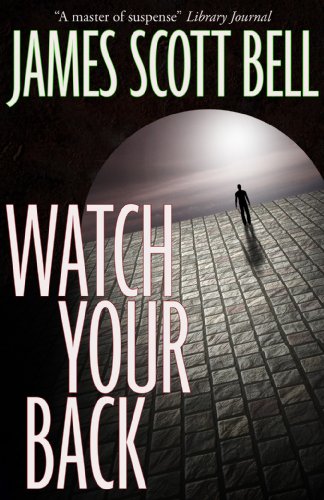
Double review: ‘Your Son Is Alive,’ and ‘Watch Your Back,’ by James Scott Bell

“I had to give up hope ten years ago. The hope was killing me.”

Dylan and Erin Reeve, the principal characters in James Scott Bell’s Your Son Is Alive, had a storybook life until one day 16 years ago, when their five-year-old son Kyle disappeared from a tee-ball game. No trace of him was ever found. The pain destroyed their marriage. But gradually they’ve learned to live with the sorrow. Dylan is even taking a chance on dating again.

Then, one night, he finds an envelope pushed through his mail slot. The message, written in crayon, says, “Your son is alive.” Erin gets mysterious phone calls. Is someone playing a game with them, or is this the beginning of a ransom demand, after all these years? Or both? There will be shocking surprises (some of them humdingers), and the implausible becomes very real as our heroes are thrown onto a roller coaster of re-opened emotional wounds and genuine physical danger.

I enjoyed reading Your Son Is Alive. It worked very well as a thriller, pushing all my empathy buttons. And the conclusion was satisfying.

The final revelation, though, struck me as pretty implausible. It was the sort of thing I expect more from Dean Koontz. Of course, I love it when Koontz does it. But one expects Koontz’s villains to come out of left field.

Recommended, with points deducted for believability. As usual with Bell, no obscenity.

This is how insanity starts. You get these thoughts and you let them play out and they cut a groove in your brain. If the groove gets big enough, you stay in it, like a diseased yak chained to a pole.

James Scott Bell writes pretty well in the shorter form as well as in novels. This is demonstrated in his collection, Watch Your Back, which contains a titular novella plus several short stories.

Watch Your Back is an interesting study in self-destruction, inspired by James M. Cain. Cameron Cates works for a large pension management company, doing computer security work. He makes a lot of money and is engaged to a lovely young woman. But he hates his job (though he’s good at it) and secretly chafes at the prospect of commitment in marriage.

Then a woman named Laine comes to work at his company. Laine is exotically beautiful and seductive, and Cam can’t stop thinking about her. When she shows an interest in him, he’s easy to seduce. And when she suggests a way they can become insanely rich, his resistance is as flimsy as his character. Trouble is, he doesn’t know some important things, and those things just might kill him.

Watch Your Back is a very neat Noir tale, nicely set up and paid off.

The other stories are good too. I especially enjoyed Heed the Wife, which played off an orthographic detail with which many of us who know old literature will be familiar.

Author Bell says that he published this book to explore a modern medium for re-creating the market for short stories, which died with the demise of pulp magazines. Sounds like a good idea to me. Mature themes, but no obscenity.

“Lies Women Believe” and “Get Lost” – Guest Reviews

One of my daughters, still a teenager, has begun to write reviews of the books she reads. She has been collecting books from my and my parents’ shelves for a couple years now. Her to-read pile is intimidating (picture below). Recently she wrote these reviews.

I finally finished Lies Women Believe and The Truth That Sets Them Free by Nancy Leigh DeMoss. Now I’ve wanted to read this book for several years and was thrilled to find on McKay’s shelves sometime last year. However, this book isn’t the most compelling, which is the main reason why I finished it today.

I do like the way the chapters are written. Nancy presents a lie which flies under most radars, explains why it is a lie, and explains the gospel truth that contradicts it. Some of the most interesting lies I discovered were the lies about priorities, emotions, and circumstances. Nancy’s explanations were simple and practical.

What I did not enjoy about this book, the fantasy “diary” of Eve. Every chapter opens with a segment of Eve’s diary, recounting The Fall along with Cain and Abel’s episode. Having Eve narrated by the stereotypical twenty-first century woman was pretty annoying to read. Debates about the historical accuracy of her complaints aside, Eve’s personality was rather whiny and depressed. I get that Nancy opened her chapters like this to give us an example of the lies we were going to bust in action, however, she these diary segments would have done better written from the perspective of some distressed, fictional mother of a twenty-first century family. If that was the case, the diary would have been a bit more relatable, and Nancy could have made her characters as annoying as she liked instead of putting words in the mouths of people who actually lived.

All in all, Lies Women Believe and The Truth That Sets Them Free isn’t a terrible book. I might read it again in ten years, once I finish the three foot stack of books on my dresser.

large stack of book
Continue reading “Lies Women Believe” and “Get Lost” – Guest Reviews

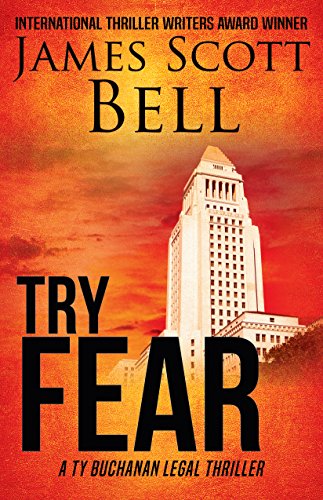
‘Try Fear,’ by James Scott Bell

I fired up the car and found a Denny’s on the way back to the freeway. I went to their bathroom and freshened up, as they say, and came out feeling like three bucks.

James Scott Bell wraps up his very satisfying Ty Buchanan legal thriller trilogy with Try Fear. Our hero, a very good lawyer who has dropped out of the big time, is called on to defend Carl Richess, a 6’ 5”, 250 pound alcoholic who was arrested just before Christmas for drunk driving and being a public nuisance after fleeing the police dressed only in a g-string and a Santa hat. Amazingly, Ty gets him off, hoping the man will get some help. Carl’s mother and brother are grateful.

Then there’s a murder in the family, and Ty is called to action again in the defense. But there’s more to the case than meets the eye. And the trail will lead very high in the city, indeed.

Also, somebody has been cyber-stalking Ty’s volunteer assistant, Sister Mary Veritas. Ty calls in favors to try to hunt the stalker down, but it’s kind of awkward because they’re trying to distance from one another. Sister Mary hasn’t taken her solemn vows yet, but she feels that Ty is an impediment to her calling.

It all turns out in a very warm and satisfying way, at least for me (a certain segment of Christian readers may disagree).

The Ty Buchanan trilogy is an extremely rewarding reading experience. Besides the clever mysteries, there’s a rich meta-narrative involving Ty’s spiritual journey. This is not a conversion story, but it is a pilgrimage story. And quite a good one.

Mature themes. No objectionable language.

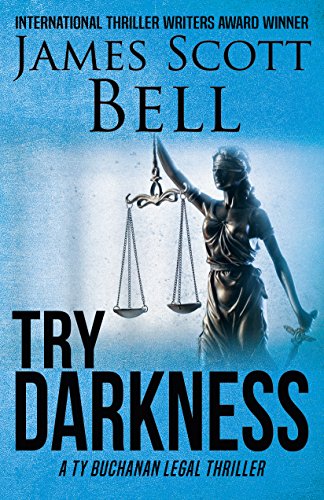
‘Try Darkness,’ by James Scott Bell

We drank. Whatever it was, it had a gentle kick, like an eight-year-old girl soccer player.

When I reviewed Try Dying, the first novel in James Scott Bell’s Ty Buchanan trilogy of legal thrillers, I said I found it a little pallid compared to his Mike Romeo books. That was a hasty judgment. This series, I now realize, is wonderful in its own way.

Ty Buchanan, as you may recall, was a high-powered lawyer with a big Los Angeles firm. His life got turned upside down when his fiancée was killed and he himself was arrested and charged with murder. He managed to prove his innocence and identify the real killers with the help of unlikely allies – a priest and a nun, from a nearby Catholic retreat center.

Try Darkness finds Ty living a strange, transitional new life, inhabiting a little trailer at the retreat center. He’s given up his old job, and for the time being is providing legal help to the poor, operating from a table at a coffee shop. Father Bob and Sister Mary Veritas are still his best friends – except that his feelings for Sister Mary are causing both of them considerable discomfort.

Father Bob brings Ty a potential client, a woman who’s living with her daughter, Kylie, at a transient hotel. The hotel makes it a practice to evict all tenants after 28 days, which prevents being reclassified as a residential hotel, making them subject to housing regulations. The practice is illegal, but the law is rarely enforced. Ty agrees to help her sue them.

But suddenly she’s found murdered, leaving little Kylie behind. Ty, leery of handing her over to Child Protective Services, takes her to the retreat center, where the nuns welcome her immediately (except for Sister Hildegarde, the unsympathetic mother superior, whom Ty, Father Bob and Sister Mary attempt to keep in the dark as much as possible).

Ty’s investigation – as you’d expect – will bring him up against powerful and dangerous people.

What was particularly fine about Try Darkness was that it had a lot of heart. Ty is working his way through grief, and his relations with Kylie – and with Sister Mary – are opening his mind and heart to a whole new way of life.

Highly recommended. The books should be read in order. No objectionable language.

Eystein’s therapy

King Eystein I of Norway, carving in the Bergen Museum. Photo credit: Nina Aldin Thune, Creative Commons LIcense.

I’ve been doing a little translation lately (I’ll tell you more about it later) which reminded me of one of my favorite passages from Snorri Sturlusson’s Heimskringla.

This story involves King Eystein I, far from the most renowned of Norway’s kings, but very possibly the most likeable.

He was part of a set, sharing a joint monarchy with his brother, Sigurd Magnusson. They were both the sons of King Magnus Bareleg, who never got the memo that the Viking Age was over, and died young and outnumbered in Ireland, declaring, “Kings were made for glory, not for long life.”

Eystein and Sigurd were very different men. Eystein, the older, was handsomer and friendlier, as well as more thoughtful. Sigurd was taller and stronger, and mercurial in his temperament. Some historians suspect, based on saga descriptions, that he may have suffered from bipolar disorder.

Sigurd was actually the first European king to go on a crusade, heading out in 1108 and returning in 1111. He fought in various places in the Mediterranean before helping King Baldwin of Jerusalem capture Sidon. He went home by way of Constantinople. Meanwhile, Eystein stayed home and watched the store.

One memorable scene in their saga has them together at one of Eystein’s estates in the Upplands. During the feasting they decide to amuse themselves by “mannjevning,” what we might call “ranking” today. A bragging competition.

Sigurd boasts about his prowess in war. He tells of his battles in the Holy Land, and all the honors he received from great princes.

This is how Eystein answers:

“I have heard that thou hast won many battles in foreign lands, but it might have been more useful for the land what I meantime did at home. North at Vagar I built booths for the fishing folks, so that poor people could get help, and earn their living. There I founded a priest’s garth and endowed the church. Before this the place was almost heathen. These men will remember that Eystein was King of Norway. The road from Trondheim went once over Dovre-fell, where people were lost in bad weather or had to sleep out of doors and suffer hardships. There I built a mountain inn and gave it an income; those people will know that Eystein has been King of Norway. At Agdenes there is a dangerous rocky coast and no harbour; and many ships were lost every year. There is now a harbour and a landing place for wintering ships, also a church. Afterwards I raised beacons on the high fells and this I hope will be useful for the country. I built at Bergen a king’s hall and the church of the Apostles, with an underground passage between the two. The kings that come after me will remember my name for that.

“I built St Michael’s Church and a monastery besides. I have also, my brother, shaped the laws so that the people can now obtain justice, and when the laws are kept the country will be better ruled. I have set a warping pole with iron rings in Sinholm sound. The Jämtland people are again under the Norse king’s rule, and this was brought about by blithe words and wise persuasion and not by force or fighting. Now these matters are of small importance, still I do not know, if the people in the land are not better served by them, than if thou hast killed black men in Serkland and sent them to hell…”

As good a “guns vs. butter” argument as I’ve ever read, I think.

But though that’s a memorable story, it’s not the best Eystein story. That comes earlier {and is not included in some translations). It represents one of those weird moments you occasionally experience in reading old books when time contracts and you encounter a historical character who seems like someone you might know, and would like to know, today.

There was an Icelandic poet in King Eystein’s court whose name was Ivor Ingemundson. Ivor was a witty conversationalist, and the king enjoyed his company. But a time came when Ivor’s mood changed. He grew quiet and sad, and the king noticed it.

The whole passage is quite long (in Monsen’s translation), but the essence of the story is that Eystein spoke to Ivor privately. Ivor was reluctant to talk at first, but the king asked a series of questions, finally working out through deduction that Ivor was lovesick. He had counted on marrying a particular girl back home, one he couldn’t help thinking about, but his father had arranged for his brother to marry the girl.

King Eystein then proposed a series of remedies – he offered to introduce him to suitable young women; he offered give him property; he offered money to enable him to travel. Ivor replied that none of those things appealed to him. So the king says this:

“I have suggested everything that comes to my mind. There is but one thing else that might help thee, although it is little compared to what I have offered thee. Every day when I am not taken up with important matters, thou shalt come to me and we will talk over this matter about the maid, for it often happens that sorrow shared is sorrow lessened, and every time I shall give thee something before thou goest away.”

The saga says that Ivor agreed to that. “He was thereby consoled in his sorrow and became glad again.”

Talk therapy. We Norwegians invented it.

Imagine No Bad Songs

Inspired by the mayor of New York City, who said the song “Imagine” was an inspirational song about treating each other better, writer Matthew Walther suggests that the unifying banner under which we can all gather could be disdain for this song.

Start with the word salad of Marxism, anarchism, and existentialism. Nowhere is there even the faintest hint of how any of the hypotheticals we are being asked to consider might be realized. Instead Lennon does the political equivalent of telling us that the real magic was inside us all along.

This terrible song offers “a vision of a reality in which ‘lol nothing matters’ is elevated to a first-order principle.”

I’ve always hated “Imagine.” It’s as silly a song as “Simply Having a Wonderful Christmastime.” It’s abyssmal. I can barely listen to Cohen’s “Hallelujah” and “Bewitched, bothered and bewildered” has to be about singing under the influence–does anyone like that one?

Let’s unite in our disdain for overly popular songs. What’s your pick? (via Prufrock)

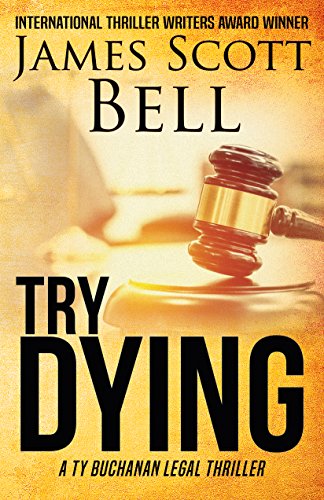
‘Try Dying,’ by James Scott Bell

He had a salt-and-pepper ponytail and L.A. eyes—trying to look cool and detached and hungry for money.

When you think about it, the thriller genre is almost ideal for Christian storytelling. A good thriller takes its hero and strips him of every comfort and illusion, forcing him to look at the plain truth unblinking.

Kind of like repentance.

James Scott Bell’s thriller, Try Dying, does a very good job of doing just that thing.

Ty Buchanan is a hotshot young L.A. lawyer. He works for a prestigious firm, owns a nice home, drives a nice car. He’s involved in a high-profile case, a lawsuit against a celebrity psychologist famous for helping people recover “repressed memories.” But best of all, he’s blissfully in love with schoolteacher Jacqueline Dwyer, to whom he’ll be married in a few days.

Then Jacqueline dies in a freak accident on the freeway.

After the funeral, he’s approached by a guy who looks homeless. He says he has information to sell him. That Jacqueline wasn’t killed in the accident. “They” killed her, he says.

When Ty presses him for more information. The man attacks him and runs off.

Ty can’t let this go. He starts hunting for the man, and trying to figure out why anyone would murder Jacqueline. Clues lead him to investigate a trendy self-help cult, one that has thugs on its payroll. But Ty won’t give up – even when he finds himself accused of murder and locked up.

This first novel in the Ty Buchanan series wasn’t as much fun as Bell’s Mike Romeo books, in my opinion, but I found it engaging and compelling. Prose, plotting, and characters were excellent. Ty’s existential crisis allows him to think about some of the the most important questions.

Highly recommended. No offensive language.

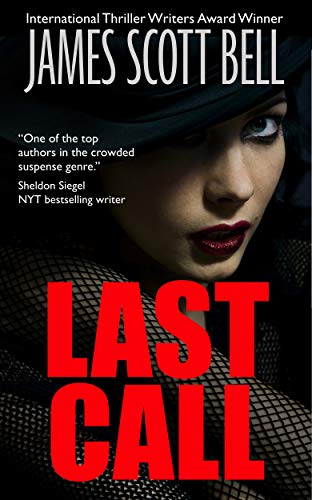
‘Last Call,’ by James Scott Bell

Keely Delmonico is a high-end call girl in Los Angeles. She does not have a heart of gold. She is, however, extremely intelligent. Enough to know that her present career has no future. She just doesn’t know what to do about that.

As James Scott Bell’s Last Call begins, one of Keely’s clients dies of a heart attack during a session. On instinct, she takes his cell phone away with her.

Her instinct is correct that the cell phone is valuable.

But she had no idea how valuable it is to certain people, and to what lengths they will go to reclaim it. Murder is just the beginning.

Keely runs to Las Vegas, to try to drop out of sight. But she’s underestimated the power of the people she’s crossed. And now she’s placed someone she cares about in mortal danger.

My reaction to Last Call was mixed. Author Bell did an excellent job ramping up the suspense. The tension was almost unbearable at times.

But plotting can be too tight. This story required some highly choreographed coincidences and deus ex machinae (is that the correct Latin plural?) to avert disaster. The plausibility suffered for this reader.

As with Bell’s other books, there is no obscene language.

Book Reviews, Creative Culture