
Maybe Effective Communication is More than 7 Percent Verbal

From our You Have Heard It Said But I Tell You desk, is only 7 percent of effective communication verbal?

Many people will note the importance of body language to being trusted or persuasive, and they may say spoken words are only 7 percent of communication, the rest being 38 percent tone of voice and 55 percent body language. Where did this idea come from?

It comes from reports on the communication research of Albert Mehrabian of UCLA during the 1960s. Philip Yaffe describes the two studies for Ubiquity. In one study, Mehrabian had his test subjects judge the emotion of a woman saying “maybe” in one of three different ways and then seeing a photo of her expressing these emotions. They guessed correctly more often after seeing the photo than by tone of voice alone.

In the other study, Mehrabian gave nine words, spoken in three different ways, and asked subjects to judge the emotion expressed. He concluded tone of voice carries a lot of weight in communication.

You can think it through yourself. Imagine the words “maybe” and “thanks” said in three different ways that would clue you in to what the person was saying. The excited maybe that hopes it works out, the uncommitted maybe, and the maybe that doesn’t want to say no to your face, at least in the moment. Nobody needed research to work this out. Was this Mehrabian’s actual conclusion?

Yaffe writes, “Professor Mehrabian’s conclusion was that for inconsistent or contradictory communications, body language and tonality may be more accurate indicators of meaning and emotions than the words themselves. However, he never intended the results to apply to normal conversation. And certainly not to speeches, which should never be inconsistent or contradictory!”

I am told Jonathan Edwards read his sermons with little emotion, addressing the back wall, yet his “The Excellency of Christ” is marvelous reading and “Sinners in the Hands of an Angry God” had people withering in the pews. Should we attribute this to the Holy Spirit’s use of the words? Sure, but how much human spirit is any of our words? Probably far more than 7 percent.
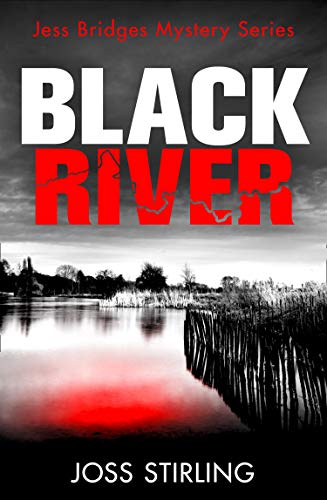
‘Black River,’ by Joss Stirling

Oxford. The Thames Valley Police. Names that evoke, in mystery fans, the unforgettable characters of Morse and Lewis, and the televised “Endeavour” prequels. But this is not one of those stories.

Black River, by Joss Stirling, is a different sort of mystery altogether, in the same setting. It’s billed as the first book in a series, although the story harkens back to previous events in the main character’s life, as if the reader already knew about them. Perhaps it’s a spin-off of another series.

Our heroine and central character is Jess Bridges, a short, pretty, curvaceous young woman who has ADHD, which makes her both impulsive and (apparently) ditzy. She has recently set up as a private investigator, specializing in missing persons. Currently she’s trying to contact a teenaged girl who has moved out on her mother and in with her recently divorced stepfather.

But that inquiry gets interrupted when, inspired by a bestselling book on “wild swimming” in England, she goes skinny-dipping at one of the author’s recommended spots, only to discover the body of a murdered man in a boat. This results in her meeting Jago Jackson, the author of the book himself, who happened to be cycling in the area, and Inspector Leo George, who heads up the murder investigation. The three of them (and several others) will meet again and again, as Jess goes undercover, taking a job with a movie crew filming at an Oxford college, and the two cases start overlapping. At least in terms of location.

The plot was complex – which really isn’t a negative criticism for a mystery. It was a pretty easy read, and the writing was good. There was a touch of French farce about the whole thing, as Jess tends to land in repeated, embarrassing sexual situations. My stuffy puritanism found that a little excessive.

However, I also noted that the author made an effort to avoid foul language. I didn’t love this book, but you very well might like it better.

‘Intolerance’

Still from D. W. Griffith’s “Intolerance,” (1916)

I posted this on Visage Volume yesterday, and though I garnered some quibbles, I still think it holds up.

The issue of Christianity’s “intolerance” has come up. I often hear the contention that the “old gods” were tolerant, while Christianity introduced intolerance. This is based on an uninformed assumption that the old days were just like ours. In fact, the “old gods” were not tolerant, and certainly not universal. They were parochial. They cared about their own people (when it suited them), and no others. Zeus cared nothing for the Parthians. Thor couldn’t care less about the Irish. Christianity brought in a new idea (anticipated by the Jewish prophets) that one God had created all, loved all, and redeemed all. If that’s true, then His message is applicable to all. The moment you make the statement, “God loves everyone,” or “everyone matters,” you are appropriating Christian theology.

Tolkien’s House Already Protected

Once the Tolkien family home

You may have heard of a fund-raising effort to solicit a few million pounds for the purchase of J.R.R. Tolkien’s Oxford house on Northmoor Road. Big names from the movie adaptations have encouraged fans to donate to Project Northmoor.

The Tolkien Society says they will not support it, “citing its concerns that, among others, no Tolkien experts were serving as directors, that the building would not be open to the public, and that the plan they had seen ‘includes spiritual retreats,'” reported by The Guardian.

That smell of Christianity may be what scares The Guardian, but the Society has a number of reasons they decided against supporting the project, including that the house “is a listed building in a conservation area – with a blue plaque proudly showing its connection to Tolkien – meaning the property is well protected under the law and not in need of rescue.”

(via Prufrock News; Photo: Tolkien House, 2002, by Stefan Servos – Ardapedia/Wikicommons)

The Master Ghost-Storyteller

Lored Eaton is lining up another round of scary ghost stories for the most wonderful time of the year. I plan to contribute one, which you’ll find here on December 19. I hope you enjoy it; feel free to say you don’t.

One of the masters of the ghost story is M.R. James (1862-1936). His tales have been adapted for the BBC many times, though not this year according to The Critic.

Many of his tales originated from being read to favoured students or pupils around his study fire in the winter, or from told as Christmas Eve entertainments for his friends. Although not all of them followed the same formula, there were several ingredients that can be regarded as quintessentially “Jamesian”, and which constitute the archetypal festive ghost story.

The protagonist of his tales is usually a learned man and a bachelor, as James himself was, who is not an especially clubbable or sociable figure, but makes up for his slight misanthropy with a great love of books and manuscripts. He often finds himself in an unusual setting, such as an abbey library or in a quiet seaside town, and stumbles upon some document or artefact that has the unforeseen effect of unleashing supernatural powers upon him.

(via Prufrock News)

Concerning garlands

I posted this video of Sissel singing “Det Lyser i Stille Grender” the other day. Watch it if you missed it before, or watch it again; it’s worth it.

There’s one detail I wanted to comment on. That concerns the Christmas tree standing behind the singer. Note what they did with the shiny garlands.

In America, it’s customary to wind the garlands around the tree, top to bottom (or bottom to top, if you prefer; I’m not dogmatic on the point). The effect is similar to what snow looks like as it lays on the branches of an evergreen after a snowfall. But in Norway it’s common (though not universal) to arrange the garlands as you see here – hanging straight down from the star (or angel; again, I’m not dogmatic) at the top. The idea here (I believe) is to suggest the rays of the star shining down from Heaven. If you set a Nativity creche underneath, that works even better. I did a search for pictures of Norwegian Christmas trees, and often they look very much like ours, but I’ve rarely seen the star-ray configuration on an American tree.

Another difference is in the use of flags. A popular decoration in Norway is a garland of little paper Norwegian flags on a string. You arrange them on the tree as you would any other holiday garland. That sort of thing’s pretty much unknown in America, even in Republican households. We try to separate Church and State – but in Norway they had a State Church up until fairly recently. And the flag, after all, does feature a cross.

It’s common to deride American conservatives as flag-worshippers, but really the Norwegians have us beat on that point. Through the periods of agitation for independence under Denmark and Sweden, the display of a “pure” Norwegian flag (one not quartered with the flag of the “parent” country) was subversive, but relatively safe. During the Nazi occupation, having the flag was less safe, but that made it all the more precious. To this day, old people get tears in their eyes when they remember the day it was finally safe to display the flag again.

No doubt, as that generation dies off, this passion for the flag will diminish.

Echo Island Is Filled with Roaring Silence

“Some things are meant to be calculated. Mystery isn’t among them.”

Jared C. Wilson, author of many books and articles we’ve discussed here, has a new young adult novel called Echo Island. When four diverse, high school friends return from a camping trip, they find everyone in their home town gone. All people, animals, and almost every sound are gone.

They don’t notice all of that at first. They notice their families missing; neighbors absent from public areas. Cars parked at churches and buildings without anyone inside. The power is out, even batteries are dead. And there isn’t a sound of any part of natural life, except the lapping of waves at the shore.

These aren’t necessarily church kids, but a couple of them think naturally of the rapture. Maybe the four boys were left behind: Bradley, the tough one; Archer, the smart one; Tim, the loyal one; and Jason (maybe he’s the one with common sense). But of the four, surely Jason would have been raptured with the others, and tons of other Echo Island residents would have remained. It wasn’t a Sunday School campground.

Over the next couple days, the boys wander the island, looking for other survivors and clues to what took everyone away. What they find is completely out of this world.

The story is great fun. It was a good follow-up to Koontz’s The Taking, because when the rain starts to fall, I initially thought of the devastating apocalypse that comes in Koontz’s downpour.

I suspected part of the solution right away, but I did not anticipate where Jared ran with it or his larger story scope. He has given it spiritual depth that many will enjoy and perhaps others will find a challenge to their assumptions. Surprises, laughs. No dogs though; that will probably cost it one out of thirty stars.

Photo by Rosie Fraser on Unsplash

‘The Jossing Affair,’ by J.L. Oakley

The title of this book probably requires a little explanation, and I’m just the man to do it (though I actually had to look it up in Norwegian Wikipedia).

Jøssing” was a common word used in Norway during World War II to describe patriots, those who opposed the Quisling collaborationist government. It arose after an incident in 1940, when British commandos attacked a German ship in the Jøssingfjord, rescuing 300 British POWs. The incident was one of the incitements for the German invasion, and the Nazis themselves originated the term as an insult against anti-Nazis. Like the name “Christian” in Roman times, the people who were being laughed at adopted it and wore it with pride.

The hero of J. L. Oakley’s The Jøssing Affair is Tore Haugland, a Resistance agent. He lives in the Norwegian town of Fjellstad, working as a fisherman’s helper. He poses as a deaf-mute. In fact he’s a University graduate and a former athlete, trained as an agent in England. He operates a secret radio transmitter and organizes “imports” and “exports” through the Shetland Bus – which at this point in the war (late 1943) no longer consists of Norwegian fishing boats, but of English submarine chasers.

Anna Fromme is the widow of a Resistance hero, a man who was tortured to death by the Gestapo. He was also a close friend of Tore’s, though Tore keeps that a secret. In spite of her husband’s heroism, single mother Anna is a pariah in Fjellstad – because she’s German. No one is sure of her loyalties, and no one trusts her.

Tentatively and almost involuntarily, the two of them slip into friendship, and then love. But that love – and much else – will be threatened when Tore is betrayed into the hands of the Gestapo, and the Nazis, aware they’re losing the war, crack down harder than ever on the Resistance, exploiting love, friendship, loyalty and trust to crush all opposition.

Author J. L. Oakley is – based on my reading of this book – a good storyteller, but a less good writer. The story had lots of dramatic tension, and I cared about the characters. It illuminated splendidly a part of World War II history that most people don’t know, and I myself wasn’t entirely aware of – the time at the end of the war when German armies were surrendering all over Europe, and the free world rejoiced – but in Norway the Nazis held on fiercely, declaring their determination to defend Fortress Norway or die in a Götterdämmerung, taking the Norwegian people down to hell with them.

What I liked less about the book (and I’ve been complaining about this in my reading reports here) was the sheer length of the thing. I thought the story could have been told faster and more simply. I had trouble keeping the characters straight (even the hero – he uses multiple aliases). Also, there were a number of word mistakes and typos in the text.

Some sexual content, but it was fairly mild. All in all, The Jøssing Affair was a good book and I’m glad I read it. (Some of the action takes place on the island of Hitra, where one of my great-grandmothers was born. I also liked the absence of pro-Communist cant, which you often find in such stories.) But it sure took a while to read. (There was a strange sense of déjà vu as I read about a population suffering deprivation, looking for liberation by Christmas, but having to wait until spring for relief. Hmm, what does that remind me of?)

‘Det Lyser i Stille Grender’

I’m pretty sure I’ve posted this number by Sissel here before (though not this performance, which conveniently includes subtitles). But it’s high on my list of Norwegian Christmas songs that deserve to be known outside the neighborhood.

According to this Norwegian account, the lyrics come from a poem by Jakob Sande. It was first published in 1931, but the author didn’t think much of it. When Lars Soraas, who was putting a Christmas songbook together in 1948, asked him for permission to use it, Sande had forgotten about it completely. Since then it’s become his best-known work.

Expository weight

Photo credit: Sergey Zolkin @szolkin, Unsplash

Once again tonight, I have nothing to review for you. This book I’m reading, which I mentioned yesterday, continues a slow read. I’ve figured out the reason – it’s longer than a federal regulation. I bought it assuming it was an ordinary World War II thriller, but it turns out to be more than 500 pages long – an epic. And although I remain interested in the events, I don’t think there’s enough story here to support that much expository weight.

It’s also a reproach to me as a writer. Because as I continue working on the new Erling book (still haven’t come up with a title), my word count is lower than I think it should be – like butter spread over not enough bread, as Bilbo would say. People expect epic fantasy books to run at least 80,000 words or so nowadays, and I’m not sure I can make it that long. I don’t want to just pad the story, but I’d rather not disappoint the reader either.

I have the idea my prose used to take up more space. Maybe I’m a victim of my own efficiency.