
I have paid insufficient attention to the upcoming movie, “The Most Reluctant Convert,” scheduled for release on November 3. Sadly, it looks like a limited engagement, but I suspect the DVD will be easily available. If it’s as good as the trailer makes it look, it might climb up beside the original BBC “Shadowlands” as my favorite Lewis movie (an admittedly small field to choose from, especially if you omit the Narnia films. Which I do, pretty much). Max McLean seems very good in the role.
Tag Archives: C.S. Lewis
‘Weariness and water were our chief enemies…’

The war itself has been so often described by those who saw more of it than I that I shall here say little about it…. Through the winter, weariness and water were our chief enemies. I have gone to sleep marching and woken again and found myself marching still. One walked in the trenches in thigh gum boats with water above the knee; one remembers the icy stream welling up inside the boot when you punctured it on concealed barbed wire. Familiarity both with the very old and the very recent dead confirmed that view of corpses which had been formed the moment I saw my dead mother. I came to know and pity and reverence the ordinary man: particularly dear Sergeant Ayres, who was (I suppose) killed by the same shell that wounded me. I was a futile officer (they gave commissions too easily then), a puppet moved about by him, and he turned this ridiculous and painful relation into something beautiful, became to me almost like a father. But for the rest, the war—the frights, the cold, the smell of H.E., the horribly smashed men still moving like half-crushed beetles, the sitting or standing corpses, the landscapes of sheer earth without a blade of grass, the boots worn day and night till they seemed to grow to your feet—all this shows rarely and faintly in memory. (C. S. Lewis, Surprised by Joy, Chapter XII)
I floundered for something to post tonight. Like so many Americans, I’m upset over a war strategy that seems both foolish and suicidal, with the fighting men (as always) paying the costs. Add to that that I’m reading a novel about the aftermath of World War I, the same sort of thing on a massive scale. So I settled on the excerpt from Surprised by Joy above, Lewis’s greatly softened public reminiscence of his war experience. (For a more candid view, see if you can find a copy of Jack’s Life, by Douglas Gresham, in which he relates what Jack told him in private about the war.)
I’d love to do a political rant, denouncing certain officials who shall remain nameless. But I haven’t the heart for it these days.
Buy my books. Someday they’ll be worth this much

Dale Nelson drew my attention to this book offering at AbeBooks.com. It’s an original review copy of C. S. Lewis’s That Hideous Strength (one of my favorite novels in the world), autographed by the author himself to George Orwell and his wife.
Posted price: $30,000.
I’m sure some of our elite blog readers are in a position to purchase this book, and then donate it to the Marion Wade Center or some other worthy institution.
I wish we had a referral arrangement with AbeBooks, as we do with Amazon, so we could get a piece of that action.
In case you’re wondering what Orwell thought of the book, he called it “worth reading,” but was not in love with it.
If you’re on a budget, you can get the book slightly more inexpensively here. We do get some of that.
25 Minutes on C.S. Lewis on BBC Four
Here’s a segment on BBC Four’s Great Lives program on C.S. Lewis. Suzannah Lipscomb, a historian, says she has not heard Lewis’s voice prior to this, calling it more “plumby” than she had imagined. She talks with Matthew Parris and Malcolm Guite about his faith, books, appearance, his marriage, and how he very much valued his privacy. (via Twitter)
Reading report: ‘The Lord of the Rings’: Diversity
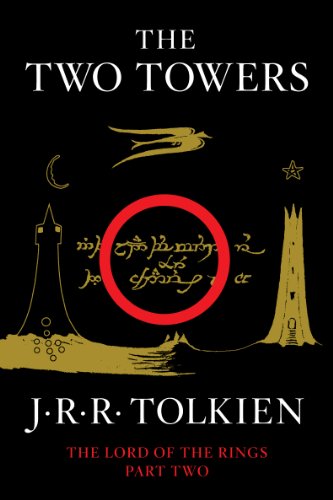
Blogging my way through The Two Towers:
Another theme in these books that strikes me is the vision of what – at the risk of political correctness – I might call “diversity.”
The Fellowship of the Ring is, self-consciously, a diverse group. It includes members of several of the more-or-less human “races” not dominated by Sauron – Men, and Elves, and Hobbits. No doubt this mirrors Tolkien’s experience with classes and Imperial ethnicities (not to mention Allies) during the Great War. The feeling (it must have seemed very strange in those times) of thinking, “Here I am, crouched in a trench with men I might have despised or even fought against in the past. But we’re all at war for a single cause now, and I find much to love and admire in them.”
No doubt it would have occurred to a thoughtful mind that one could conceivably come to feel the same way about the enemy, under different circumstances.
But it wouldn’t only have been the war. The fabled Inklings group was itself (to an extent) a disparate gathering. Not radically disparate, but to Tolkien, as a member of a religious minority, the chasm between Catholic and Protestant was always significant. I don’t recall that any of the Inklings was an atheist or agnostic, but Owen Barfield was a Theosophist (though he eventually became a communicant Anglican).
Which reminds me of the issue of “Jack” Lewis’s Anglicanism, always a sore point with Tolkien. After the famous night in 1931 when he and Hugo Dyson convinced Lewis that mythology might be a kind of inchoate prophecy from Heaven (leading to his Christian conversion), Tolkien hoped Jack would join him in his Roman faith. But Jack remained at bottom a Belfast Protestant, though he learned to appreciate certain beauties in his friend’s church.
And when I read of Gimli and Legolas, tentatively finding common ground in which an Elf might go so far as to visit caverns, in order (perhaps) to discover the beauties a Dwarf sees there, and the Dwarf condescends to travel in a forest with the Elf for the same reason, we may be peering into the heart of Tolkien’s and Lewis’s friendship.
‘New’ C. S. Lewis recordings

“Like cold water to a thirsty soul, so is good news from a far country.” (Proverbs 25:25, ESV)
There is good news, folks, even now, especially if you’re a C. S. Lewis fan.
There are “new” recordings of C. S. Lewis reading his own work and Chaucer, available from the Rabbit Room Store. That’s surprising in itself, but the source of the recordings is even more remarkable.
In August of 1960, C. S. Lewis’s wife Joy Davidman had been dead for about a month. At that time her ex-husband, William Gresham, traveled to England to see his sons, Douglas and David. It must have been an awkward reunion. Bill Gresham tried hard to get custody of his sons, but “Jack” Lewis strenuously opposed him, winning custody for himself. (According to Joy Davidman’s biographer, she may have exaggerated her stories of Bill’s neglect and abuse. However, it is indisputable that he was an alcoholic.)
However he felt, Bill was gracious enough to ask Jack to read some of his work into the new tape recorder he’d brought along. Jack did so, reading excerpts from Perelandra and That Hideous Strength, and then reading (or reciting) part of the Prologue to The Canterbury Tales in flawless Middle English.
I haven’t bought my copy yet, mostly out of laziness, but I’m going to. I can’t complain about the price – three bucks for the whole caboodle.
Proceeds go to benefit the Marion E. Wade Center, which owns the rights.
Few Know About C.S. Lewis’s schizophrenic Stepson
Douglas Gresham has begun talking about his difficulty experiences as a child with his brother, David, and how Lewis and Uncle Warnie did all they could to care for this dangerously schizophrenic boy.
“When I was a small child,” Gresham told Jonathon Van Maren, “he was continually trying to get rid of me. This went on into our teen years.” He said he remembers “running like crazy or defending myself from my rather insane brother. . . I would never have said anything to harm him or upset him while he was alive, because oddly enough I still loved him as a brother. In fact, I wept when he died.”
“Jack went out of his way to do everything he possibly could for that lad, and none of it was accepted.” (via Prufrock News)
Biographical stand-ins
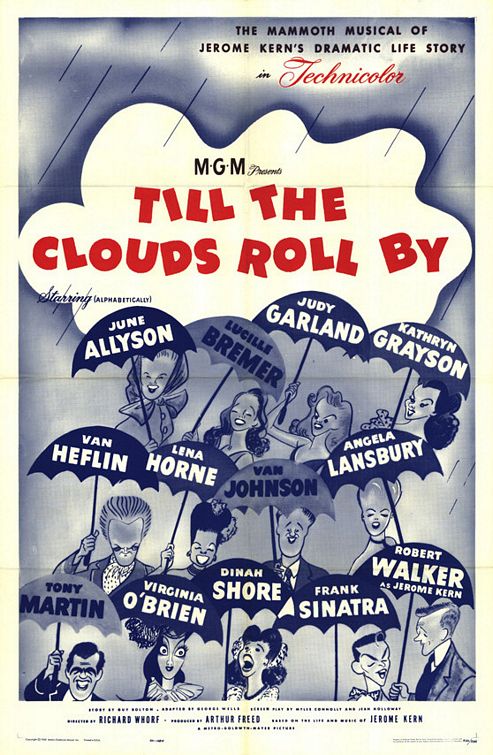
I caught an old movie the other day. “Till the Clouds Roll By,” starring Robert Walker (no relation). It’s a biographical film, based on the life of Broadway composer Jerome Kern.
I like old movies in general, but this one interested me because I knew Kern wrote along with P. G. Wodehouse and Guy Bolton in his early years, doing a lot to invent the American musical comedy as we know it. Up until their time, Broadway musical plays had been mostly adaptations of European ones. This team, plus a few others, invented more character-centric stories, where the songs always advanced the plot. I wondered how the movie would treat that collaboration.
They treated it, in typical Hollywood fashion, by replacing it entirely. In the movie, instead of working with various collaborators, the young Kern teams up with a fictional older lyricist named Jim Hessler (Van Heflin). The Hessler character comes fully equipped with a fictional family, including a young daughter who becomes a surrogate little sister to Kern, and adds dramatic conflict to the third act so that all can be resolved in the big musical climax.
That got me thinking about the subject of fictional characters. That is, fictional characters included in real life stories, in order to avoid using real people – who sometimes sue you (or their heirs do) if they don’t like the way they’ve been depicted. (Movies were made about Wyatt Earp before his widow died, but they had to change his name, because she refused to give approval.)
Perhaps the most famous case is Shakespeare’s Sir John Falstaff, introduced in Henry V, Part 1. Falstaff was a stand-in for a genuine historical figure named Sir John Oldcastle. Oldcastle had a similar career to the fat man in the play, except that he joined the Lollards, the proto-Protestant followers of Wycliffe, and eventually died a martyr’s death, roasted over a fire. His descendants, who were influential, made it very clear that they did not want their ancestor belittled, so Will Shakespeare just wrote Oldcastle out, replacing him with Falstaff. Probably just as well.
In both versions of “Shadowlands,” the film about C.S. Lewis’s marriage to Joy Davidman (I prefer the original BBC version), we see Jack together with his friends, the Inklings, debating, laughing, smoking pipes, and drinking beer. Except for his brother Warnie, who plays a major role in the play, all these friends are fictional. There is no J. R. R. Tolkien there, nor any Hugo Dyson or Owen Barfield. Including them (especially Tolkien) would have been a distraction, I imagine. The audience would be trying to identify them rather than following the story.
And they all had living families, always potential complications.
It makes perfect prudential sense to fictionalize.
And yet I always feel a little cheated when it’s done.
Sub-creators

A snippet from Tolkien: A Biography, by Humphrey Carpenter.
This is from his account of the long night’s conversation among Tolkien, C.S. Lewis, and Hugo Dyson at Oxford in 1931, which bore fruit a few days later in Lewis’s conversion. It’s tremendously important.
We have come from God (continued Tolkien), and inevitably the myths woven by us, though they contain error, will also reflect a splintered fragment of the true light, the eternal truth that is with God. Indeed only by myth-making, only by becoming a ‘sub-creator’ and inventing stories, can Man aspire to the state of perfection that he knew before the Fall. Our myths may be misguided, but they steer however shakily towards the true harbour, while materialistic ‘progress’ leads only to a yawning abyss and the Iron Crown of the power of evil….
Lewis listened as Dyson affirmed in his own way what Tolkien had said. You mean, asked Lewis, that the story of Christ is simply a true myth, a myth that works on us in the same way as the others, but a myth that really happened? In that case, he said, I begin to understand.
‘Lost and Found in the Cosmos’
These stories [by Lovecraft] end in suicide, madness, or, as in The Shadow Over Innsmouth, a disturbing acquiescence. Given the Darwinian undertones, what else could one do but acquiesce? You are what you are, and that’s the end of it.
But for Lewis, there is reason for hope. Reality comes with an “upper story,” and while we are embodied souls, we are souls above all. It is to our souls that Lewis makes his appeal. He wants us to look in horror upon our inner monster, but unlike Lovecraft, he does not want us to die. He wants us to turn to Aslan and live.
At Touchstone, C. R. Wiley analyzes the different ways in which two near-contemporaries, H. P. Lovecraft and C. S. Lewis, approached the mysteries of the universe in their imaginative fiction. This article precisely mirrors my own opinions, and is therefore a marvel of reason.
(Tip: My friend Kit Johnson.)