Writing advice: Paragraphs

Photo credit: Thom Milkovic @ thommilkovic, via Unsplash

I’m deep in translation work right now, but not the paying kind. I’m translating another article for the Georg Sverdrup Society, whose journal I edit. (Sverdrup, in case you don’t want to bother with the Wikipedia link, was a founding father of Augsburg Seminary and College in Minneapolis, and of The Lutheran Free Church, which no longer exists. Its principles are carried on by The Association of Free Lutheran Congregations, to which I belong.) Sverdrup isn’t the easiest writer to translate, though I’ve translated far worse (see below). But this article is harder than usual, Sverdrup wrote it early in his career, before he immigrated to the US, and he hadn’t figured out yet that paragraphs shouldn’t run a whole page in length.

Hans Nielsen Hauge was far worse, though. I’ve written about him before, both here and in The American Spectator. He was the peasant preacher who sparked a revival in Norway around the turn of the 19th Century. Hauge was a man full of Christian zeal, but with little education. I’ve translated some of his books – all this is unpublished to date – and a couple of them feature long, long sections with no paragraph breaks at all. The man was not cerebral; he was an enthusiast. He sat down with pen and paper and just wrote whatever his spirit put into his mind. Thank the Lord for Post-It Notes (which got their inspiration, by the way, in church); without them it would be almost impossible to keep your place as you work your way through books like that. (Oddly enough, Art Fry, who got the Post-It idea in church, worked for Augsburg College, which I mentioned in the previous paragraph. This fact seems like it should be significant, but is not, so it doesn’t rate a paragraph of its own.)

It all comes down to something C. S. Lewis wrote… somewhere. Might have been a letter to a kid. He said that when you write badly, you’re asking the reader to do your work for you. It’s your job to a) think out what you want to say, and b) say it as clearly and comprehensibly as possible, without putting roadblocks in the reader’s way.

In case you’re unclear on how this is done, you basically change paragraphs whenever you move on to a new idea. It’s like a subheading in an outline. If your paragraphs vary in length, that’s perfectly fine. Some paragraphs can even be one sentence. In extreme situations, one word will do.

In the old days, when reading material was rare and relatively expensive, people with the reading bug would read pretty much anything they could get their hands on. If you rode into a town in the early American west, any reading material you brought with you would be eagerly borrowed – old newspapers were especially prized, and it didn’t matter how out of date they were.

But those days are past. Today you need to fight for your readership. Keeping your paragraphs short – and congruent with your narrative purpose – is a way of working with your reader.

Like all rules, there are exceptions. But exceptions to this rule are pretty darn rare.

Words for the Flock

We talked about the word egregious and its change in usage last week. It comes from the Latin ex grege, meaning “rising above the flock,” so its use as a word for excellent or extraordinary, which are not the same thing, makes sense. This word grex or gregis is Latin for “a flock” or “gathered into a flock” and has given us a, uh, small herd of words.

Gregarious derives from this word alone, no stir-ins, no additional flavors. We use it to describe someone who loves to be around other people. He enjoys running with the flock.

Segregate means to separate from the flock.

Aggregate means “to collect or unite as a mass or sum,” similar to congregate, which also means “to bring together.” Coleridge said, “cold congregates all bodies,” making them appear united when they are spiritually indifferent.

Allegory does not come to us from grex, but it does comes from the related Greek word agora. Agora means “assembly” or “place of assembly.” “To speak in an assembly” or “to speak publicly” is the Greek word agoreuein. If you add allos or “other” to that, you get “to speak other in an assembly.” Tell the truth but tell it slant. This is the root of the Greek word allegoria, “the description of one thing under the image of another.”

Yes, I see that hand! How did we get from grex to flock? That’s a thoughtful question. Thank you.

As words are wont to do, our word flock comes from completely different root words. On the one hand, flock (from Middle English flokke and earlier from Old French and Latin) means “a lock of wool or hair.” It can describe cotton or woolen rejects used to stuff a bed. You can use it as a verb to mean “to stuff a bed with flock” or “to give something a fibrous appearance.” If you didn’t know, and I didn’t, you can flock almost anything and could have been doing this for a good long time, allowing for a now obsolete meaning of this verb, “to treat contemptuously.” Considering today’s high levels of vulgarity, I don’t recommend attempting to fit this into daily conversation.

On the other hand, flock (from Anglo-Saxon flocc, related to Old Norse flokkr) means “a group of people.” If you say flocks, you’re going to indicate a large number of people from several sizable groups. Etymonline appears to say this word sprang from the ground of its own will, because it isn’t found in other Germanic languages beyond the Middle Low German vlocke, meaning “crowd, flock (of sheep).”

Continue reading Words for the Flock

No kidding about the captain

Captain Kidd buries his treasure, by the great Howard Pyle. William Kidd looked nothing like this. Of course, he looked nothing like Charles Laughton either.

Today the temperature soared to near 40˚ Farenheit. Spring-like. It won’t last, of course, but we feel as if we deserve it. Or if not, we’ll take it and hope whoever monitors these things doesn’t add it to our bill.

The big activity today was a visit from my friendly plumber, who extracted a clog from my bathroom sink drain (must have been some clog, judging from the time it took), and then extracted a wad of my substance from my credit card. Even with the loyalty club discount, it seemed excessive. But I suppose the man who has no power snake must be servant to the man who does.

Kids, go into plumbing as a career. You’ll love the sense of power.

Then I watched the old 1945 film, Captain Kidd, starring Charles Laughton and Randolph Scott. Ahoy, mates – yonder be cheese! Laughton has a high reputation as an actor, but I never liked him much. In this one he marlin-spikes the overacting meter pretty constantly. And Randolph Scott is convincing neither as a sailor nor as an Englishman. Barbara Britton was lovely, though. Wikipedia says this was one of Stalin’s favorite films, according to Khrushchev.

Captain Kidd himself is an interesting, and rather pathetic, historical character. Opinions of his career vary. Some historians say he was innocent and should not have hanged, others say he was guilty and deserved it by the standards of the time. All agree he was nothing like the fearsome figure he cuts in legend and fiction.

He was, in fact, pretty bad at being a pirate. He set out to hunt pirates, had no luck, and seems to have allowed his crew to pressure him into marginal activities. Rather than a psychopathic monster, he seems to have been an incompetent commander – the kind who let discipline drift until he finally blew a fuse and killed a man. Hanging seems a heavy price to pay for poor management skills, but the British admiralty was not a merciful institution, and the killing did complicate it all – even if he only brained the guy with a bucket.

When I was a kid, I was a fan of Robert Lawson’s juvenile historical novels about the pets of great historical figures. One was Captain Kidd’s Cat – a strange story to include in an essentially lighthearted series, considering that the main character hangs in the end. Lawson’s take on Captain Kidd seems to have been influenced by the story of the pirate Stede Bonnet, who claimed he took to freebooting to get away from a nagging wife. In the book, William Kidd is a henpecked husband whose wife sends him on his voyage with strict instructions to bring her home a Turkey Carpet (the same thing as a Persian carpet, I assume). His whole tragedy springs from his successive, blundering attempts to secure that rug.

Why did Captain Kidd go into legend as a monstrous sea wolf? Probably because of his connections to New York City, and the rumor that he left a treasure buried on nearby Gardner’s Island. The legend of that treasure sparked a lot of imaginations in old Gotham.

‘Confessions of a Charismatic Christian,’ by Rick Dewhurst

In spite of the fact that I’ve never given any of his novels a rave review, Rick Dewhurst keeps alerting me to his new books. This argues a level of spiritual humility which I can only admire. I like his writing style, but I don’t think he’s ever found his real vehicle.

He has a new book out now, in a different genre entirely. It’s a spiritual memoir called Confessions of a Charismatic Christian.

It wasn’t, frankly, what I expected. I was anticipating something along the lines of C. S. Lewis’s Surprised By Joy. The plan here is somewhat different. These Confessions are a series of spiritual lessons, each headed by an experience (not related chronologically) from the author’s own life. Sometimes a miraculous one.

I don’t mean to disparage the book’s plan, but I would have enjoyed reading more about the life that produced such an intriguing writer. But it’s a capital mistake to judge a book by what you think it should be, rather than what the author chose to create.

I had some difficulty with the early chapters, which are the heaviest on the charismatic lessons. Rick is the pastor of a charismatic congregation in British Columbia. Although I myself spent time on the periphery of the charismatic movement back in the ‘70s, I have since joined a church that takes a skeptical attitude toward signs and wonders (though not denying their possibility). So I wasn’t entirely in sympathy with a lot of that part. But as I read on, I found more and more material that was profound and edifying for everyone.

I thought the writing a little discursive – the text could have been tightened up some. And the tone is sometimes unnecessarily apologetic. But Confessions of a Charismatic Christian was an edifying book from a seasoned pastor. Worth reading.

Egregious Examples of Less than Excellent Exercises

If you come across the word egregious this week, it is likely in a story about the New York governor’s exemplary leadership during the pandemic in which he scuttled seniors by sending the coronavirus into their nursing homes while reportedly making the medical officials in charge of them immune to liability charges. He has reportedly threatened state congressmen of his own party in order to silence their calls for accountability. By all accounts, this is excellent gubernatorial work.

But you see the irony I’m using here. I’ve said egregious as if it means excellent, because that’s exactly the usage the word once had. Egregious comes from Latin, originally meaning “distinguished or extraordinary.” The Online Etymology Dictionary says it came into English in the 1530s.

An old educational journal gives some examples of its use in this meaning. From Samuel Johnson’s The Life of Pope: “This Essay affords an egregious instance of the predominance of genius, the dazzling splendour of imagery, and the seductive powers of eloquence.” Here Johnson is saying Pope has outdone himself in this essay on man. “The reader feels his mind full, though he learns nothing; and when he meets it in its new array no longer knows the talk of his mother and his nurse.”

In a poem for a newborn prince in 1705:

One, to Empire Born,
Egregious Prince, whose Manly Childhood shew’d
His mingled Parents, and portended Joy
Unspeakable;

Johnson’s use leans into the extraordinary side of the original meaning of egregious, not so much the excellent side. Perhaps it shows the path for the change of meaning, which the dictionary has occurring in the late 16th century.

First, we used it ironically: Should’ve seen the street preacher I just passed, an egregious communicator that, preaching the gospel of sausages in buns.

Then, we pushed the meaning into outrageous or extremely bad, like only a governor can do.

Isn’t it interesting that words can flip meaning like this?

I sing of Capitalism

No book to review tonight. And that’s tragic, because it leaves me no alternative but to write down my thoughts. You’ve been warned.

The question is perpetual. People ask, “If you’re a Christian, why aren’t you a socialist? Didn’t Jesus tell us to share what we owned with the poor? Didn’t the Jerusalem church in Acts practice common ownership of property? Doesn’t it make you a hypocrite to promote capitalism, which is based on greed?”

A natural question. And one that’s been addressed numerous times. So what I’m about to say is far from original.

I support capitalism because I’m a Christian, with a Christian world view.

Capitalism recognizes the biblical view of Man, which is that Man is fallen and sinful by nature. Greedy, among his other faults. Capitalism recognizes that this is true of everyone – rich and poor, male and female, regardless of race.

Capitalism restrains (or tries to restrain) one greedy man who has achieved wealth from dominating everyone around him. It forces him to compete with other greedy men in order to achieve further wealth. This gives a certain amount of power to the consumer, who is likely much poorer than the rich guys.

It’s a system for controlling greed through the distribution of power.

Socialism is based on a non-Christian view of Man, that Man is basically innocent, just corrupted by a perverted society that has somehow evolved (it’s never explained how that happened if Man is innocent). The classic expression of this view is Rousseau’s “Man was born free, but is everywhere in chains.”

Socialism assumes that if those societal chains (chains of wealth, power, class, gender, race, etc.) are removed, innocent Man will blossom into his natural virtue, and the world will become an Eden.

This plan has never worked. And when it fails, Socialist True Believers have no alternative but to look for scapegoats. “The plan was perfect! Based on science! So if it fails, it must be the fault of wreckers! Find these wreckers, and eliminate them!”

Thus the inevitable re-education camps and gulags.

That’s what happens when you try to enforce Christian love without the change of heart wrought by the gospel. Also when you try to perfect the human heart through force of law.

Ever read the epistles of Paul? A fair proportion of their text involves appeals for funds, to help feed the socialist church in Jerusalem, which is now starving.

‘Fool Moon,’ by Jim Butcher

Many of my reading friends seem to be fans of Jim Butcher’s Harry Dresden books, a fusion of hard-boiled detective and fantasy stories. Harry is a working wizard operating in Chicago. At the beginning of Fool Moon, he is roused from a dry period in his career when his cop friend, Karrin Murphy, calls him in to look at the scene of a horrific murder – lots of blood, and gigantic wolf prints on the floor to boot. Harry isn’t an expert on lycanthropy, but he studies up on it quick, learning that there are several kinds of werewolf, and what he’s dealing with here is the baddest of them all.

Which leads us into a very complex story involving hostile police, hostile FBI agents, hostile werewolves, and hostile mobsters, all at odds with each other, but mostly agreed in not liking Harry. Much blood will be spilled before we get to the big final showdown.

I read one Harry Dresden book already (the first), and wasn’t greatly taken with it. My Butcher Brigade friends said I should try it again – the books get better. I have to say, I still don’t get it. The writing wasn’t bad, but it didn’t grab me. My main problem, I think, was that I just have a visceral reaction to the mechanics of Magic. Gandalf’s okay, because he’s a supernatural being (essentially an angel). But potions and magic incantations and pentagrams and all that stuff – it repels me.

Also, I sometimes had trouble following the story. In particular, the penultimate climactic scene involves a pit trap below some kind of wooden superstructure, and for the life of me I couldn’t picture the thing in my mind.

So I guess I’m not going to add the Harry Dresden books to my reading rotation. But lots of people like them, so you may react differently. The story, I must admit, was exciting, and sometimes stirring. And by the way, I should note that there’s lots of violence and gore.

Baen Books under attack

As you may be aware, I have been and am one of Baen Books’ authors (in electronic form in recent years). Going back to the time of the late Jim Baen himself, Baen Books has always honored the classic view of First Amendment freedom — they publish authors who run the political gamut from me (a Christian conservative) to Eric Flint, who is a Communist. All Jim ever cared about was telling a good story, and his successor Toni Weisskopf has carried on that tradition, in a way every American should approve.

Today we learned, via bestselling author Larry Correia, that Baen has come under attack as a threat to national security. (Cautions for language.) The precise target of the attack was Baen’s Bar, a free-wheeling online forum in which readers and authors interact. The Bar has always been an unrestrained sort of place, where people felt free to engage in hyperbole and “hold my beer and watch this.” Today, of course, you’re only allowed to hyperbolize if you have a government-issued Hyperbole Permit, so an effort is being made to close it down.

Because nothing is more offensive to a Leftist than any talk of revolution.

Anyway, if you’d like to stand up for free speech, you might want to buy a book from Baen. One of my e-books, even.

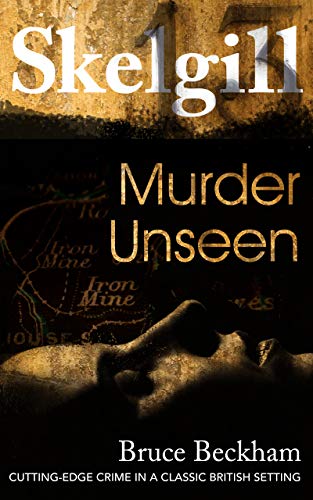
‘Murder Unseen,’ by bruce Beckham

Bruce Beckham’s Inspector Skelgill series, set in Cumbria, continues with Murder Unseen, though Skelgill himself takes a somewhat reduced role this time out. He’s off on a different assignment (and on holiday) much of the time, so the focus is on DS Emma Jones, his subordinate, mentee and secret admirer. DS Leyton, the other main member of the team, has a smaller case of his own to look into.

Lisa Jackson, an attractive young employee at a Carlisle design firm, walks into the office one morning and disappears from the face of the earth. The office is in a blind alley, and there is no back exit from the building.

A suspect quickly appears. Ray Piper, a married man and co-worker who recently ended an affair with Lisa, is seen with his car backed up to the office door shortly after her disappearance. But he has an explanation for every suspicious act and piece of evidence in the case, and it’s notoriously difficult to prosecute a murder without a corpus delicti. As time passes, the team will begin to despair of a conviction – until Skelgill himself returns to apply his intuitive investigative approach, and his close familiarity with the local terrain.

The Skelgill books aren’t highly charged thrillers, and that suits me just fine. They’re slower, quieter, and more character-driven than most mysteries, and the author loves to pause to describe the Lake District scenery. I enjoyed Murder Unseen, and recommend it.

I do wish Skelgill and Jones would get together, though. If she waits for him to make a move, she’ll probably wait forever.

If We Win the Leaders, Will We Win the Nation?

I gather family devotions is a challenge for everyone. I remember my parents pulling us together a couple times for what resembled the semblance of something like a worship service. It was awkward. I didn’t like it. My father-in-law regularly read from the Bible after supper, so that’s the pattern that drew me in.

Since we have homeschooled our kids from the beginning, my wife read through the Bible with them during the morning routine. That and my desire to read something that applied the Word, if not strictly devotional, is what steered me toward reading through Christian books instead of the Bible. We read a few of Jared C. Wilson’s books, at least a couple of Jerry Bridges’s. After using the Advent readings from our church, I was at a loss for what to start next. My wife suggested a few of the small books from our shelf, and that’s what got us into Richard Wurmbrand’s Tortured for Christ.

This ain’t light reading. Wurmbrand is a Romanian minister from Bucharest who grew up atheist and came to faith through reading the Bible. He became an leader of the Underground Church after Communism began to strangle all of its citizens. What he and other believers suffered was demonic.

He writes like a missionary, as you would expect, and one of his principles provoked us to push back. He advocates winning people of influence first.

How was Norway won for Christ? By winning King Olaf. Russia first had the Gospel when its king, Vladimir, was won. Hungary was won by winning St. Stephen, its king. The same with Poland. In Africa, wehre the chief of the tribe has been won, the tribe follows. We setup missions to rank-and-life men who may become very fine Christians, but who have little influence and cannot change the state of things.

We must win rulers: political, economic, scientific, artistic personalities. They are the engineers of souls. They mold the souls of men. Winning them, you win the people they lead and influence.

Wurmbrand might have looked to the book of Daniel and asked whether Nebuchadnezzar’s repent and apparent faith did anything to turn Babylon around or the sympathy King Darius had for Daniel bore any fruit. Who was saved when Jonah preached to Ninevah? That nation was blessed by avoiding God’s wrath for a few generations, but when Nahum returned 150 years later, he said, “And all who look at you will shrink from you and say, ‘Wasted is Nineveh; who will grieve for her?'”

Certainly a people are blessed by Christian leaders. A society organized on biblical values is better overall than any other society, but it would not usher in faith for anyone by mere leadership. When civil leaders turn a country to Christ, it isn’t often by Christian means. The faithless see opportunity and take it by declaring themselves faithful.

God uses society and influence in ways we don’t often foresee. Remember how he has told us to care for widows and orphans. They aren’t the influential ones today, but they could be tomorrow. A common result would be that they seek Christ wherever they go and repeat the truth to a family or congregation, thereby keeping a few more people on the straight and narrow. Who can say this is an unambitious plan?