‘The Quiet Man,’ by Caimh McDonnell

The midday heat was quite something. It hit Bunny like a punch in the solar plexus. Nevada temperatures were the kind you only experienced in Ireland when they were cooking instructions.

The Bunny McGarry Stateside series (a spin-off of Caimh McDonnell’s Dublin Trilogy) rolls along with a brand-new entry, The Quiet Man. And sorry, this story has no connection to the famous John Ford movie, except for the presence of a heavy-drinking, pugnacious Irishman.

The background, if you haven’t read the previous books, is a little complicated. Bunny McGarry, former Dublin police detective, is now officially dead. He has come to the US on a private quest to locate Simone, the love of his life. She disappeared entirely some years ago in order to escape some dangerous people who were looking for her. But now Bunny has learned of a credible threat to her safety of which she needs to be warned. To locate her, he has formed an alliance with the Sisters of the Saint, an unofficial order of “nuns” who are not necessarily religious (or celibate), but who have banded together to fight evil. Sort of a female A-Team with a mother superior. One of their members may know where Simone is, but she and another sister have been kidnapped by a Mexican drug cartel. The cartel’s price for their release is that the Sisters find a way to spring one of their members (the titular Quiet Man) from a super-high security prison in Nevada.

Got that?

Bunny, always game, agrees to get himself arrested, and the Sisters’ resident internet hacker manages to get him placed in The Quiet Man’s cell. The Quiet Man is a mysterious prisoner, very large and strong, who never leaves the cell without a Hannibal Lecter mask, and to whom everyone is forbidden to speak. All Bunny has to do is persuade him to come along when the Sisters disrupt prison security. And, incidentally, stay alive while being threatened by various prison gangs, an old enemy who unexpectedly appears, and a homicidal chief guard. And, oh yes, survive in a place where they think a biscuit is what Bunny calls a scone.

I didn’t think The Quiet Man was quite as funny as the previous books (which may be only a trick of memory), but it was an engaging light thriller, and there were a lot of amusing moments and a neat resolution. I recommend it, if you can handle the rough language and “earthy” humor.

Watching ‘Atlantic Crossing’

Crown Princess Martha (Sofia Helin) and Crown Prince Olav (Tobias Santelmann) with the Roosevelts in “Atlantic Crossing.”

Now and then I write about things that I’ve seen or read, which you can’t enjoy because I read Norwegian and you don’t (nya nya nya). But this is about Atlantic Crossing, which I and some of you had the opportunity to enjoy (first 2 episodes only) yesterday, thanks to a special feed from the Cannes Film Festival. (The Cannes people and I are like that, and we often do favors for one another.)

My gloating is mitigated this time because we can all hope to see the full series in this country soon, perhaps early next year. This article from Yahoo! News says that AC is being eagerly snapped up by markets in various countries:

Sales have been struck with Italy’s RAI and Deutsche Telekom’s Magenta TV for Germany and Austria, as well as with France’ Chérie 25. The series was produced by leading Norwegian banner Cinenord for public broadcaster NRK, and was co-produced by Beta Film, SVT and DR.

“Atlantic Crossing” was also snatched up for Russia (more.tv), the Australian public broadcaster SBS, Greece and
Cyprus (Forthnet) and across Eastern Europe, including Lithuania (LRT). The event series is competing at Canneseries and will bow on NRK on Oct. 26.

Nothing there about US sales, but I find this in an article from the Malay Mail (of all places):

The eight-hour show has been sold throughout Europe and a US deal is in final negotiations, distributor Beta Film said.

So I look forward to seeing the whole thing soon. And I truly mean that. When I watched the preview yesterday, it amazed me.

I’m prejudiced, of course. I put in a lot of work on this project. Linda May Kallestein, who you’ll see listed as co-writer, was the woman who originally got me into script translation, and I still work for her often (due to her forgiving nature). I got the Cannes Festival video link from her.

But I don’t think I’m talking with blinders on when I tell you this is an astonishing production.

The photography is gorgeous (Norway has rarely looked so beautiful on film). The actors’ performances are uniformly excellent. The dramatic pace is relentless – sometimes as tense as a superior thriller.

I know this script (at least the first four episodes) better than almost anybody in the world outside the writers, because I worked (though not alone) through several revisions, and did the final proofing (again, of the first four episodes) before shooting began. And yet I was constantly surprised as I watched. When I’d visualized it in my head, it wasn’t as compelling as this. It’s all in the execution. Original direction, creative cinematography, and fine acting bring it all to life in ways that took my breath away. There wasn’t a false note from the titles to the credits.

And the final scene of Episode 2, when Märtha and her children have to leave Norway for an uncertain future, had me in tears like a little girl.

I told Linda May, in an email today, “I think you might be stuck with a classic on your hands.”

I think Atlantic Crossing may set a new benchmark for quality in miniseries.

Catch it when you get the chance. I’ll be sure to let you know.

‘Atlantic Crossing’ Preview

This offer is good today only.

I’ve been boring you for some time, talking about the big miniseries, Atlantic Crossing (trailer above), on which I did a whole lot of translation work (often when I say I worked on a project, I mean an episode or two. On this one I helped translate several episodes, and I proofread the entire first half, four episodes). Right now, it’s being judged at the Cannes Film Festival. If you sign in with your email address (or so I’m told; I haven’t tried it yet) you can view Episodes 1 and 2 right here. But the showing only lasts 24 hours, which means you’ve got to get to it before sometime around early afternoon tomorrow, my time (Central), Tuesday (if my reckoning is right. Which is not something to bet your life on).

I’m authorized to give you that link, by the way. I’ve messed such things up in the past, but I have this on good authority.

I like that trailer. Very moving, it seems to me. I hope it gets lots of awards at Cannes, so I can brag about my association even more. I’m an old man. I covet the gratifications I can still get.

“Well, our first event of the year kind of sucked,” said one of my friends in the Viking Age Club on Saturday. Some of us had gathered in another town for the funeral of one of our older members. (Cancer, not Covid. I know you were wondering.)

What a year it’s been. But, as Thanksgiving approaches (and Happy Canadian Thanksgiving, to any Good Neighbors to the North who happen to be reading this), I have to say I have much to be thankful for. Aside from my continued good health, I’ve gotten enough translating work (just about exactly enough; it’s kind of like manna) to sustain me through the year.

The funeral day came equipped with beautiful weather; today is about the same. Almost enough to make me an Autumn fan. Autumn days can be delightful; but I’m too much of a worrier to ever forget that Fall is the door through which Winter enters (with horns in a minor key, like Darth Vader).

But, day by day. That’s what I need to remind myself.

Leif Erikson Day

Leif Erikson discovers America, by Christian Krogh, who liked his heroes stout. I saw the original of this painting once, when it was on loan at Epcot.

In the honored tradition of this blog, or at least in the honorable tradition of my own posts, I shall announce a holiday at the point when it’s mostly over.

Today is Leif Erikson Day. A legal holiday in some states, though not the kind you get off work for.

Leif Erikson (I prefer to spell it Eriksson, with two s’s), of course, was the Norse discoverer of North America. Other Europeans may have done it before him, but they don’t have proof and we do. As I mentioned on Facebook, it’s OK to celebrate Vinland, because the colony was unsuccessful. If it had prospered, it would be another egregious example of European imperialism.

Leif himself is something of a mystery. He’s not one of those saga heroes who jump off the page as a full-blown personality. The sagas that tell of his exploits are fairly laconic. He seems to have been a man of boldness, sense, and good luck. Unlike most saga heroes, we have no evidence he ever killed anybody. And he was a convert to Christianity.

I feature him in two of my novels, The Year of the Warrior and West Oversea. There’s every reason to believe he probably knew Erling Skjalgsson. Erling had family and business ties in Iceland, and Leif’s father, Erik the Red, came from a farm in Jaeren, Erling’s bailiwick. As the chief of the Greenland colony, dependent on Norwegian markets, Leif probably did business with Erling.

A Norwegian bachelor buddy of mine texted me and asked, “How shall we celebrate Leif Erikson Day?” After considerable deliberation, we decided to clean out my gutters. It was an amazing day, above 80 degrees in August.

Party people we are not. But we did have pizza.

Reading report: ‘The Lord of the Rings’: Incompatibility

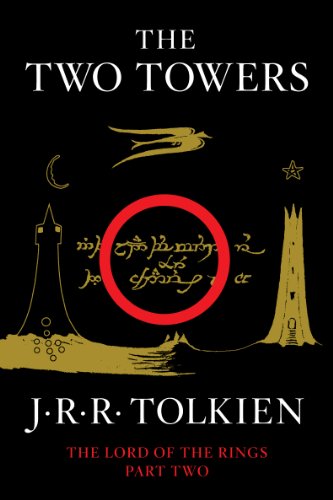
Blogging my way through The Two Towers:

To some extent Ronald and Edith [Tolkien] lived separate lives at Northmoor Road [Oxford], sleeping in separate bedrooms and keeping different hours…. She and Ronald did not always talk about the same things to the same people, and as they grew older each went his and her own way in this respect, Ronald discoursing on an English place-name apparently oblivious that the same visitor was simultaneously being addressed by Edith on the subject of a grandchild’s measles. But this was something that regular guests learnt to cope with. (J. R. R. Tolkien: A Biography, Humphrey Carpenter.)

‘But our hearts did not go on growing in the same way: the Ents gave their love to things that they met in the world, and the Entwives gave their thought to other things, for the Ents loved the great trees, and the wild woods, and the slopes of the high hills…. But the Entwives gave their minds to the lesser trees, and to the meads in the sunshine beyond the feet of the forests…. ‘ (Treebeard, in The Two Towers)

Just a parallel that struck me, from Tolkien’s life and his books. It’s not for me to say much about the Professor’s domestic life (which was full of love by all accounts, though a little eccentric). Just to point out a similarity.

Reading report: ‘The Lord of the Rings’: Diversity

Blogging my way through The Two Towers:

Another theme in these books that strikes me is the vision of what – at the risk of political correctness – I might call “diversity.”

The Fellowship of the Ring is, self-consciously, a diverse group. It includes members of several of the more-or-less human “races” not dominated by Sauron – Men, and Elves, and Hobbits. No doubt this mirrors Tolkien’s experience with classes and Imperial ethnicities (not to mention Allies) during the Great War. The feeling (it must have seemed very strange in those times) of thinking, “Here I am, crouched in a trench with men I might have despised or even fought against in the past. But we’re all at war for a single cause now, and I find much to love and admire in them.”

No doubt it would have occurred to a thoughtful mind that one could conceivably come to feel the same way about the enemy, under different circumstances.

But it wouldn’t only have been the war. The fabled Inklings group was itself (to an extent) a disparate gathering. Not radically disparate, but to Tolkien, as a member of a religious minority, the chasm between Catholic and Protestant was always significant. I don’t recall that any of the Inklings was an atheist or agnostic, but Owen Barfield was a Theosophist (though he eventually became a communicant Anglican).

Which reminds me of the issue of “Jack” Lewis’s Anglicanism, always a sore point with Tolkien. After the famous night in 1931 when he and Hugo Dyson convinced Lewis that mythology might be a kind of inchoate prophecy from Heaven (leading to his Christian conversion), Tolkien hoped Jack would join him in his Roman faith. But Jack remained at bottom a Belfast Protestant, though he learned to appreciate certain beauties in his friend’s church.

And when I read of Gimli and Legolas, tentatively finding common ground in which an Elf might go so far as to visit caverns, in order (perhaps) to discover the beauties a Dwarf sees there, and the Dwarf condescends to travel in a forest with the Elf for the same reason, we may be peering into the heart of Tolkien’s and Lewis’s friendship.

With Great Art and Great Quotations Comes Coolness

D. Lee Grooms shares a fun moment when my tweet promoting on old post adds to art. Spidey probably reads this blog. All the cool kids do.

If you’re asking who said, “With great power comes great responsibility?” ask no more.

New Podcast Dramatizes Martin Luther as Events Unfold

On October 10, 1520, Martin Luther received an official church statement charging him with heresy. Today’s Luther says the bull got to him by a circuitous route.

The Rector of the University of Wittenberg, Peter Burkhard, received the bull from a citizen to whom a Leipzig militiaman had given it. This was, to say the least, an unusual mode of delivery of an official document, probably intended to prevent the University from refusing to accept it.

The Papal Bull condemns him for statements that are “either heretical, false, scandalous, offensive to pious ears, or misleading to the simple.” Clearly Luther was playing precursor to Osteen at this point in his career.

Ligonier Ministries has a new Reformation Day podcast starting October 10 to dramatize Luther’s actions and thoughts, starting at this point, called “Luther: In Real Time.”

Ligonier is also streaming documentary on Luther for free all this month.

‘New’ C. S. Lewis recordings

“Like cold water to a thirsty soul, so is good news from a far country.” (Proverbs 25:25, ESV)

There is good news, folks, even now, especially if you’re a C. S. Lewis fan.

There are “new” recordings of C. S. Lewis reading his own work and Chaucer, available from the Rabbit Room Store. That’s surprising in itself, but the source of the recordings is even more remarkable.

In August of 1960, C. S. Lewis’s wife Joy Davidman had been dead for about a month. At that time her ex-husband, William Gresham, traveled to England to see his sons, Douglas and David. It must have been an awkward reunion. Bill Gresham tried hard to get custody of his sons, but “Jack” Lewis strenuously opposed him, winning custody for himself. (According to Joy Davidman’s biographer, she may have exaggerated her stories of Bill’s neglect and abuse. However, it is indisputable that he was an alcoholic.)

However he felt, Bill was gracious enough to ask Jack to read some of his work into the new tape recorder he’d brought along. Jack did so, reading excerpts from Perelandra and That Hideous Strength, and then reading (or reciting) part of the Prologue to The Canterbury Tales in flawless Middle English.

I haven’t bought my copy yet, mostly out of laziness, but I’m going to. I can’t complain about the price – three bucks for the whole caboodle.

Proceeds go to benefit the Marion E. Wade Center, which owns the rights.

Reading report: The Two Towers, by J.R.R. Tolkien: The name of Erling

Blogging my way through The Lord of the Rings.

I’m well into The Two Towers now. An anxious nation will be gratified to know that I Have Thoughts.

I noticed – for the first time, I think – the name of the ancient warrior who – we are told – founded the Kingdom of Rohan. His name was Eorl the Young.

This is where I did a little linguistic analysis, based on my fair knowledge of Norwegian and my sketchy grasp of Old Norse.

I figured Eorl must be etymologically related to the Norse word, Jarl, which means a ruler. I was pretty sure that the Norse cognate when used in personal names was “Erl.” I had looked up the meaning of Erling (for obvious reasons) and learned that the name means “young ruler.”

That makes sense, because the “ing” suffix is common in sagas to indicate “the younger,” as in “junior.” Thus the sons of Arne Arnmodsson (whom I mentioned a few days ago in my post on my novel writing) were known as the Arnmodings.

My guesses were verified by the author of this web site, assuming he knows what he’s talking about.

Therefore, when you encounter the name Eorl the Young in TLOTR, think “Erling.”

Did Tolkien have Erling Skjalgsson in mind when he named the character? I have no evidence for that. But I like to think so. Because what I like is extremely important.