“O the Deep, Deep Love of Jesus” sung by the congregation of Grace Community Church in Sun Valley, California
This moving hymn feels like watching an ocean roll, as the metaphor goes. Its slow statement Christ’s profound love can be happy and ecstatic, but it’s in daily living, in common struggle, and in grief that we can feel the soul-stirring depth of his unchanging love for us.
Samuel Trevor Francis (1834-1925), a London businessman, wrote the words. Welshman Thomas John Williams (1869-1944) wrote the melody. Williams was an insurance salesman, so this popular hymn comes to us from the business sect of Christendom.
1 O the deep, deep love of Jesus! Vast, unmeasured, boundless, free, rolling as a mighty ocean in its fullness over me. Underneath me, all around me, is the current of thy love; leading onward, leading homeward, to thy glorious rest above.
2 O the deep, deep love of Jesus! Spread his praise from shore to shore; how he loveth, ever loveth, changeth never, nevermore; how he watches o’er his loved ones, died to call them all his own; how for them he intercedeth, watcheth o’er them from the throne.
3 O the deep, deep love of Jesus! Love of ev’ry love the best: ’tis an ocean vast of blessing, ’tis a haven sweet of rest. O the deep, deep love of Jesus! ‘Tis a heav’n of heav’ns to me; and it lifts me up to glory, for it lifts me up to thee.
Last week, an independent bookstore in Chicago splashed up attention for many Twitter users with a tweet complaining about a customer who wanted to rent rather than buy some expensive books. Rebecca George, a co-owner of Volumes Bookcafe in Chicago’s Wicker Park, wrote in Jan 9 tweet: “Turns out one of our biggest sales last month was for the person to stage their home for the holidays and now they want to return them all. Please don’t do this to a small business, people. That one sale was a third of our rent.”
The books were eye-catching art and cook book, no doubt published to show off the reader’s good taste. The most modest book in the set was entitled Authenticity: The Vain Attempt at Finding the Real You. (I’m sorry. I made that up.)
The tweet has been seen almost seven million times and picked up by news outlets, making January a very good month for sales by good-hearted book-buyers showing their sympathy.
What else is online?
Reading Good Books: An essential freedom that builds character more than we know. “American kids, more than ever, are stratified into those who read—those who have regular access to books—and those who don’t. I’m not talking here about basic literacy, but being open to the human good that is the enjoyment of literature.”
Kristin Lavransdatter at 100.Sigrid Undset wrote a “medieval romance in the twentieth century (published between 1920 and 1922), [and] she somehow reverses a thousand years of morbidity, bringing a long dead genre back to life. . . . Kristin Lavransdatter is really just a love story—but one of the most savagely honest love stories ever written.”
Mystery: All About Agatha is a podcast that has read all of Agatha Christie’s novels, discussed them, and ranked them against each other. I look forward to looking up All Hallow’s Eve to see if they place it within the worst five.
Writing: Backstory brings characters to life, making them appear as real people, except when it floods the reader with irrelevant details. So it’s a very good, except when it isn’t.
Terry Teachout: The New York art critic died last year on Jan. 13. Patrick Kurp calls that fact “comparably difficult to believe. It’s like saying France no longer exists. Seldom in my experience was so prominent and successful a writer so generous with his success.”
Another free book by an author I’m not familiar with. I think this is the fourth in the string. I’ve disliked each book less than the last, and The Blood Line by Solomon Carter was the best so far. Not stellar, but not bad.
Aging Detective Inspector Joe Hogarth of Southend in Essex, England, is summoned to a very nasty crime scene with his two female colleagues. The deceased has been dead several days, and decomposition is well under way. The dead man was known as a forger, specializing in false passports and other IDs. The method of the murder is interesting – first the man was given a powerful “speedball” injection of cocaine and heroin, and then he was stabbed to death before the drugs could kill him. Why would anyone take the trouble to do all that?
Before long another local criminal, a human trafficker, is found murdered exactly the same way. This is obviously personal for the killer, but who could that person be? The field of possible suspects is wide; the problem is finding the person with the right kind of hate.
Joe Hogarth is a sort of a sad sack – middle-aged, never married, lonely but scared of commitment. Instead of taking risks in dating, he medicates himself with alcohol. Meanwhile, an old enemy of his has been released from prison. All unknown to Hogarth, this psychopath has come to town and is laying plans to repay him for all the time he spent behind bars.
I thought The Blood Line was well-written. Joe Hogarth is a good character, and not politically correct; I was interested in him. My only real objection, though, is a big one – the story is kind of dreary. Hogarth has a dreary life, and little hope is in view. Maybe things will get better in the next books in the series.
Sad, sad news. The historian Paul Johnson died today. He was born in 1928, and was a practicing Roman Catholic. He wrote more than 40 books, as well as innumerable articles. Originally a leftist, Johnson grew disenchanted with the Left, objecting especially to its blinkered moral relativism, a theme that runs through all his works. His books Modern Times and Intellectuals were formative for me (I delighted in his takedown of Ibsen in Intellectuals), and I also appreciated The Birth of the Modern.
The English Spectator has a memorial post today here. It includes a quote from an article he wrote for them on moral relativism:
As I see it, the Satan who confronted Jesus during this encounter is the personification of moral relativism, and the materialism which creates it. What we are shown is not merely ‘all the kingdoms of the world’ but the entire universe, in all its colossal extent, reaching backwards and forwards into infinity and beyond the powers of the human mind to grasp except in mathematical equations. We are told: this came into existence, not by an act of creation, but as a result of the laws of physics, which have no moral purpose whatever — or indeed any purpose. There is no conceivable room for God in this process, and mankind is an infinitely minute spectator of this futile process about which he can do nothing, being of no more significance than a speck of dust or a fragment of rock. If you will accept this view of our fate, then there is just a chance that by applying the laws of science to the exclusion of any other considerations, and by dismissing the notion of God, or the spirit, or goodness, or any other absolute notion of truth and right and wrong, we shall be able marginally to improve the human condition during the minute portion of time our race occupies our doomed planet.’
Rest in peace, Mr. Johnson. You’ll be much missed.
I’ve been reading a lot of free books made available through various Kindle promotions lately. As you may have noticed, I wasn’t entirely happy with the last couple I reviewed. Was J. C. Fields’ The Cold Trail more satisfying?
Well, yes. But not entirely.
This book is part of a series, and there were the usual problems with character relationships that had to be explained, but that wasn’t handled too badly. The story begins with the disappearance, a few years back, of three female volleyball players from a college in Missouri. A few years later, our hero, Sean Kruger, a professor at another Missouri college, is able to rescue a different volleyball player. Kruger is a former FBI agent, and he worked on the earlier abductions. The similarities prompt him to get his hacker friend to do some checking in the records, and he believes he can discern the work of a serial killer. Because of this he makes up his mind to go back to his old job at the FBI, which assigns him to the case.
Eventually he and his team are able learn that one thing connects a number of disappearances of female athletes over recent years. In each case, a particular software company was installing a system in the college at the time. And the man overseeing the installation was the son of the company’s owner, computer mogul Robert Burns, who recently retired as a senator. The son in question was Robert Jr., “Bobby,” and he has just been elected to his father’s old seat. Is it possible a US senator is a serial killer?
Of course it’s possible, and much money has been spent on covering up Bobby’s “indiscretions.” But it goes far deeper than that. We’re talking about the Russian mafia and international human trafficking.
The story worked pretty well. The characters were interesting, and they interacted well. The dialogue was good. The book could have used a proofreader – I found misplaced modifiers and word confusion (like “vanilla folder”). But as a narrative, it wasn’t bad. I caught what looked to me like one plot weakness, but that happens.
My reservations were mostly political and paranoid.
The evil senator is, of course, a conservative Republican. And he is owned, part and parcel, by Vladimir Putin and the Russians, who are using him to destabilize the US economy.
It occurred to me that Robert Burns might be a stand-in for Donald Trump in a left-wing fantasy.
Also, we got to watch the FBI at work investigating a senator, and they cut legal corners from time to time. Nothing sinister about the squeaky-clean FBI illegally surveilling a Republican, right?
Also, the bureaucrats in this book never worry about wokeness. There’s no concern over microaggressions, and nobody talks about their preferred pronouns. I did not believe this was true to contemporary life in the federal government.
All in all, The Cold Trail left me with chilly feet.
Writing a story (of any length, but novels are hardest in this respect) presents many challenges, and it’s a surprise any of us ever gets it tolerably right (I’m not saying I get it right myself; that’s for others to determine). You’ve got to cobble together an interesting plot, and then you’ve got to cat-herd your characters into doing the (sometimes outrageous) stuff they need to do in order to keep common sense from breaking out. A story implies unusual activity, and unusual activity usually means forcing characters to do extreme stuff. This can be done well or badly. I felt it was done rather badly in Lewis M. Penry’s One Other, second in his DS Jerome Roberts police procedural series.
Dr. Ben Carr is one-half of a medical practice in the London suburb of Shefford. He’s a family man and football (soccer) coach. Apparently popular with his neighbors – so why did someone stab him to death in his home?
Detective Sergeant Jerome Roberts, along with his superior DI Richard Martin, starts questioning neighbors and friends, and a darker picture of him emerges. Dr. Carr seems to have had his share of enemies – there’s his business partner (whom he’s been blackmailing), and the families of female students he’s been sleeping with. There’s the football mom who threatened him publicly for not putting her son into a game. There’s his own brother, too.
As police pressure increases, the suspects respond violently, turning on one another, and even on themselves. The whole thing erupts in a series of homicides.
And that’s my problem with this book. This isn’t supposed to be grand opera or Shakespearean tragedy. It’s a story about ordinary middle class citizens in a suburb. No doubt they’re all sinners like the rest of us, but (it seems to me) the author overestimates the capacity of the average person for deadly force. Killing another human is the first and most stubborn taboo. It takes serious fear, trauma, or specialized training to get past that taboo. Communities don’t just break out in murder like an epidemic of chickenpox.
One Other fell down, for this reader, in the psychology department. I simply didn’t believe the story.
The poor—the slaves who really stoop under the burden of life—have often been mad, scatter-brained and cruel, but never hopeless. That is a class privilege, like cigars. Their drivelling literature will always be a ‘blood and thunder’ literature, as simple as the thunder of heaven and the blood of men.
On a friend’s recommendation, I picked up the Project Gutenberg version of G. K. Chesterton’s The Defendant. (My link, of course, is to a version you’ll have to pay for. You think we’re running a charity here?) It’s pretty standard Chesterton, which is to say, eccentrically stimulating.
The book’s title, as the author himself admits in the Foreword, is awkwardly put. Chesterton does not stand in his own defense here, but in defense of various topics he has chosen for no other reason than that they’re out of fashion (or were at the time). Subjects include: “Penny Dreadful” novels, skeletons, publicity, nonsense, “ugly things,” slang, detective stories, and patriotism. It helps, in reading, to have some general idea of intellectual fashions around the turn of the 20th Century. Although Christianity is mentioned, this is not one of Chesterton’s most Christian (or Catholic) works.
The Defendant isn’t one of the most memorable books in G. K.’s ouvre, but it’s definitely worth reading. There are excellent moments:
“There is a road from the eye to the heart that does not go through the intellect. Men do not quarrel about the meaning of sunsets; they never dispute that the hawthorne says the best and wittiest thing about the spring.”
“Scripture says that one star differeth from another in glory, and the same conception applies to noses.”
“Jesus Paid It All” arranged for acoustic instruments and performed by Craig Duncan
Here’s an excellent hymn to begin a new year. Elvina M. Hall (1820-1889) wrote “Jesus Paid It All” on a fly leaf of the hymnal of her Methodist Episcopal Church in Baltimore, Maryland, in 1865. Perhaps that means it was written in response to a sermon or Scripture reading during the service. It reads like such a response.
1 I hear the Savior say, “Thy strength indeed is small, Child of weakness, watch and pray, Find in Me thine all in all.”
Refrain: Jesus paid it all, All to Him I owe; Sin had left a crimson stain, He washed it white as snow.
2 Lord, now indeed I find Thy pow’r and Thine alone, Can change the leper’s spots And melt the heart of stone. [Refrain]
3 For nothing good have I Where-by Thy grace to claim; I’ll wash my garments white In the blood of Calv’ry’s Lamb. [Refrain]
4 And when, before the throne, I stand in Him complete, “Jesus died my soul to save,” My lips shall still repeat. [Refrain]
I intend to read more books this year, but since I didn’t quite track how many I read last year, I don’t have an actual number to aim for this year. Goodreads has 23 on last year’s list, which includes several manga. Not sure those count, and a number of books isn’t my goal anyway. A number of pages would be more accurate.
I bought a few Christmas gifts for this purpose, and Tom Holland’s Dominion is 542 dense pages. That will take me a while to get through and in no way diminishes my enjoyment or education for being only one book. (I should take notes too.)
Writer Max Liu read a poetry anthology over two years, “each morning in the four minutes it took my coffee to brew. It was a wonderful reminder that reading is never about quantity and always about the quality of time you spend with a text.” He encourages all of us to read well and for fun, not to meet some goal. (via Joel Miller)
Christian Poetry: How would you define Christian poetry? What about a poem would make it Christian? In a new anthology, Christian Poetry in America (which I bought last month), part of that definition is placing “imitation and tradition over originality and self-expression.”
War in Ukraine: “Someone said it’s essential for Ukraine to win as it would give Russia a chance to rethink its values and undergo cleansing and much-needed change. We pray for it.”
Self-Absorbed Much? A new book is coming on the dangers of social media. The Wolf in Their Pockets is written to pastors to help them minister to “those whose online influences have filled them with cynicism and contempt.”
Photo: Santa’s #1 reindeer, Magic Forest, Lake George, New York. 1996. John Margolies Roadside America photograph archive (1972-2008), Library of Congress, Prints and Photographs Division.
The inner office was, however, empty when Joss entered. It was only after he had banged cheerfully on the desk with a paperweight, at the same time shouting a jovial “Bring out your dead,” that Mr. Duff came in from the little balcony outside the window, where he had been attempting to alleviate his dyspepsia by deep breathing.
“Aha, J. B.,” said Joss sunnily. “Good morrow.”
“Oh, you’re there are you?” said Mr. Duff, making no attempt to emulate his junior’s effervescence.
The managing director of Duff and Trotter was a large man who, after an athletic youth, had allowed himself to put on weight. In his college days he had been a hammer thrower of some repute, and he was looking as if he wished he had a hammer now and could throw it at Joss….
“You’re late!” he boomed.
“Not really,” said Joss.
“What the devil do you mean, not really?”
“A man like me always seems to be later than he is. That is because people sit yearning for him….”
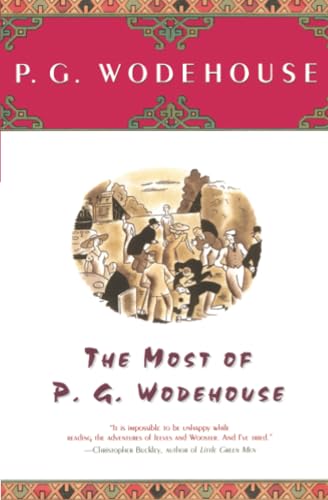
The first book of P. G. Wodehouse I ever bought was the collection The Most of P. G. Wodehouse, published by Simon & Schuster back in the ‘70s, which included the novel Quick Service as a sort of extra (it remains the most reasonably priced way to get this book, so that’s the link I’m using). Thus, Quick Service was the first Wodehouse novel I ever read. I enjoyed it immensely then, and did again on re-reading. Especially because its main character is surprisingly different from most of your Wodehouse heroes.
The plot of the story is extremely tight and complex, but cutting back to the essentials, we start at Claines Hall in Sussex, which now belongs to Mrs. Howard Steptoe, an American millionairess, and her husband. Also in residence is her poor relation, Sally Fairmile, who serves as a sort of secretary. Sally has just gotten engaged to young Lord Holbeton, another guest at the manor. The problem is that under the terms of his father’s will, Lord Holbeton can’t touch his inheritance yet without the approval of his trustee, Mr. J. B. Duff of Duff and Trotter’s exclusive grocery store in London. Sally suggests that she go talk to Mr. Duff, and see if she can’t charm him.
But when she arrives at Duff’s office, she finds not him but our hero, Joss Weatherby, an artist who works in the advertising department. Joss immediately falls in love with her. When she’s gone, Duff reappears, having learned, through eavesdropping, that Joss painted a portrait of a Mrs. Chavender, which now hangs at Claines Hall (where Mrs. Chavender just happens to be a current guest). Duff was once engaged to Mrs. Chavender, he says, and it occurs to him that her face, with its haughty sneer, would make a wonderful poster for the store. He then fires Joss, but Joss heads off to Claines Hall, to take a job as Mr. Steptoe’s valet (a job that Sally mentioned is open). His plan is to steal the portrait, get his job back, and marry Sally.
There may be other heroes like Joss Weatherby in other Wodehouse stories (my memory sometimes fails, and there are a lot of stories), but such an energetic, bright, confident type isn’t the Master’s usual fare. Uncle Fred and Uncle Galahad were probably something like this in their youths. “Aplomb” is the word that best suits Joss. It makes no difference whether he’s discovered swilling his boss’s sherry, breaking into a French window, or perched on a chair, cutting a painting from its frame, he is never dismayed. His self-confidence only ebbs in those moments when he contemplates his unworthiness of the woman he loves. And then only briefly. Joss Weatherby is a great tonic for the depressive reader.
Quick Service is a tremendous story, and everyone should read it.
Websites store cookies to enhance functionality and personalise your experience. You can manage your preferences, but blocking some cookies may impact site performance and services.
Essential cookies enable basic functions and are necessary for the proper function of the website.
Name
Description
Duration
Cookie Preferences
This cookie is used to store the user's cookie consent preferences.
30 days
These cookies are needed for adding comments on this website.
Name
Description
Duration
comment_author
Used to track the user across multiple sessions.
Session
comment_author_email
Used to track the user across multiple sessions.
Session
comment_author_url
Used to track the user across multiple sessions.
Session
These cookies are used for managing login functionality on this website.
Name
Description
Duration
wordpress_logged_in
Used to store logged-in users.
Persistent
wordpress_sec
Used to track the user across multiple sessions.
15 days
wordpress_test_cookie
Used to determine if cookies are enabled.
Session
Statistics cookies collect information anonymously. This information helps us understand how visitors use our website.
Google Analytics is a powerful tool that tracks and analyzes website traffic for informed marketing decisions.
Used to monitor number of Google Analytics server requests
10 minutes
__utmb
Used to distinguish new sessions and visits. This cookie is set when the GA.js javascript library is loaded and there is no existing __utmb cookie. The cookie is updated every time data is sent to the Google Analytics server.
30 minutes after last activity
__utmc
Used only with old Urchin versions of Google Analytics and not with GA.js. Was used to distinguish between new sessions and visits at the end of a session.
End of session (browser)
__utmz
Contains information about the traffic source or campaign that directed user to the website. The cookie is set when the GA.js javascript is loaded and updated when data is sent to the Google Anaytics server
6 months after last activity
__utmv
Contains custom information set by the web developer via the _setCustomVar method in Google Analytics. This cookie is updated every time new data is sent to the Google Analytics server.
2 years after last activity
__utmx
Used to determine whether a user is included in an A / B or Multivariate test.
18 months
_ga
ID used to identify users
2 years
_gali
Used by Google Analytics to determine which links on a page are being clicked
30 seconds
_ga_
ID used to identify users
2 years
_gid
ID used to identify users for 24 hours after last activity
24 hours
_gat
Used to monitor number of Google Analytics server requests when using Google Tag Manager
1 minute
_gac_
Contains information related to marketing campaigns of the user. These are shared with Google AdWords / Google Ads when the Google Ads and Google Analytics accounts are linked together.
90 days
Marketing cookies are used to follow visitors to websites. The intention is to show ads that are relevant and engaging to the individual user.
A video-sharing platform for users to upload, view, and share videos across various genres and topics.
Registers a unique ID on mobile devices to enable tracking based on geographical GPS location.
1 day
VISITOR_INFO1_LIVE
Tries to estimate the users' bandwidth on pages with integrated YouTube videos. Also used for marketing
179 days
PREF
This cookie stores your preferences and other information, in particular preferred language, how many search results you wish to be shown on your page, and whether or not you wish to have Google’s SafeSearch filter turned on.
10 years from set/ update
YSC
Registers a unique ID to keep statistics of what videos from YouTube the user has seen.
Session
DEVICE_INFO
Used to detect if the visitor has accepted the marketing category in the cookie banner. This cookie is necessary for GDPR-compliance of the website.
179 days
LOGIN_INFO
This cookie is used to play YouTube videos embedded on the website.